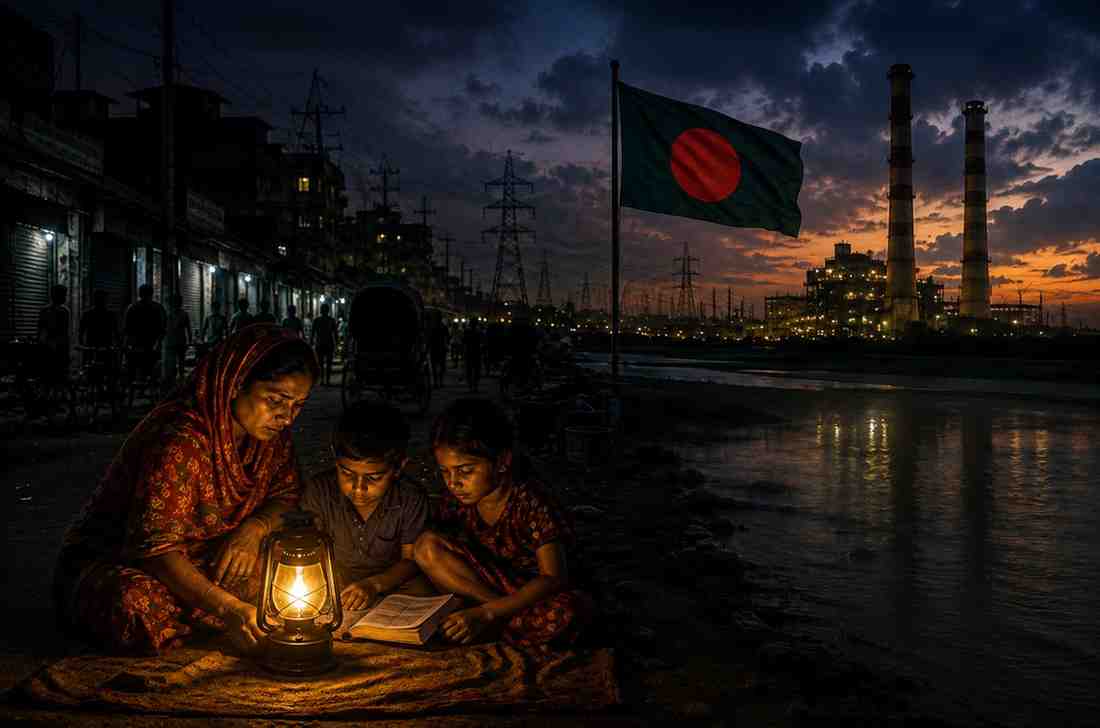
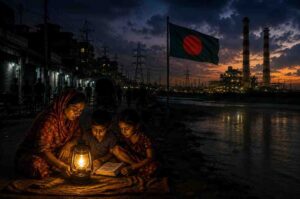
Bangladesh is battling a deepening power crisis, with several parts of the country experiencing prolonged electricity outages amid a shortage of natural gas and other fuels. In some rural areas outside Dhaka, power cuts have reportedly continued for as long as eight to 10 hours, putting households, businesses and industries under mounting pressure.
The crisis has become severe enough for the government to introduce fresh electricity-saving measures. Shopping malls, markets and shops have been ordered to close by 8 pm, while trade fairs and cultural programmes must also conclude by the same time. Decorative lighting has been restricted, and illuminated billboards have been ordered to switch off by 7 pm. Hospitals and pharmacies have been exempted from the restrictions.
The measures highlight the seriousness of Bangladesh’s energy shortage as electricity demand continues to outpace available generation. Reports indicate that demand has remained around 18,000 megawatts, while supply has struggled to reach approximately 13,000 MW. The resulting gap has intensified load-shedding, particularly outside the capital.
Rural Bangladesh bears the brunt of blackouts
The electricity shortage is particularly severe in rural regions, where residents are facing repeated and lengthy outages. Areas including Mymensingh, Barishal, Rangpur, Sylhet, Rajshahi and Khulna have been affected, with many locations experiencing several hours of load-shedding each day. Khulna has reportedly witnessed outages lasting nine to 10 hours.
The situation has been aggravated by high temperatures and ongoing heatwave conditions, increasing dependence on electricity for cooling and essential services. The shortage is also creating serious difficulties for agriculture and businesses that depend on uninterrupted electricity.
Farmers have been forced to rely more heavily on diesel-powered generators, increasing operational costs. Shrimp farmers are among those particularly affected because electricity is needed to operate aerators that maintain oxygen levels in ponds. Extended outages can therefore threaten production and cause substantial financial losses.
Bangladesh’s crucial textile and garment sector is also feeling the impact, raising concerns about broader economic disruption if the electricity shortage persists.
Fuel shortage emerges as the central problem
The immediate challenge is closely linked to a shortage of fuel, especially natural gas, which plays a major role in Bangladesh’s electricity-generation system. The country imports more than 90 per cent of its oil and around 30 per cent of its gas, leaving its energy security vulnerable to disruptions in international supplies.
A major blow came after an incident at an LNG terminal operated by Excelerate Energy. LNG supplies reportedly fell sharply after the terminal was shut following a July 21 incident. Although partial operations resumed earlier this week, the disruption has continued to affect gas availability.
Rough weather has further complicated the situation, with at least two LNG vessels reportedly unable to unload their cargo at terminals. At the same time, reduced electricity imports have added pressure to an already strained power system.
Bangladesh’s power sector requires more than one billion cubic feet of gas daily, but current availability has fallen to roughly 700 million cubic feet, severely limiting electricity generation.
Anger grows as power facilities face attacks
The prolonged blackouts have also triggered growing public frustration. Reports of attacks and vandalism at electricity-related facilities have emerged in several areas, prompting concerns over the security of power infrastructure and employees.
The Bangladesh Palli Bidyut Association has sought police protection for grids, substations and electricity offices. Reports have also emerged of vandalism and arson in places including Saidpur, Nilphamari and Kushtia. Some electricity officials have reportedly faced hostile calls and threats.
Also Read: India’s Digital Revolution Surges as 12 Years of DPI Transform Governance
The unrest adds another layer of difficulty for authorities attempting to manage an already fragile energy system.
Bangladesh seeks India’s help for additional diesel
Amid the escalating crisis, Bangladesh has turned to India for additional diesel supplies. The request was communicated during a meeting between Bangladesh Energy Minister Iqbal Hassan Mahmood and Indian High Commissioner Dinesh Trivedi.
Mahmood said Bangladesh already receives diesel from India through a pipeline and has asked New Delhi to increase supplies.
The India-Bangladesh Friendship Pipeline, operational since 2017, has become an important component of Bangladesh’s fuel supply network. Under a 15-year agreement, India is committed to supplying 180,000 metric tonnes of diesel annually to Bangladesh. India had already supplied more than 30,000 tonnes of diesel to Bangladesh in March and April amid disruptions linked to turmoil in the Middle East.
Energy crisis puts Bangladesh-India ties in focus
The appeal to India comes at a politically sensitive moment in bilateral relations. Ties between New Delhi and Dhaka have faced tensions following India’s decision to provide shelter to former Bangladesh Prime Minister Sheikh Hasina after she left Bangladesh in 2024.
Despite those political differences, the energy crisis has created an immediate area for practical cooperation. Additional diesel supplies from India could provide Bangladesh with short-term relief as authorities struggle to bridge the gap between electricity demand and generation.
However, the latest crisis also exposes Bangladesh’s dependence on imported fuel and vulnerable gas supplies. While emergency assistance may help ease the immediate pressure, the country faces a longer-term challenge of strengthening energy security, diversifying fuel sources and improving resilience against disruptions.
For millions affected by extended blackouts, the priority remains simple: restoring a reliable electricity supply before the worsening energy crisis causes deeper damage to daily life and the economy.
Click here to join our WhatsApp Channel for real-time news updates and exclusive coverage.