
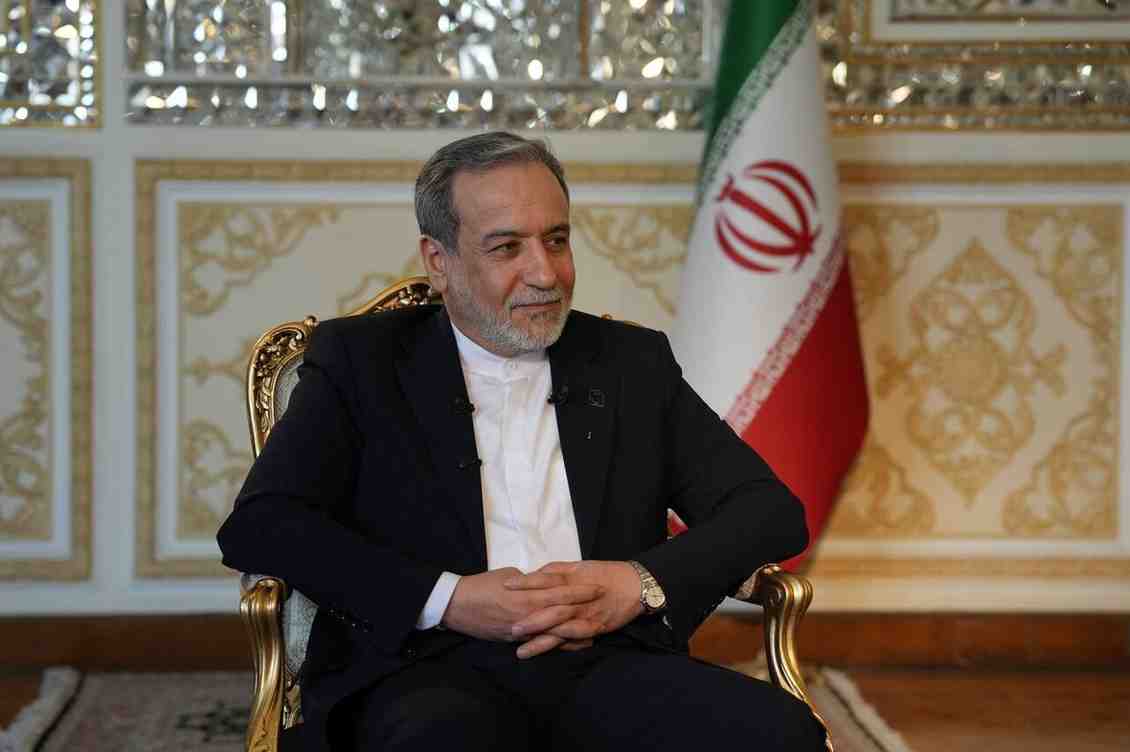
Iranian Foreign Minister Abbas Araghchi has said that a memorandum of understanding (MoU) between Iran and the United States is nearing completion, describing it as the outcome of months of negotiations aimed at securing and formalising what he called the Iranian people’s victory following the recent conflict.
Speaking to Iranian state television on Friday, Araghchi said the proposed agreement represents the final stage of diplomatic efforts conducted after the ceasefire that halted the conflict between Iran, the United States and Israel earlier this year. The ceasefire, which came into effect on April 8, was brokered by , which has continued to facilitate talks between Tehran and Washington.
According to Araghchi, the Iranian Foreign Ministry pursued negotiations in close coordination with the country’s armed forces. He stressed that both institutions had worked toward the same objective despite operating in different capacities.
“There is something beyond mere unity between the Foreign Ministry and the Armed Forces,” Araghchi said. “Both move along the same path and toward the same goal, each from within a different trench.”
The foreign minister revealed that negotiators have reached the final stages of drafting a 14-point memorandum of understanding. However, he declined to disclose specific details, saying amendments could still be made before the document is finalized.
“This process has now reached its final stages,” he said, adding that the contents of the agreement would be made public only after the text is formally approved and signed.
Araghchi noted that the proposed framework has been repeatedly reviewed by Iran’s Supreme National Security Council and other key decision-making institutions.
“The war will come to an end on all fronts, including in Lebanon,” he said. He added that the agreement would include commitments against initiating future wars, making threats, or using force.
One of the most significant elements of the proposed MoU, according to Araghchi, is a provision requiring both sides to respect each other’s sovereignty. He claimed that the document could mark the first time in nearly five decades that the United States formally acknowledges and records respect for the sovereignty of the Islamic Republic of Iran in a written agreement.
The foreign minister said the memorandum would be signed digitally by both governments once finalized. He suggested that the breakthrough could come soon. “We are closer than ever to that point,” Araghchi said. “It could happen within the next day or two, or within the coming days.”
Beyond the immediate ceasefire framework, the proposed MoU is expected to open the door for a second phase of negotiations focused on Iran’s nuclear programme and the lifting of international sanctions. Araghchi said those discussions would begin after the memorandum is signed and would initially be conducted within a 60-day timeframe.
He indicated that the talks could either conclude within that period or be extended if both parties believe further negotiations are worthwhile.
Addressing expectations surrounding the negotiations, Araghchi emphasized that diplomacy requires compromise from all sides.
“The best possible agreement is one in which both sides achieve a certain level of satisfaction,” he said. “There is no agreement or deal in which one side is one hundred percent successful while the other gains nothing. This is a basic principle of diplomacy.
Araghchi’s comments suggest that both Tehran and Washington may be approaching a significant diplomatic milestone after months of indirect negotiations. If finalized, the memorandum would not only formalize the ceasefire but also establish a framework for addressing more complex issues such as Iran’s nuclear activities and sanctions relief.
The reported commitment to mutual respect for sovereignty could also serve as a confidence-building measure after decades of strained relations between Iran and the United States.
However, important questions remain unanswered, including the exact terms of the 14-point agreement, verification mechanisms, security guarantees, and how future nuclear negotiations will be structured. The success of the MoU will ultimately depend on whether both sides can translate the preliminary understanding into a durable political settlement capable of surviving domestic and regional pressures.