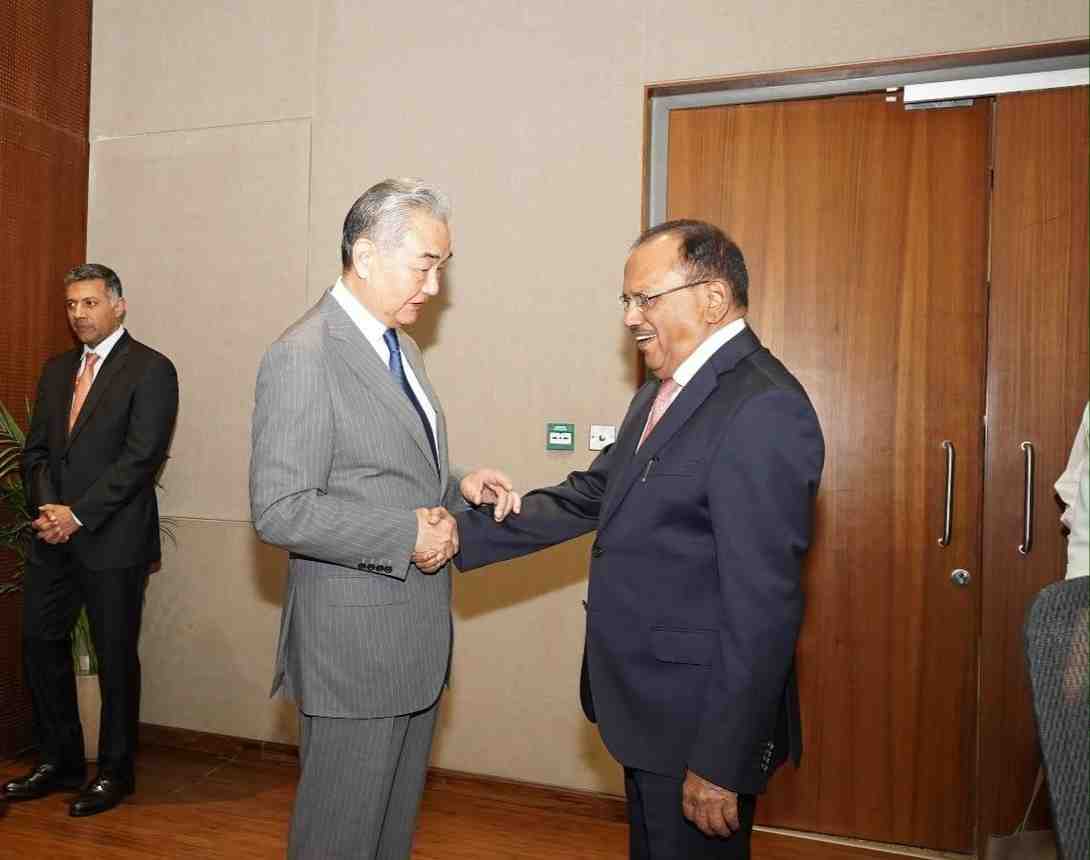
NEW DELHI: National Security Adviser Ajit Doval and Chinese Foreign Minister Wang Yi held extensive discussions in New Delhi on Monday, with both sides reviewing the progress made in restoring bilateral ties and expressing optimism about a gradual normalisation of relations between the two neighbouring Asian powers.
The meeting took place on the sidelines of the BRICS National Security Advisers’ gathering being hosted by India. According to official statements, the discussions were described as “constructive and forward-looking”, indicating a positive shift in engagement after years of strained relations following the military standoff along the Line of Actual Control (LAC).
Focus on rebuilding trust
During the talks, Doval stressed the importance of maintaining stable, predictable and constructive relations between India and China. He underlined that stronger bilateral ties are essential for building trust and improving mutual understanding between the two countries. Officials from both nations reviewed recent developments and acknowledged the progress achieved towards gradually normalising diplomatic engagement.
The meeting reflects a broader effort by both governments to move beyond years of tensions that intensified after the deadly border clashes and prolonged military deployments along the Himalayan frontier. Although significant challenges remain unresolved, diplomatic channels between New Delhi and Beijing have become more active over the past year.
BRICS Platform Gains Strategic Importance
The interaction between Doval and Wang Yi took place during the 16th BRICS National Security Advisers’ meeting in New Delhi. India is currently chairing the BRICS grouping and will host the leaders’ summit later this year.
The security meeting is considered a crucial preparatory exercise ahead of the larger summit. Representatives from BRICS member countries are discussing issues ranging from terrorism and geopolitical conflicts to emerging security challenges.
China has indicated that it intends to use the BRICS platform to discuss major international developments, regional conflicts and strategies to address both conventional and non-conventional security threats. The forum has become increasingly significant as global geopolitical uncertainties continue to rise.
Relations Improving After Prolonged Border Tensions
India and China have spent several years attempting to stabilise relations after military tensions erupted along the disputed Himalayan border. Diplomatic, military and working-level mechanisms have remained active to prevent escalation.
Recent meetings under various bilateral frameworks have shown encouraging signs. Officials from both countries have expressed satisfaction over maintaining peace and stability in border areas, which has created space for broader diplomatic engagement.
While border issues remain sensitive, both governments appear willing to pursue a balanced approach that combines strategic caution with increased cooperation in areas of mutual interest.
Wang Yi’s Visit Carries Diplomatic Significance
This marks Wang Yi’s first visit to India in nearly a year. His presence in New Delhi is being viewed as an important indicator of Beijing’s willingness to sustain dialogue with India despite unresolved disputes.
Wang Yi occupies multiple influential positions within the Chinese government and also serves as Director of the Office of the Central Commission for Foreign Affairs, making him one of China’s most senior foreign policy officials.
His latest engagement with Indian leaders follows several rounds of diplomatic exchanges held over the past year, including previous meetings with Doval and External Affairs Minister S. Jaishankar.
Strategic Cooperation Remains A Work In Progress
Experts believe the latest dialogue demonstrates that both countries recognise the importance of maintaining open communication despite strategic competition.
India and China share one of the world’s longest disputed borders and have substantial economic interdependence. At the same time, both nations remain influential players in global institutions such as BRICS and other multilateral organisations.
The challenge moving forward will be converting diplomatic goodwill into sustained progress on contentious issues, particularly border management, security concerns and regional competition.
Nevertheless, Monday’s meeting sends a strong signal that both governments are prioritising engagement over confrontation and are seeking to establish a more stable framework for future interactions.
As India prepares to host the upcoming BRICS Summit later this year, the outcome of these conversations could shape not only bilateral relations but also wider regional diplomacy across Asia.