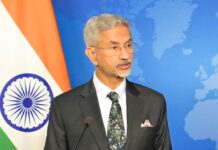

NEW DELHI: India’s National Security Adviser (NSA) Ajit Doval hosted the 5th Meeting of the BIMSTEC National Security Chiefs in New Delhi on Wednesday, bringing together National Security Advisers and Heads of Delegation from all seven member countries to strengthen regional security cooperation and address emerging challenges facing the Bay of Bengal region.
The high-level meeting witnessed the participation of representatives from Bangladesh, Bhutan, India, Myanmar, Nepal, Sri Lanka, and Thailand, reaffirming the shared commitment of BIMSTEC nations to work together on issues ranging from counter-terrorism and cyber security to maritime safety and disaster management.
The discussions came at a significant time as the Bay of Bengal Initiative for Multi-Sectoral Technical and Economic Cooperation (BIMSTEC) prepares to mark its 30th anniversary in 2027, highlighting nearly three decades of regional collaboration.
Focus on Regional Security and Emerging Threats
During the meeting, the participating National Security Advisers and senior officials held extensive discussions on strengthening cooperation against terrorism, organised crime, cyber threats, maritime security challenges, and energy security.

The leaders emphasized the need for practical and action-oriented measures that would enable member countries to respond more effectively to both traditional and non-traditional security threats.
Participants also explored ways to improve intelligence sharing, strengthen institutional coordination, and enhance regional mechanisms capable of responding quickly to evolving security situations.
The meeting reflected the growing importance of BIMSTEC as a platform for regional cooperation, especially as security challenges continue to evolve across South Asia and Southeast Asia.
Secretary General Reviews Progress Across Sectors
BIMSTEC Secretary General presented a comprehensive review of the progress achieved in the organisation’s security cooperation agenda.
The presentation covered developments across multiple sectors, including regional security, transport connectivity, disaster management, technology cooperation, trade, and people-to-people exchanges.
Member states reviewed ongoing initiatives and discussed ways to accelerate implementation of agreed programmes while ensuring stronger coordination among participating countries.
The review also highlighted the importance of maintaining regular dialogue among security agencies to improve preparedness against future challenges.
Maritime Guidelines Adopted
One of the major outcomes of the meeting was the adoption of guidelines for the maritime component of Humanitarian Assistance and Disaster Relief (HADR).
These guidelines are expected to enable BIMSTEC member countries to undertake coordinated humanitarian relief operations more efficiently whenever natural disasters or emergencies occur within the region.
Given the Bay of Bengal’s vulnerability to cyclones, floods, earthquakes, and other natural disasters, the new framework aims to improve the speed and effectiveness of regional disaster response.
The participants also endorsed a separate set of guiding principles for maritime law enforcement agencies during interactions at sea.
Also Read: India Advises Shipping Firms To Keep Seafarers Off Strait Of Hormuz Routes
These principles are intended to improve predictability, reduce misunderstandings, and promote safer maritime engagements among BIMSTEC member states.
The agreed framework is expected to contribute to better coordination between maritime agencies while strengthening regional stability.
BIMSTEC’s Expanding Strategic Role
BIMSTEC has steadily expanded its role as a bridge connecting South Asia and Southeast Asia, two of the world’s most dynamic regions linked through the Indian Ocean.
Over the years, cooperation within the grouping has widened beyond economic partnerships to include security collaboration, maritime affairs, disaster resilience, transport connectivity, digital technology, trade facilitation, and cultural exchanges.
Security cooperation has increasingly become one of the organisation’s central pillars as member countries seek coordinated responses to cross-border threats.
The New Delhi meeting reflected the shared recognition that many contemporary security challenges—including cybercrime, organised criminal networks, illegal trafficking, and terrorism—require collective regional action rather than isolated national responses.
Strengthening Disaster Preparedness
Disaster management remained another major focus of the discussions.
Given the region’s exposure to frequent natural disasters, member states explored ways to improve coordination in humanitarian assistance, emergency response planning, and capacity building.
Officials agreed that stronger institutional mechanisms, regular information sharing, and joint preparedness initiatives would help reduce response times during emergencies.
The newly adopted HADR maritime guidelines are expected to play an important role in facilitating quicker deployment of relief resources whenever required.
Commitment Ahead of BIMSTEC’s 30th Anniversary
As BIMSTEC approaches its thirtieth anniversary next year, participating National Security Advisers reaffirmed their commitment to expanding regional cooperation across all security-related sectors.
The delegates agreed that stronger collaboration, continuous knowledge-sharing, and enhanced institutional capacity would be essential for addressing both existing and emerging security threats.
They also emphasized building greater regional resilience while promoting stability, peace, and sustainable development across the Bay of Bengal region.
The successful conclusion of the fifth meeting underscored the importance of continued dialogue among member countries and reinforced BIMSTEC’s growing role as a platform for advancing collective security and regional cooperation in South Asia and Southeast Asia.
Click here to join our WhatsApp Channel for real-time news updates and exclusive coverage.