NEW DELHI: Prime Minister Narendra Modi held a telephone conversation with the Amir of Kuwait, Sheikh Meshal Al-Ahmad Al-Jaber Al Sabah, on Tuesday to discuss the rapidly evolving security situation in West Asia amid escalating regional tensions.
During the conversation, the two leaders exchanged views on the ongoing crisis and its implications for regional stability. Prime Minister Modi expressed deep concern over the deteriorating situation and reaffirmed India’s strong condemnation of attacks on Kuwait’s sovereignty and territorial integrity. He also emphasized the urgent need for restraint and peaceful resolution of conflicts through dialogue and diplomacy.
According to official information, the Prime Minister reiterated India’s consistent position that de-escalation remains the only viable path to restoring peace and stability in the region. He stressed that continued hostilities could further destabilize West Asia and affect millions of people across the region.
Modi also thanked the Amir for his personal attention toward ensuring the safety and well-being of the large Indian community living in Kuwait. Nearly one million Indians reside and work in the Gulf nation, making them one of the largest expatriate communities in the country. Their welfare remains a key priority for New Delhi amid the current security challenges.
The conversation comes at a time when West Asia is witnessing heightened tensions involving multiple regional actors. Recent missile and drone attacks, including strikes linked to the broader Iran-Israel confrontation and attacks affecting Kuwait, have raised serious concerns about regional security. Earlier this month, an Indian national was killed during an attack on Kuwait International Airport, prompting India to strongly condemn attacks on civilian infrastructure and call for the protection of civilians.
Just a day before the Modi-Amir conversation, India expressed deep concern over renewed attacks in West Asia and urged all parties to immediately de-escalate tensions. The Ministry of External Affairs described the latest escalation as a matter of “utmost concern” and called for the protection of civilians as well as a diplomatic solution to end the conflict. New Delhi warned that the prolonged crisis was causing significant humanitarian suffering while also disrupting global trade, energy supplies and economic stability.
Modi’s Landmark Kuwait Visit
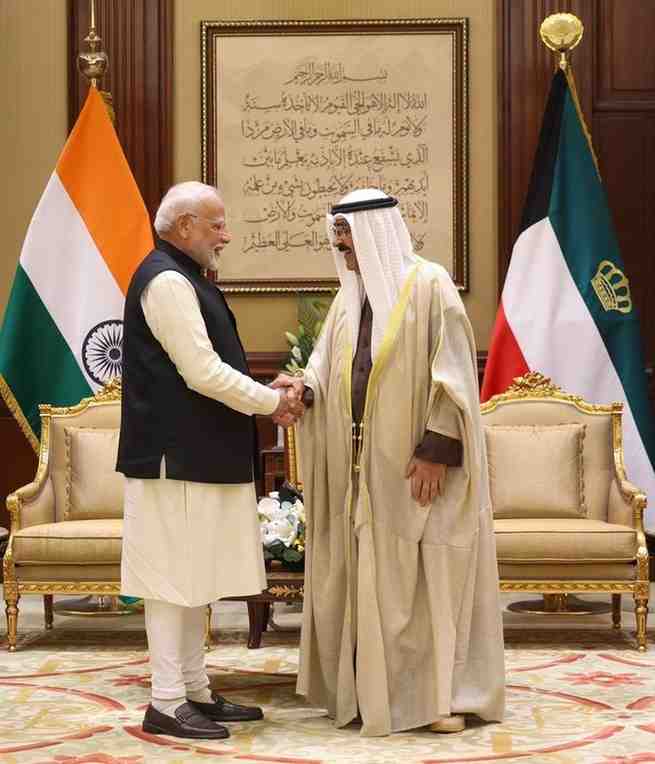
The latest diplomatic engagement follows Prime Minister Modi’s historic visit to Kuwait in December 2025, the first visit by an Indian Prime Minister to the Gulf nation in more than four decades. During that visit, Modi held extensive discussions with Kuwait’s leadership on trade, energy cooperation, investment, technology and the welfare of the Indian diaspora. The visit marked a significant milestone in India-Kuwait relations and elevated bilateral cooperation across several strategic sectors.
Growing Concerns Over West Asia
The ongoing West Asia crisis has emerged as a major concern for India due to its strong economic and strategic ties with the region. India relies heavily on Gulf countries for energy supplies, while millions of Indian expatriates live and work across West Asia. Any prolonged conflict could affect oil markets, shipping routes and regional stability, directly impacting India’s economic interests.
Against this backdrop, New Delhi has consistently advocated restraint, dialogue and diplomacy. Tuesday’s conversation between Prime Minister Modi and the Amir of Kuwait underscores India’s continued diplomatic engagement with key regional partners and its commitment to supporting efforts aimed at restoring peace and stability in West Asia.
West Asia on Edge as Regional Conflict Deepens
West Asia is currently facing one of its most volatile security situations in recent years. Tensions have escalated following a series of missile and drone attacks linked to the ongoing confrontation involving Iran, Israel and allied groups operating across the region. The conflict has expanded beyond direct military exchanges, affecting civilian infrastructure, transportation networks and strategic installations.
Several countries in the Gulf region have heightened security measures amid concerns that the violence could spread further. Recent attacks targeting key facilities and transportation hubs have raised fears of wider instability, threatening regional peace and economic activity. The situation has also disrupted maritime trade routes and increased uncertainty in global energy markets, as West Asia remains a critical supplier of oil and natural gas.
The humanitarian impact is growing, with civilians facing security risks and disruptions to daily life. The international community, including India, has repeatedly called for restraint, de-escalation and a return to dialogue. New Delhi has expressed concern over renewed violence and emphasized the need to protect civilians and maintain regional stability.
With diplomatic efforts continuing, world leaders are urging all sides to avoid further escalation and pursue peaceful solutions to prevent a broader regional conflict that could have global consequences.