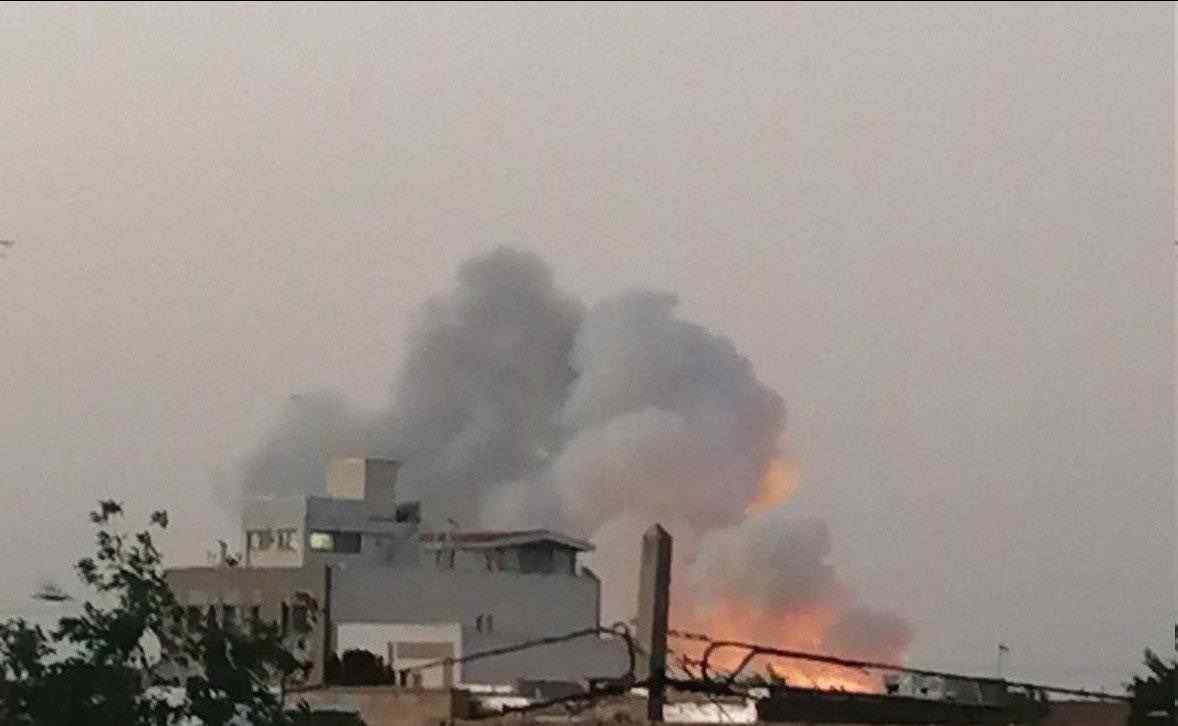
The Middle East witnessed another dangerous escalation on Monday as Israel launched fresh attacks on military sites in western and central Iran, intensifying tensions despite ongoing diplomatic efforts led by the United States. The strikes came shortly after reports emerged that US President Donald Trump had urged Israeli Prime Minister Benjamin Netanyahu to avoid further military action in order to keep negotiations with Tehran on track.
The latest exchange of attacks highlighted the fragile state of diplomacy in a conflict that has now lasted for more than 100 days and continues to threaten regional stability. While Washington insists that progress is being made toward a broader agreement with Iran, military confrontations between the two rivals have repeatedly complicated efforts to reach a lasting settlement.
Israeli military officials confirmed that air operations targeted what they described as strategic military facilities inside Iran. The attacks followed an Iranian missile strike aimed at Israeli targets, including the Ramat David air base near Nazareth. According to Israeli authorities, the incoming missiles were intercepted by air defence systems before causing significant damage.
Iran’s Revolutionary Guards said the missile operation was carried out in response to recent Israeli military actions in Lebanon. Tehran has repeatedly accused Israel of provoking instability through continued operations against Hezbollah, the Iran-backed armed group active in southern Lebanon and Beirut’s suburbs.
Shortly after Iran’s missile launch, Israel announced retaliatory strikes against military infrastructure inside Iranian territory. Iranian military officials claimed the attacks involved air-launched ballistic missiles and accused Israel of attempting to widen the conflict beyond Lebanon’s borders.
The renewed confrontation had an immediate impact on global financial markets. Concerns about potential disruptions to energy supplies pushed oil prices sharply higher. Brent crude futures climbed more than three percent, crossing the $96-per-barrel mark as traders assessed the risk of a broader regional conflict affecting oil exports from the Gulf.
The military escalation unfolded despite fresh comments from President Trump, who insisted that recent exchanges would not derail ongoing diplomatic efforts. Speaking in an interview, Trump emphasized that the United States remained committed to securing a peace arrangement with Iran and suggested that negotiations were nearing a critical breakthrough.
Trump also appeared to distance US foreign policy from Israeli military decisions. Responding to questions about Netanyahu’s actions, the president asserted that Washington would continue to direct its own diplomatic agenda. His remarks reflected growing concerns within the US administration that military operations could undermine months of behind-the-scenes negotiations.
According to reports, Trump spoke with Netanyahu by telephone on Sunday and urged restraint. During the conversation, the US president reportedly argued that both sides were close to achieving progress toward an agreement and warned against actions that could jeopardize the diplomatic process.
Neither the White House nor Netanyahu’s office publicly commented on the details of the reported call, but the discussion underscored differences in approach between Washington and Jerusalem regarding the path forward.
A major obstacle remains the situation in Lebanon. Since negotiations between the United States and Iran began, Israel has maintained military pressure on Hezbollah, arguing that the Lebanese front should not be linked to broader diplomatic discussions. Tehran, however, has insisted that any long-term understanding with Washington must include guarantees related to Lebanon and an end to attacks against Hezbollah.
Iranian parliamentary speaker and senior negotiator Mohammed Baqer Qalibaf reiterated that position, warning that US military installations and Israeli interests could remain potential targets if hostilities continue. Iranian officials have repeatedly argued that military pressure cannot be separated from political negotiations.
Before Sunday’s missile strike, Iran had largely refrained from directly attacking Israel following a ceasefire agreement that took effect in April. However, Hezbollah has continued launching attacks against Israeli positions, keeping tensions high along the northern border.
Trump has continued to combine diplomatic outreach with strong warnings toward Tehran. In a recent television interview, he said the United States was close to reaching a deal but warned of severe consequences if negotiations collapsed. His comments reflected the administration’s strategy of maintaining pressure while pursuing a diplomatic solution.
Meanwhile, Israel has shown little sign of easing its campaign in Lebanon. Netanyahu defended recent operations targeting Beirut’s southern suburbs, saying they were necessary responses to Hezbollah attacks on Israeli communities near the border.
The broader conflict has also affected international trade and shipping. Iran has imposed restrictions affecting movement through the Strait of Hormuz, a critical route for global energy supplies. The waterway handles a significant share of the world’s oil exports, making any disruption a concern for international markets.
Although US and Iranian negotiators have reportedly made progress toward a preliminary understanding that could reduce tensions and restore normal maritime activity, major disagreements remain unresolved. Key issues include sanctions relief, limits on Iran’s nuclear activities and access to billions of dollars in frozen Iranian assets.
Adding another layer of complexity, reports suggest Washington is considering allowing some Iranian funds to be used for reconstruction efforts in Gulf countries affected by attacks linked to Tehran. Iranian officials have rejected the idea, calling it unlawful and warning of retaliation if such measures are implemented.
As diplomatic talks continue, military leaders on both sides have adopted increasingly firm rhetoric. Israeli military spokesperson Brigadier General Effie Defrin accused Iran of making a serious mistake by launching missiles at Israel and vowed that operations against Hezbollah would continue. He stressed that Israel would not tolerate ongoing attacks against its northern communities and would intensify efforts to weaken Hezbollah’s capabilities.
With military actions continuing alongside sensitive negotiations, the coming days are expected to be critical in determining whether diplomacy can prevent the conflict from spiralling into a broader regional war.