
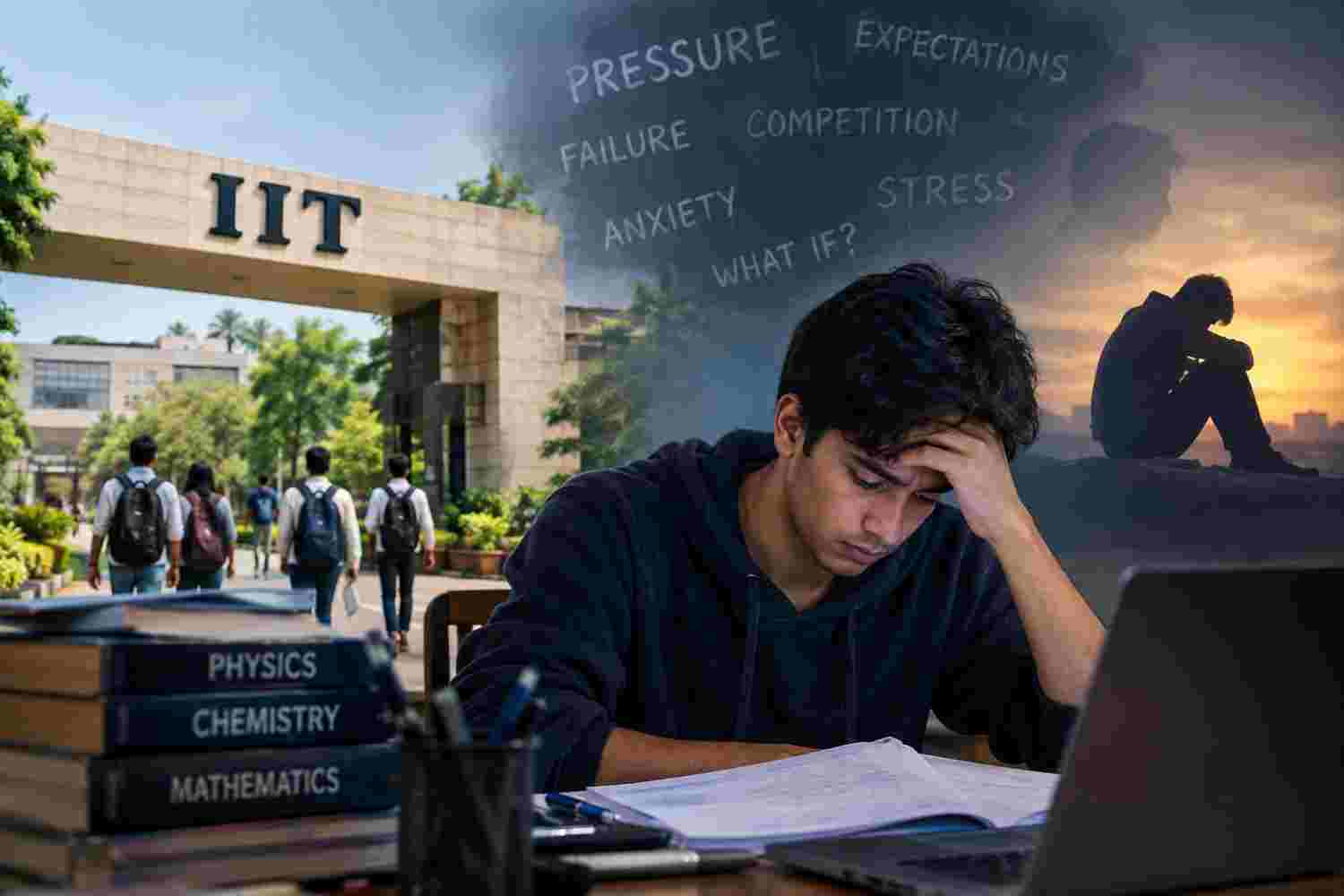
IITs are built on dreams — dreams of academic success, prestigious careers and a better future. But behind the ranks, results and relentless competition are young students quietly struggling with a fear that no examination can measure: the fear of failure. As concerns over student suicides at IITs grow, India must confront a difficult question – Are we teaching our children how to succeed, while failing to teach them how to cope when success feels out of reach?
Rising Concern Over Student Suicides at IITs
The numbers are worrying. Recent official data show that 23 IITs reported 45 student suicides between 2020–21 and 2024–25. The figures were compiled from data supplied by the IITs. Twenty-eight of the 45 students belonged to SC, ST or OBC communities. These figures do not explain why each student died, but they show that student well-being cannot be treated as a secondary issue.
At the national level, the Ministry of Education said in August 2026 that NCRB records show several reported causes of student suicides, including family problems, illness and failure in examinations. The government has also acknowledged professional or career problems, isolation, mental disorders and financial difficulties among the factors associated with suicide. This is important because there is no single explanation for such a complex problem.
Academic Pressure and the Fear of Failure
The pressure to perform, however, deserves serious attention. A student who has always been among the toppers may suddenly find themselves surrounded by hundreds of equally talented students. Being average for the first time can feel like failure. Marks then stop being just marks. They become a measure of identity.The pressure can also create unhealthy behaviour.
National Efforts to Address Student Mental Health
However there is some reason for hope. India’s National Task Force on student mental health, constituted by the Supreme Court in March 2025, has been studying the problem across higher education. By February 2026, it had received responses from more than 12.88 lakh students, 1.6 lakh faculty members, 2.26 lakh parents and 6,800 mental-health professionals. It had also received responses from 16,750 higher educational institutions. By June 2026, the Task Force had visited 30 institutions across 10 states and held 25 stakeholder consultations.

These numbers tell us something important: student mental health is no longer a private matter to be discussed only after a tragedy. It is a national education issue.
Parents can begin by asking, “How are you?” instead of only, “What marks did you get?” Teachers can notice sudden changes in behaviour and create spaces where students can speak without fear of judgement. Colleges need accessible counselling, early identification of distress and supportive grievance systems. These are also areas highlighted in the Ministry of Education’s guidance for higher educational institutions.
Building an Education System That Values Every Student
Education should certainly encourage ambition. But ambition should not come at the cost of a young person’s sense of worth.
Also Read | Mumbai-Ahmedabad Bullet Train Hits Major Milestone As 480-Metre Sabarmati Bridge Completed
A student can fail an examination and write it again. A career can change. A rank can be forgotten. A life cannot be replaced.
The real measure of an education system is not only how many toppers it produces. It is also whether students learn to face failure, ask for help, recover from setbacks and continue moving forward.
We need to teach our students to aim high — but also to understand that their worth is always greater than their marks.
At the end, The rising concern over student suicides highlights the complex pressures facing young people in India’s higher education system. Academic competition, fear of failure, isolation, financial difficulties and personal challenges can contribute to distress. Official data and the National Task Force’s extensive consultations underline the need for stronger counselling, early intervention and supportive institutions. Education must balance academic excellence with emotional resilience, helping students understand that failure is temporary and their worth extends beyond marks.
Click here to join our WhatsApp Channel for real-time news updates and exclusive coverage.