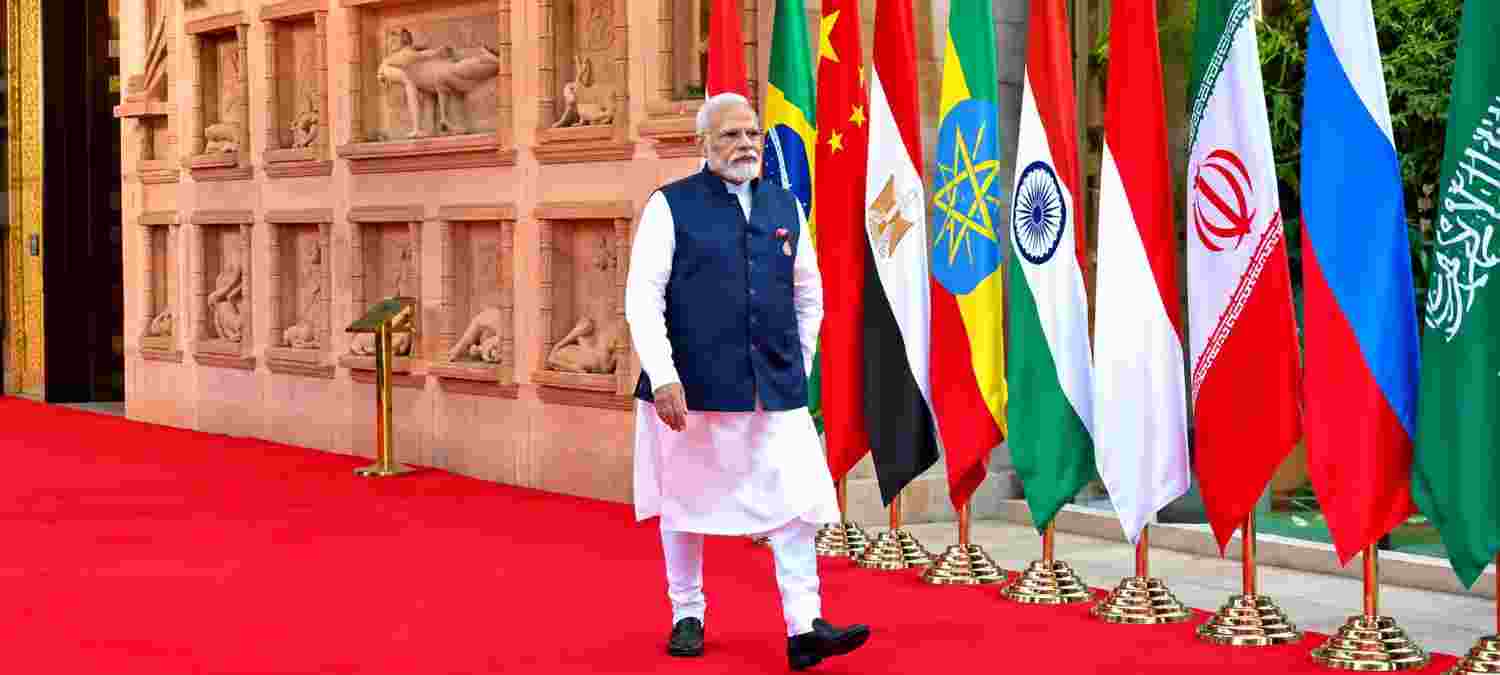
The second and concluding day of the 18th BRICS Summit in New Delhi is set to witness an intense round of diplomatic engagement, with Prime Minister Narendra Modi scheduled to hold seven key bilateral meetings with visiting leaders. The discussions come as India hosts the expanded BRICS grouping under its 2026 chairship and seeks to strengthen cooperation on global growth, development, innovation and the priorities of the Global South.
BRICS leaders began arriving at Bharat Mandapam on Sunday for the Day 2 programme. The day’s main session is centred on “Resilience, Innovation, Cooperation and Sustainability: Shaping the Future for Inclusive Global Growth.” Leaders are also expected to discuss development, economic cooperation and ways to give developing countries a stronger voice in global decision-making.
Seven Bilateral Meetings Put Modi At Centre Of Day 2 Diplomacy
The planned seven bilateral engagements underline the diplomatic importance of the second day of the summit. Modi is expected to use the meetings to advance India’s bilateral priorities with visiting heads of government and strengthen cooperation across strategic, economic and multilateral areas.
The summit has already provided several opportunities for high-level engagement. On the sidelines, Modi met Chinese President Xi Jinping, Russian President Vladimir Putin, Iranian President Masoud Pezeshkian and other leaders. The India-China meeting focused on border peace, economic ties, business cooperation and reducing trade imbalances, while the Modi-Putin engagement covered bilateral cooperation, trade, energy and broader geopolitical developments.
Xi Jinping, Putin Among Key BRICS Leaders In Delhi
Chinese President Xi Jinping, Russian President Vladimir Putin, Brazilian President Luiz Inácio Lula da Silva, South African President Cyril Ramaphosa, Iranian President Masoud Pezeshkian, Egyptian President Abdel Fattah El-Sisi and Indonesian President Prabowo Subianto are among the leaders attending the summit.
Ethiopian Prime Minister Abiy Ahmed Ali and UAE Crown Prince Sheikh Khaled bin Mohamed bin Zayed Al Nahyan are also participating, while partner and outreach countries include Malaysia and Vietnam.
Xi’s presence has attracted particular attention following his bilateral meeting with Modi. The talks marked his first visit to India in seven years and focused on stabilising bilateral relations, maintaining peace along the border and expanding economic and people-to-people links.
Day 2 Focuses On Resilience And Inclusive Growth
The second-day plenary places economic and developmental priorities at the heart of the summit. The discussions are expected to examine how BRICS members can build stronger economies capable of responding to geopolitical uncertainty, trade disruptions and technological change.
Innovation and sustainability are also central to India’s BRICS agenda. The emphasis reflects New Delhi’s effort to connect economic development with technology, environmental sustainability and inclusive growth.
Also Read — BRICS vs G7: India’s Strategic Rise Challenges Old Global Economic Order
The BRICS grouping has expanded to 11 full members, including India, China, Russia, Brazil, South Africa, Egypt, Ethiopia, Indonesia, Iran, Saudi Arabia and the UAE. According to Indian government figures cited in the summit coverage, the grouping represents about 49.5% of the world’s population and around 40% of global GDP.
New Delhi Declaration Provides Strong Foundation
The Day 2 deliberations follow the unanimous adoption of the New Delhi Declaration on Saturday. The 140-point document covers a wide range of issues, including global governance, conflicts, terrorism, trade, climate, health, technology and development.
The declaration condemned the Pahalgam terror attack and reaffirmed opposition to terrorism and terror financing. It also called for dialogue, diplomacy and restraint in dealing with conflicts in West Asia, while supporting a ceasefire and political solution.
The document also opposed unilateral tariffs and trade barriers and highlighted the importance of more inclusive artificial intelligence and stronger representation for developing countries in global institutions.
Modi Pushes Global South Agenda
India’s BRICS chairship has placed the aspirations of developing nations prominently on the diplomatic agenda. Modi has called for transforming what he described as a “pyramid of privilege” into a “platform of partnership”, arguing that the Global South should have a greater role in shaping international rules.
Gaekwad Legacy Defies Time As Vadodara Enters Powerful New Railway Era
He has also proposed measures including a BRICS mechanism for continuity and implementation of decisions and a Seafarers’ Emergency Support Network aimed at assisting seafarers in distress.
Trade, AI And Global Governance In Focus
Economic cooperation remains another major pillar of the summit. BRICS members have discussed strengthening trade, improving cross-border payment systems and increasing the use of national currencies. The summit did not announce a common BRICS currency, but discussions supported greater cooperation in payments and financial connectivity.
Artificial intelligence is another emerging priority. The New Delhi Declaration calls for AI development that is inclusive and accessible while stressing greater participation of developing countries in shaping emerging-technology rules.
India has also renewed its call for reform of the United Nations Security Council and greater representation for developing nations in global institutions.
A High-Stakes Closing Day For India
With seven bilateral meetings planned alongside the main BRICS proceedings, Day 2 offers Modi another major opportunity to advance India’s strategic and economic interests with influential partners.
As leaders conclude the New Delhi Summit, the focus is likely to remain on converting political commitments into practical cooperation while strengthening BRICS as a platform for emerging economies and the wider Global South.
Click here to join our WhatsApp Channel for real-time news updates and exclusive coverage.