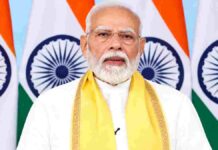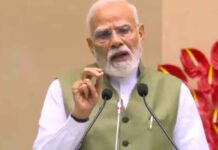
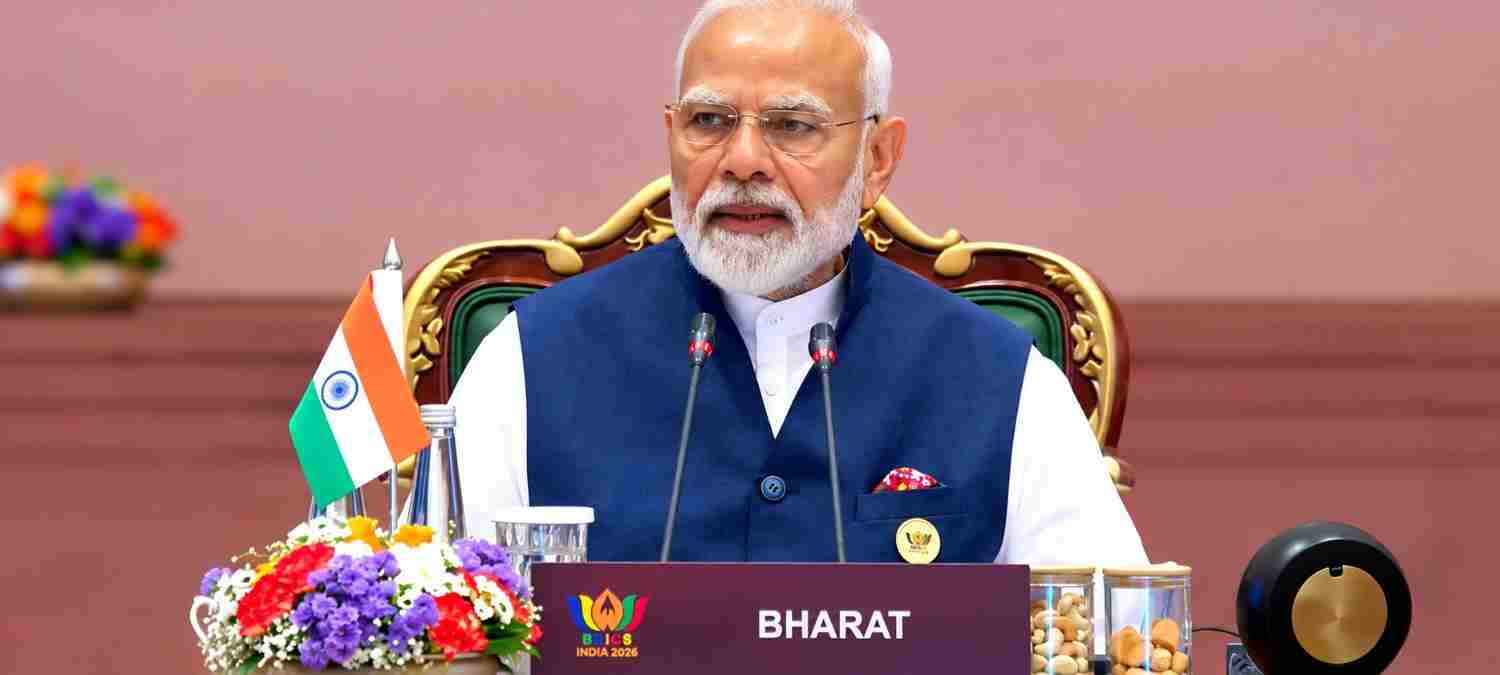
Prime Minister Narendra Modi on Sunday highlighted India’s BRICS presidency and said the grouping had focused on four key pillars—resilience, innovation, cooperation and sustainability—while working with member countries to convert a shared vision into practical, mutually beneficial cooperation.
The remarks came on the second day of the 18th BRICS Summit at Bharat Mandapam in New Delhi, where leaders of the grouping gathered for discussions on major global and economic challenges. The leaders also participated in a family photograph before the main session centred on “Resilience, Innovation, Cooperation and Sustainability.”
Four Pillars Guiding India’s BRICS Presidency
Addressing the summit, Modi said India had directed its efforts during its presidency towards four interconnected priorities: resilience, innovation, cooperation and sustainability.
He expressed satisfaction that, with the cooperation and support of BRICS members, India had been able to translate the grouping’s collective vision into what he described as “win-win collaboration.”
The four pillars reflect India’s emphasis on strengthening BRICS cooperation amid growing uncertainty across the global economy and international system. The approach places resilience alongside innovation, while highlighting cooperation and sustainability as essential elements of long-term development.
Rising Global Tensions Raise Need for Greater Resilience
Modi said the number of tensions across the world was continuously increasing and that these developments were having a significant and widespread impact on ordinary people.
He pointed to pandemics, climate-related disasters and disruptions to supply chains as examples of crises that have demonstrated the interconnected nature of the modern world.
According to the Prime Minister, in such an interconnected environment, a crisis originating in one region can have consequences far beyond its immediate geographical boundaries. He therefore stressed the importance of strengthening resilience within BRICS.
Modi said countries must be able to identify emerging challenges in a timely manner, prepare themselves in advance and respond quickly when crises occur.
BRICS Moves Towards Integrated Early Warning System
As part of this resilience-focused approach, Modi highlighted a consensus reached within BRICS on an integrated early warning system aimed at preventing and responding to infectious diseases.
The initiative is intended to strengthen preparedness by improving the ability of member countries to identify potential health threats and coordinate responses at an early stage.
Also Read — BRICS Day 2: PM Modi To Hold 7 Bilateral Meetings, Boosting India’s Global Influence
The Prime Minister also referred to the formulation of guidelines for integrating early warning data for disaster management. Such cooperation can help countries improve information sharing and strengthen their preparedness for disasters that can rapidly affect communities and critical infrastructure.
New Delhi Declaration Sets Out 140-Point Agenda
The second day of the summit followed the adoption of the New Delhi Declaration 2026 at the 18th BRICS Summit on Saturday.
The declaration, titled “New Delhi Declaration — Building for Resilience, Innovation, Cooperation and Sustainability,” contains 140 points and covers a broad range of international and developmental issues.
Its agenda includes global governance, conflicts, terrorism, trade, climate change, health, technology and development, reflecting the expanding scope of cooperation among BRICS members.
The declaration provides a framework for addressing common challenges while strengthening coordination among member countries on issues that have growing significance for the developing world.
Global Challenges at the Centre of BRICS Discussions
The discussions at the summit come against a backdrop of geopolitical tensions, economic uncertainty, climate-related emergencies and vulnerabilities in global supply chains.
India’s emphasis on resilience seeks to encourage BRICS countries to strengthen their capacity to withstand shocks while maintaining essential economic and social systems.
BRICS vs G7: India’s Strategic Rise Challenges Old Global Economic Order
At the same time, the focus on innovation and sustainability underlines the importance of technology, research and responsible development in addressing long-term challenges.
Modi Stresses Collective Action
The Prime Minister’s remarks underscored India’s approach of placing collective action at the centre of its BRICS presidency.
By bringing resilience, innovation, cooperation and sustainability together, India has sought to promote a broader framework for BRICS engagement that goes beyond immediate economic cooperation.
The summit’s deliberations are expected to further shape the grouping’s priorities on global governance, health, climate action, technology, trade and development.
With the New Delhi Declaration adopted unanimously and new initiatives such as the proposed integrated early warning mechanism receiving consensus, India has presented its BRICS presidency as an effort to turn common priorities into practical cooperation.
Modi’s message on the second day of the summit was clear: in an increasingly interconnected world, countries must prepare collectively for emerging risks while using cooperation and innovation to build a more resilient and sustainable future.
Click here to join our WhatsApp Channel for real-time news updates and exclusive coverage.