
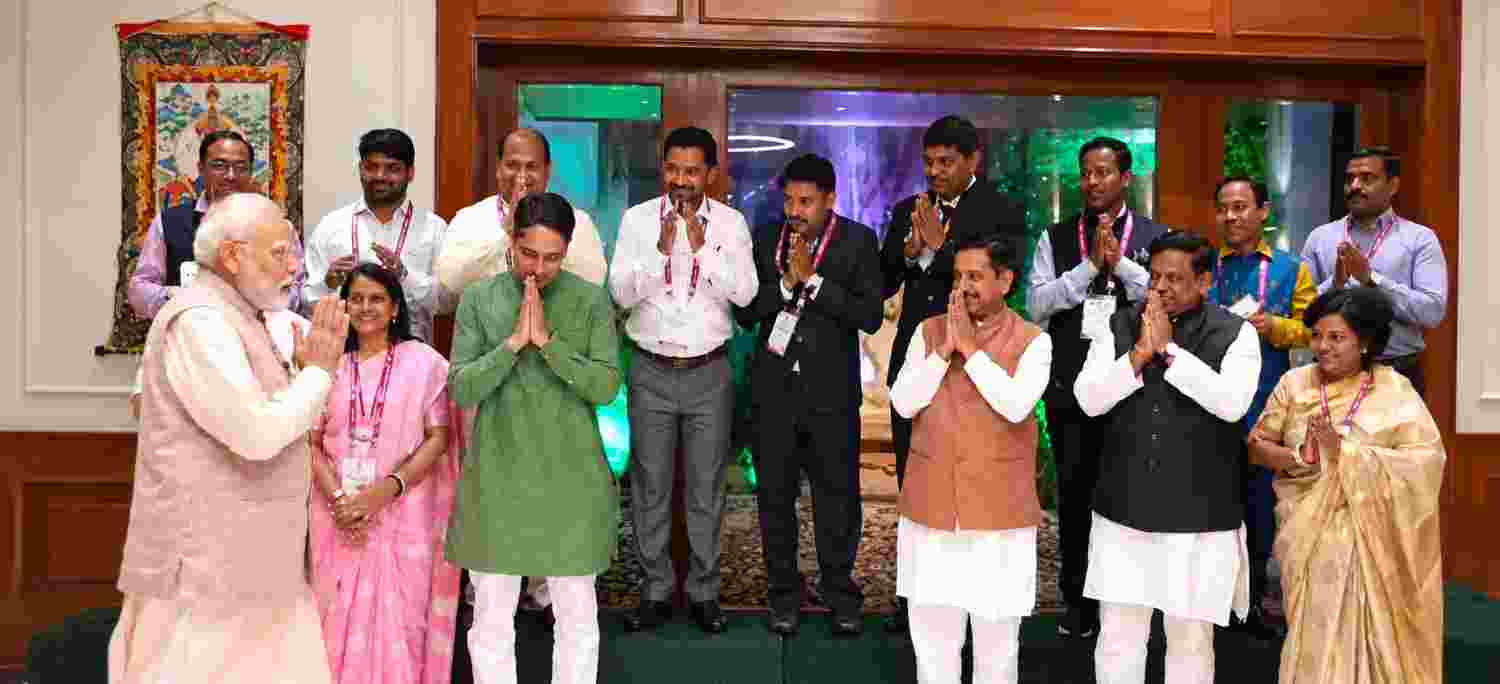
Prime Minister Narendra Modi on Saturday interacted with the winners of the National Teachers Awards at his residence at Lok Kalyan Marg, highlighting the expanding role of teachers in shaping children’s lives beyond classrooms and academic performance.
The interaction brought together 82 teachers and educators selected for this year’s National Teachers Awards across three departments. The awardees included teachers from school education, faculty members from higher educational institutions and polytechnics, and skill trainers working under the Ministry of Skill Development and Entrepreneurship.
During the meeting, the award-winning educators spoke about their professional experiences, innovative teaching methods and creative initiatives that have helped make classroom learning more engaging, practical and effective.
PM Modi Highlights Teachers’ Wider Role in Children’s Lives
Prime Minister Modi emphasised that teachers should not restrict their attention to students’ academic results. He urged educators to observe children’s behaviour, routines and everyday lives so that emerging concerns can be identified at an early stage.
He noted that changes in the traditional joint-family structure have increased the importance of teachers in children’s lives. With children spending significant portions of their day in educational institutions, teachers can play an important role in providing guidance, encouragement and emotional support.
The Prime Minister also highlighted the need for teachers to remain vigilant about the growing problem of drug use among young people. He called on educators to notice behavioural changes, understand the reasons behind them and support children who may be struggling with harmful habits.
According to Modi, teachers have a responsibility that extends beyond delivering lessons. Their ability to understand students and respond to their individual needs can help create a supportive environment where children feel encouraged to overcome difficulties.
Protecting Childhood and Channelising Curiosity
The Prime Minister stressed that protecting the innocence and curiosity of childhood should remain an important responsibility for teachers.
He said children generally share a natural sense of curiosity and a desire to explore the world around them. Teachers, he suggested, can make a lasting contribution by nurturing this curiosity and directing it towards constructive learning and development.
Rather than limiting children to textbook-based education, educators can encourage them to ask questions, experiment, discover new ideas and develop confidence in their abilities.
Modi’s message placed emphasis on the teacher as a mentor and guide, rather than only as an instructor responsible for completing a syllabus. Such an approach, he said, can help children develop into confident and responsible individuals.
PM Modi Raises Concern Over Excessive Screen Time
Screen usage among children was another major issue highlighted by the Prime Minister during the interaction.
Modi urged teachers to discuss children’s screen habits with parents, particularly the amount of time youngsters spend using mobile phones and other digital devices. He also asked educators to find out whether children continue using phones late into the night.
The Prime Minister suggested that excessive dependence on screens could be gradually reduced by encouraging children to participate in sports, physical games and creative pursuits.
Also Read: Explosions Rock Near Iran’s Kharg Island After Trump’s Pickaxe Mountain Threat
He stressed the importance of developing healthier and more engaging alternatives to prolonged screen use. Outdoor activities, games and creative interests can help children remain physically active while also encouraging social interaction and imagination.
National Education Policy and Learning Beyond Classrooms
Prime Minister Modi also referred to the National Education Policy (NEP) and its emphasis on taking education beyond conventional classroom boundaries.
He encouraged teachers to connect students with the real world and expose them to practical skills and different forms of work. Such experiences, he said, can help children understand how knowledge is applied in everyday life.
The Prime Minister also urged teachers to move beyond simply completing the prescribed syllabus. Education, he emphasised, should contribute to the development of values and character alongside academic knowledge.
In particular, he highlighted the importance of cultivating respect for the dignity of labour among children. Giving students opportunities to understand different professions and forms of work can help them appreciate the contribution made by people across society.
The interaction with the National Teachers Award winners underlined the broader expectations placed on educators in today’s changing social environment. From academic learning and practical skills to children’s behaviour, digital habits, values and personal development, teachers have an increasingly significant role in preparing the next generation.
The Prime Minister’s message also reinforced the idea that meaningful education extends beyond textbooks and examinations. By nurturing curiosity, protecting childhood, encouraging healthy habits and connecting learning with real-life experiences, teachers can help children develop the knowledge, confidence and values needed to face the future.
Click here to join our WhatsApp Channel for real-time news updates and exclusive coverage.