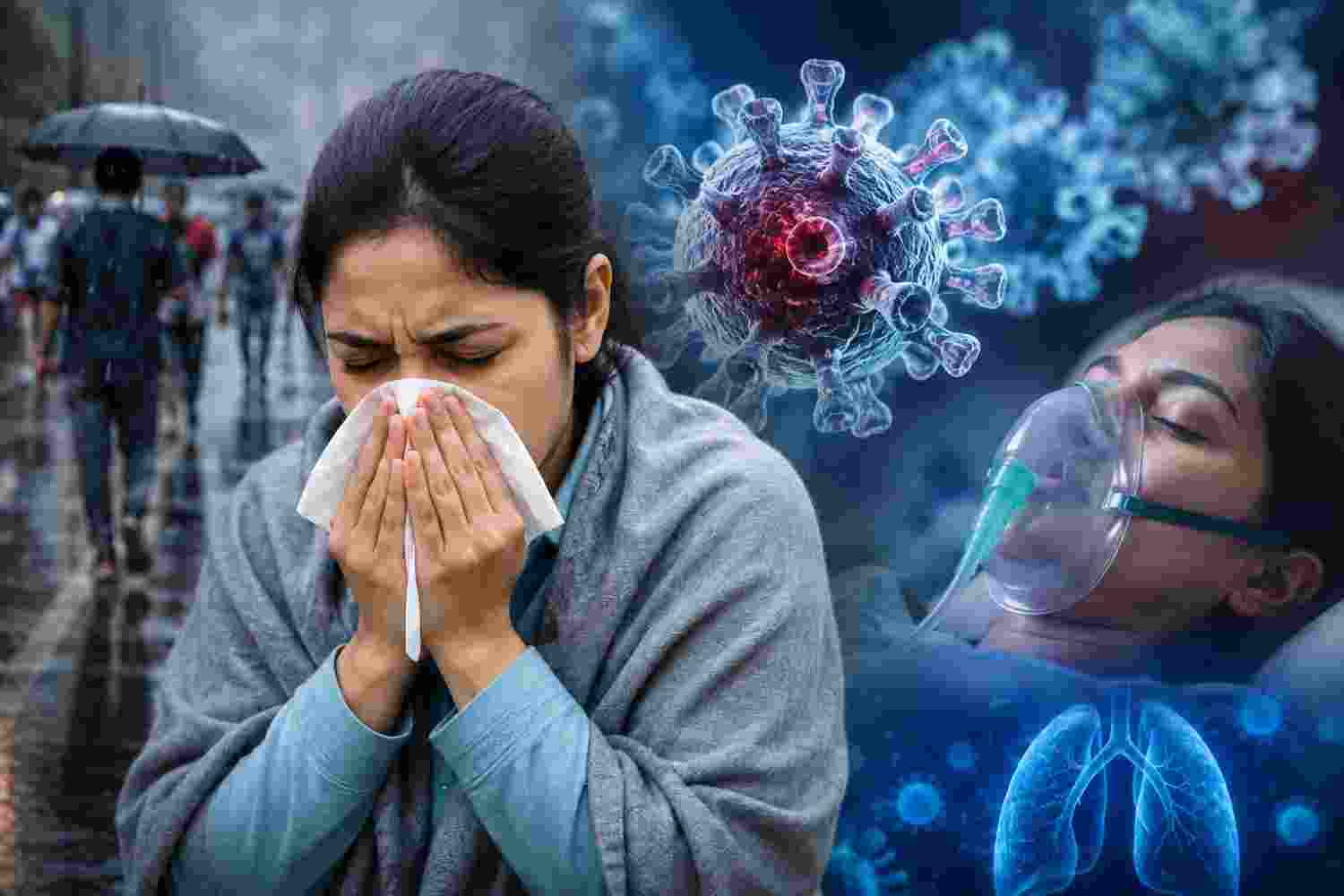
Delhi-NCR is witnessing a worrying rise in H1N1 infections and other respiratory illnesses as humid and fluctuating monsoon weather creates favourable conditions for seasonal infections. Doctors across the region are reporting an increase in patients with flu-like symptoms, while some cases have progressed to breathing difficulties and falling oxygen levels.
The latest situation has raised concern among medical professionals, particularly because several doctors and even the head of a Delhi government hospital have reportedly tested positive for H1N1. While health experts have advised people not to panic, they are urging residents to remain alert and seek timely medical attention when symptoms become severe or persistent.
H1N1 cases increase during monsoon
H1N1, commonly referred to as swine flu, is a respiratory infection caused by an influenza A virus. The monsoon season often sees an increase in respiratory infections because changing temperatures, high humidity and crowded indoor environments can facilitate the transmission of viruses.
Doctors say Delhi-NCR is currently seeing a combination of H1N1, seasonal influenza and other viral respiratory infections. This makes it difficult to identify the cause of symptoms based solely on fever or cough, as several illnesses can produce similar signs.
Delhi records a sharp jump in infections
Delhi has recorded a substantial increase in H1N1 infections this year. According to data cited in recent reports, the national capital had registered around 1,344 H1N1 cases by early August 2026, compared with 229 cases during the corresponding period last year.
The increase represents nearly a six-fold rise and has prompted greater attention from doctors and health authorities, particularly as hospitals continue to receive patients with influenza-like symptoms.
The rise is not limited to Delhi. Mumbai, Bengaluru and Chennai have also reported increased influenza activity, although the intensity varies from one region to another. Kerala has reported particularly high influenza numbers this year, including fatalities, according to reports citing The Hindu.
Falling oxygen levels raise concern
Doctors in Delhi-NCR have reported patients experiencing more serious respiratory symptoms, including breathlessness and declining oxygen saturation. Such symptoms can indicate that an influenza infection has progressed beyond a routine viral illness and may require urgent medical assessment.
H1N1 symptoms can include sudden fever, dry cough, sore throat, headache, chills, body aches and pronounced fatigue. Some patients may also experience breathing difficulties, while gastrointestinal symptoms such as vomiting or diarrhoea can occur in certain cases.
Medical experts stress that not every person with fever or cough necessarily has H1N1. Other respiratory viruses can cause comparable symptoms, making clinical evaluation and testing important when symptoms are severe, prolonged or unusual.
Doctors urge vulnerable people to stay alert
Children, older adults and people with underlying health problems may require additional caution when they develop flu-like symptoms. Reports from other Indian cities have also highlighted concerns involving children, particularly those with asthma or other chronic conditions.
Also Read: India-Japan Defence Deal: Rajnath Singh, Koizumi Sign Major Maritime Security Pact
Doctors have advised families to monitor symptoms closely rather than ignoring persistent fever, severe weakness, breathing difficulties or reduced oxygen levels. Early medical evaluation can help determine whether specialised treatment is required.
Medical professionals have also emphasised that antiviral treatment, when prescribed, can be more effective when started early in appropriate patients. However, people should consult a doctor rather than self-medicate.
Respiratory hygiene remains crucial
With H1N1 and other respiratory infections circulating, doctors are encouraging people to follow basic preventive measures. Maintaining hand hygiene, covering the mouth and nose while coughing or sneezing, avoiding close contact when unwell and staying away from crowded settings when experiencing significant respiratory symptoms can help reduce transmission.
People who are sick should also avoid sending symptomatic children to school or unnecessarily exposing colleagues and family members to infection. Such precautions become particularly important in crowded classrooms, offices and public transport.
No need for panic, experts say
Despite the increase in H1N1 infections, health experts have cautioned against unnecessary panic. The current rise is occurring alongside a broader increase in seasonal respiratory illnesses associated with monsoon conditions, and not every flu-like illness is necessarily caused by H1N1.
However, doctors say the rising number of infections should not be dismissed. Persistent high fever, worsening cough, severe weakness, breathlessness or falling oxygen levels warrant prompt medical attention.
For Delhi-NCR residents, the key message from health experts is therefore awareness without alarm. With seasonal infections increasing, recognising warning signs early, maintaining respiratory hygiene and seeking timely medical advice can help prevent mild illnesses from developing into serious complications.
Click here to join our WhatsApp Channel for real-time news updates and exclusive coverage.