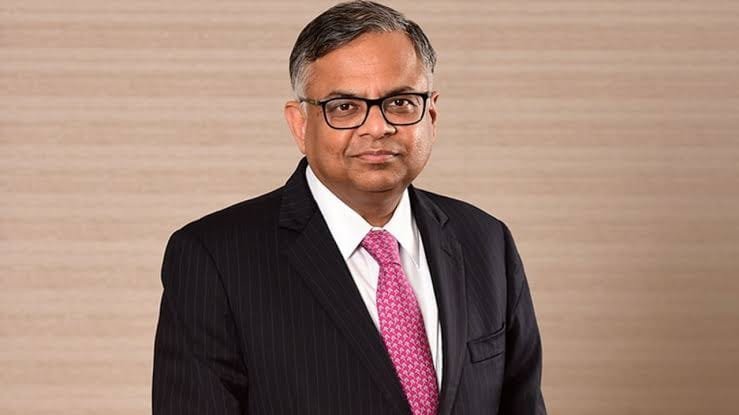
In a major development that has sent shockwaves through India’s corporate and stock markets, N Chandrasekaran has decided not to seek reappointment as chairman of Tata Sons after his current term ends in February 2027. The announcement comes just days before the Tata Sons Annual General Meeting (AGM), scheduled for August 18, triggering a sharp sell-off across several Tata Group companies.
The development marks a significant leadership transition for one of India’s most influential business conglomerates. Chandrasekaran, who has led Tata Sons since 2017, informed the company’s board that he would not offer himself for another term and urged directors to begin the succession process quickly to ensure a smooth transition.
N Chandrasekaran announces exit from Tata Sons
Chandrasekaran’s decision does not mean an immediate departure from the Tata Group. His current term as Tata Sons chairman runs until February 20, 2027. However, he has made it clear that he will not seek reappointment when the tenure expires.
In his statement, Chandrasekaran said he had completed 40 years of professional life with the Tata Group and described his decade-long leadership of Tata Sons as both an honour and a major responsibility. He also asked the board to decide on his successor soon, citing the importance of leadership clarity for employees, investors, business partners and other stakeholders.
The announcement comes after months of uncertainty surrounding his continuation at the top of Tata Sons. According to reports, a proposal concerning the extension of his tenure had been discussed earlier this year, but the process did not reach a final resolution. Chandrasekaran said the absence of clarity had continued for around six months.
Tata Group stocks tumble after leadership shock
The biggest immediate impact was visible in the stock market. Tata Group companies came under heavy selling pressure after the leadership announcement, with several prominent stocks declining sharply during Wednesday’s trading session.

Tata Consultancy Services (TCS), the group’s largest listed technology company, emerged as one of the biggest losers. TCS shares fell as much as 4.84% to around ₹2,322 on the BSE, according to market data cited in reports. Tata Motors also declined, while Tejas Networks, Tata Consumer Products, Tata Communications and Tata Steel were among other Tata-linked companies facing selling pressure.
Reports indicated that Tata Group companies collectively lost a substantial amount of market value during the sell-off, reflecting investor concern over the leadership transition and uncertainty surrounding the conglomerate’s future direction.
Also Read — Houthi Attack Rocks Bab el-Mandeb: 4 Crew Members Killed In Deadly Missile Strike
The market reaction also came against a broader backdrop of weakness in Indian equities, meaning the fall in Tata stocks cannot be attributed entirely to Chandrasekaran’s announcement. Nevertheless, the sudden leadership uncertainty intensified selling in several Tata counters.
Why Chandrasekaran’s exit matters for Tata Group
Chandrasekaran has played a central role in shaping Tata Group’s modern business strategy. Since becoming Tata Sons chairman in 2017, he has overseen the conglomerate’s expansion and investment across several emerging and strategically important sectors.
The Tata Group today has interests spanning technology, automobiles, aviation, consumer products, electronics, semiconductors, batteries and digital businesses. Tata Sons, the principal investment holding company of the group, has a controlling role across more than 30 major companies, while Tata Trusts hold approximately 66% of Tata Sons.
His departure therefore creates an important succession challenge at a time when several major Tata businesses and investment projects are at critical stages.
Tata Trusts and leadership uncertainty
The leadership issue has also been linked to differences involving Tata Trusts chairman Noel Tata. Reports have highlighted uncertainty surrounding Chandrasekaran’s reappointment and disagreements over aspects of the group’s performance and newer businesses.
The upcoming August 18 AGM was expected to be an important moment for determining the future leadership structure. Chandrasekaran’s decision to step aside from seeking another term could now reduce some of that uncertainty while simultaneously opening a major succession battle.
The next chairman will inherit responsibility for guiding Tata Sons through a period of ambitious investment, intense global competition and rapidly changing business conditions.
What happens next?
The immediate focus will now shift to the Tata Sons board and the process of identifying Chandrasekaran’s successor. The chairman has specifically asked the board to make a decision soon so that there is sufficient time for an orderly transition.
For investors, the key question will be whether the new leadership can maintain strategic continuity while addressing concerns surrounding capital allocation, emerging businesses and the group’s long-term growth plans.
For Tata Group employees, shareholders and markets, Chandrasekaran’s decision represents the end of an important chapter. While his tenure will continue until February 2027, the succession process has effectively begun.
The sharp reaction in Tata stocks demonstrates just how closely investors are watching the transition. As the August 18 AGM approaches, the search for the next Tata Sons chairman is likely to remain one of the biggest corporate stories in India’s markets.
Click here to join our WhatsApp Channel for real-time news updates and exclusive coverage.