
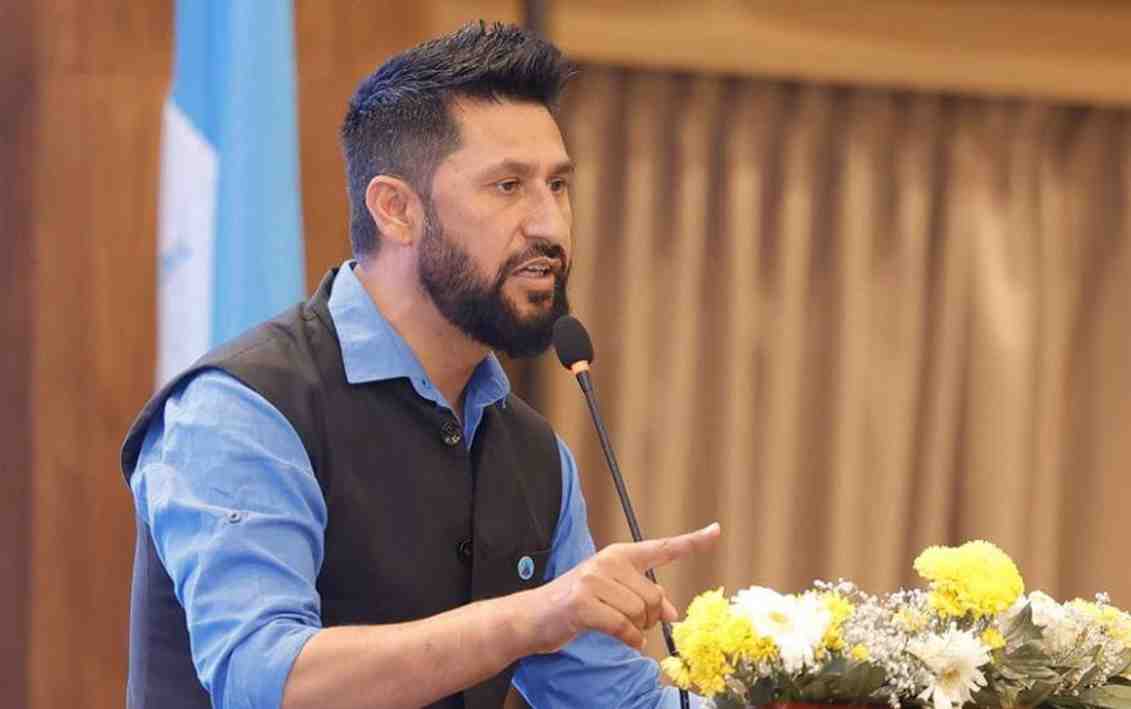
A New Chapter in Nepal-India Engagement
The official visit of Honorable Rabi Lamichhane, President of the Rastriya Swatantra Party (RSP), to India from June 1 to June 5 marks a significant milestone in contemporary Nepal-India relations. Invited by Shri Nitin Nabin, President of the Bharatiya Janata Party (BJP), this is the first major India visit by the RSP leadership since the formation of the new government under Prime Minister Balen Shah in Nepal.
Accompanied by an official delegation comprising Hon. Bipin Kumar Acharya (Joint General Secretary and Member of the House of Representatives), Hon. Deepak Bohora (Secretariat Member and Member of the House of Representatives), Mrs. Nikita Poudel, and Mr. Pradip Acharya, the visit is expected to carry both political and diplomatic significance.
At a time when Nepal is undergoing a major political transition and South Asia is witnessing rapid geopolitical shifts, this visit provides an important opportunity to redefine bilateral priorities and strengthen mutual trust between the two neighbouring nations.
Political Importance of the Visit
Rabi Lamichhane remains one of the most influential political figures in Nepal and is widely regarded as the driving force behind the Rastriya Swatantra Party. His rise has been associated with demands for political reform, transparency, and accountability in governance.
The visit comes amid internal debates within the party and evolving political equations in Kathmandu. Therefore, the India tour is not merely a diplomatic engagement but also an opportunity to demonstrate political maturity, regional vision, and statesmanship.
For India, engaging with emerging political leadership in Nepal is equally important as it seeks to maintain strong relations with all democratic stakeholders in the Himalayan nation.
A Timely Diplomatic Opportunity
The timing of the visit is particularly noteworthy. Just days before the visit, Prime Minister Balen Shah made a significant statement in Nepal’s Parliament, acknowledging that historical border-related concerns involve complexities on both sides and that Nepal, too, must approach territorial issues with honesty and responsibility.
Such remarks have opened the door for a more pragmatic and constructive discussion on long-standing bilateral concerns. This provides an opportunity for leaders from both countries to move beyond emotional narratives and focus on practical solutions.
Key Issues Expected to Be Discussed
1. Border Management and Territorial Concerns
Issues relating to Kalapani, Lipulekh, Limpiyadhura, and other border-sensitive areas are likely to remain important topics of discussion.
Rather than allowing these issues to become sources of recurring tension, both nations have an opportunity to strengthen institutional mechanisms for dialogue, technical verification, and peaceful resolution.
2. Economic and Trade Cooperation
India remains Nepal’s largest trading partner and one of its most important development partners.
The delegation may explore:
Trade facilitation measures
Reduction of non-tariff barriers
Cross-border infrastructure projects
Investment opportunities
Industrial cooperation
Digital economy partnerships
Tourism promotion
3. Hydropower and Energy Security
Nepal possesses enormous hydropower potential, while India continues to experience increasing energy demand.
Discussions could focus on:
Power purchase agreements
Cross-border transmission infrastructure
Joint investment in hydropower projects
Regional energy connectivity
A stronger energy partnership would benefit both economies.
4. Connectivity and Infrastructure Development
Connectivity remains central to future Nepal-India relations.
Potential areas of cooperation include:
Railway expansion
Integrated check posts
Road corridors
Air connectivity
Digital infrastructure
Cross-border logistics hubs
Enhanced connectivity would facilitate trade, tourism, and people-to-people interaction.
5. Youth, Employment, and Skill Development
Both India and Nepal have large youth populations.
The visit may provide an opportunity to discuss:
Educational exchanges
Technical training programs
Start-up collaboration
Technology partnerships
Employment opportunities
Such initiatives could empower the next generation of leaders and entrepreneurs.
6. Security and Regional Stability
The open border between Nepal and India is unique in the world and requires continuous cooperation.
Topics may include:
Countering transnational crime
Human trafficking prevention
Cybersecurity cooperation
Intelligence coordination
Border management modernization
7. Cultural and Civilizational Relations
No relationship in South Asia is as deeply rooted in history, culture, and faith as that of Nepal and India.
President Lamichhane’s proposed visit to Ayodhya carries symbolic significance and reflects the civilizational links that bind the two nations through shared traditions, religious heritage, and people-to-people connections.
Interaction with the Nepali Diaspora in India
An important aspect of the visit is the planned interaction with the Nepali community residing in India.
Millions of Nepali citizens contribute to India’s economy and society while maintaining strong emotional ties with their homeland. Engaging with them provides an opportunity to understand their aspirations, concerns, and expectations from the new political leadership in Nepal.
The diaspora can play a vital role in strengthening economic, educational, and cultural relations between the two countries.
Beyond Diplomacy: Building Strategic Trust
The success of this visit should not be measured solely by official meetings or ceremonial engagements. Its true significance lies in the possibility of rebuilding strategic trust between Kathmandu and New Delhi.
Both nations face common challenges and opportunities:
Climate change
Water resource management
Regional security
Economic development
Infrastructure modernization
Youth employment
A forward-looking partnership focused on shared prosperity can transform the relationship from one driven by periodic disputes to one guided by long-term strategic cooperation.
Conclusion
Rabi Lamichhane’s first official visit to India as the leader of Nepal’s most prominent emerging political force comes at a crucial moment in the history of Nepal-India relations.
The visit offers a rare opportunity to address unresolved issues, expand cooperation, deepen mutual understanding, and establish a roadmap for the future.
As both countries navigate changing regional dynamics, constructive dialogue and political maturity will be essential.
If utilized effectively, this visit could become a landmark moment that strengthens not only diplomatic ties but also the enduring friendship between the peoples of Nepal and India.
The future of Nepal-India relations lies not in revisiting old disagreements but in jointly building new opportunities for peace, prosperity, and regional stability.




Excellent
Perfect explanation and very positive view
Wow nice article