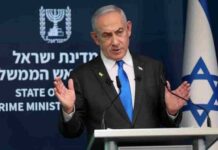
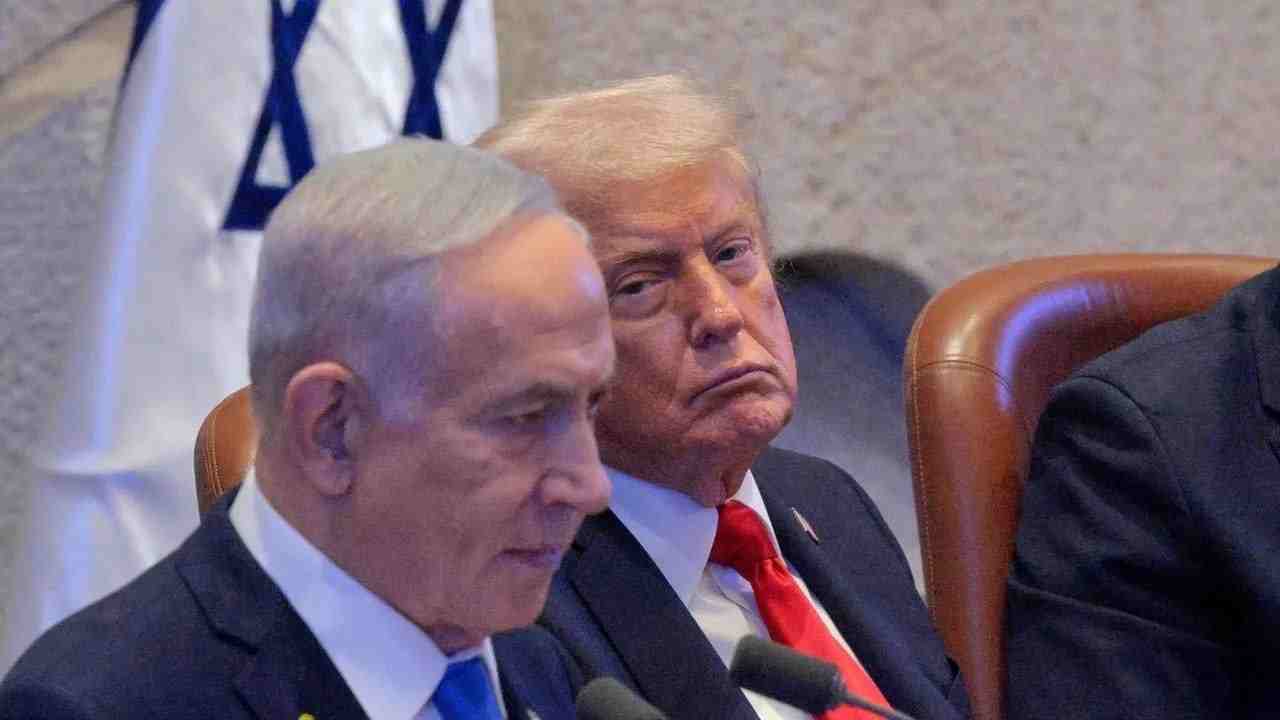
US President Donald Trump has publicly rejected reports that Israeli Prime Minister Benjamin Netanyahu is attempting to influence Washington’s decision on a potential sale of F-35 stealth fighter jets to Turkey. Delivering a firm response ahead of high-level discussions with Netanyahu in Washington, Trump declared that no foreign leader would dictate what military equipment the United States chooses to sell, underscoring America’s authority over its own defence policies.
The remarks have reignited debate over one of the most sensitive defence issues involving the United States, Israel, and Turkey. At the heart of the controversy is the possible transfer of Lockheed Martin’s advanced F-35 Lightning II fighter aircraft to Turkey—a NATO ally that was previously removed from the multinational F-35 programme following its purchase of Russia’s S-400 missile defence system.
Trump’s comments have drawn international attention as they come at a time when regional security dynamics in the Middle East continue to evolve, with Washington balancing its relationships with both Israel and Turkey.
Trump Says US Will Decide Its Own Military Sales
Responding to questions about Israel’s reported concerns, Trump stressed that decisions regarding American defence exports would be made solely by the United States.
He said that nobody tells him what America should or should not sell, making it clear that US strategic interests—not external pressure—would guide any future military agreements.
Although Trump did not confirm that an F-35 sale to Turkey has been approved or is imminent, his remarks signalled that Washington remains open to making independent decisions on defence cooperation without allowing allies to determine US policy.
The statement also reflects Trump’s broader approach to foreign policy, in which he has frequently emphasised American sovereignty in diplomatic and military decision-making.
Netanyahu Reportedly Raises Security Concerns
According to reports, Israeli Prime Minister Benjamin Netanyahu has expressed reservations about the possibility of Turkey receiving fifth-generation fighter aircraft from the United States.
Israel has long maintained what is known as a qualitative military edge in the Middle East, a principle supported by successive US administrations. The policy ensures that Israel retains access to the region’s most advanced military capabilities to preserve its security advantage.
Israeli officials reportedly believe that providing F-35 aircraft to Turkey could alter the regional military balance, especially given the often strained relationship between Ankara and Jerusalem over issues including Gaza, regional diplomacy, and broader geopolitical disagreements.
While neither government has officially detailed the private discussions, the issue has emerged as one of several strategic matters surrounding the Trump-Netanyahu meeting.
Turkey Continues to Seek Return to F-35 Programme
Turkey was once an important participant in the multinational F-35 development programme and had planned to purchase more than 100 aircraft.
However, Ankara was removed from the programme after acquiring the Russian-made S-400 air defence system. Washington argued that operating the S-400 alongside the F-35 could compromise the aircraft’s sensitive technology and create security risks for NATO.
Since then, Turkish leaders have repeatedly sought to restore defence ties with the United States and reopen discussions regarding advanced fighter aircraft.
Recent diplomatic engagement between Washington and Ankara has fuelled speculation that military cooperation could improve if long-standing disputes are resolved, although no formal decision regarding F-35 exports has been announced.
Strategic Importance of Turkey
Despite years of disagreements, Turkey remains one of NATO’s most strategically significant members.
Its geographic location linking Europe, the Middle East, and the Black Sea makes it a key partner in regional security operations. American officials have often described Turkey as an essential ally despite differences over defence procurement, Syria, and relations with Russia.
Supporters of closer US-Turkey defence cooperation argue that strengthening Turkey’s air force would reinforce NATO’s southern flank and contribute to collective security.
However, critics insist that restoring access to advanced US military technology should only occur after concerns surrounding Turkey’s defence policies and previous purchases of Russian military equipment are fully addressed.
Meeting Highlights Broader Regional Challenges
The disagreement over the possible F-35 sale comes as Trump and Netanyahu continue discussions on several major regional issues, including Iran, the conflict in Gaza, broader Middle East stability, and future security cooperation.
Also Read: Bhopal On Alert as 10 People Go Missing Within 24 Hours, Police Intensify Search
Although the United States and Israel remain close strategic partners, Trump’s comments indicate that differences can emerge when American national interests intersect with the concerns of key allies.
Analysts say Washington faces the difficult task of maintaining Israel’s security while also preserving strong ties with Turkey, another important regional partner and NATO member.
Balancing these competing interests has become increasingly complex as geopolitical tensions continue to reshape alliances across the Middle East.
Future Decision Still Unclear
At present, the United States has not formally approved the sale of F-35 fighter jets to Turkey, and no official agreement has been announced.
Nevertheless, Trump’s remarks suggest that his administration intends to make defence export decisions independently, regardless of objections from allied governments.
Whether Washington ultimately restores Turkey’s access to the F-35 programme or pursues another form of military cooperation remains uncertain. Any decision is expected to carry significant implications for NATO, Middle East security, and the future of US relations with both Israel and Turkey.
For now, Trump’s message has made one point unmistakably clear: the United States will determine its own defence policies, even when they involve some of its closest international partners.
Click here to join our WhatsApp Channel for real-time news updates and exclusive coverage.