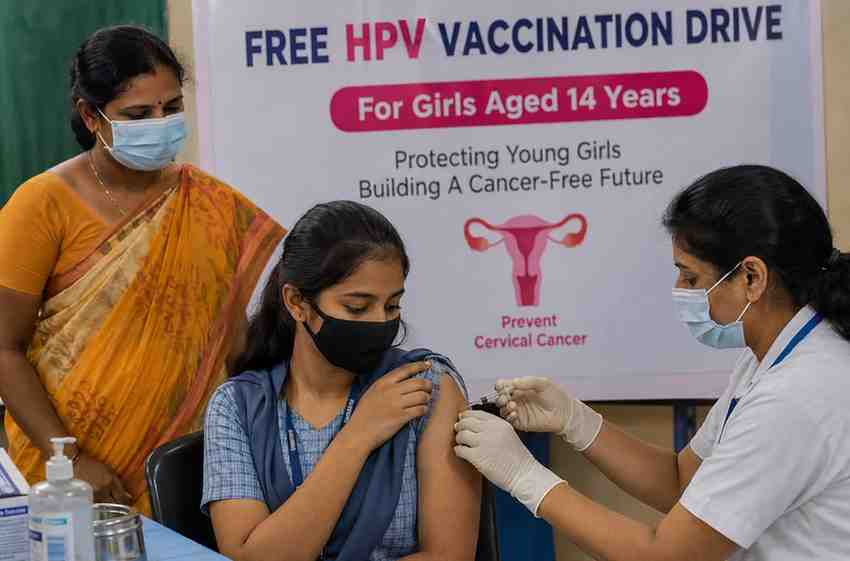
In a significant step towards improving women’s health and preventing cervical cancer, the West Bengal government has launched a free Human Papillomavirus (HPV) vaccination campaign for adolescent girls aged 14 years.
The initiative, inaugurated on Saturday by Chief Minister Suvendu Adhikari, seeks to provide protection against one of the leading causes of cervical cancer among women. Health officials believe the campaign will play a crucial role in reducing future cancer cases while creating greater awareness about preventive healthcare.
The vaccination programme will be implemented across 881 government-run health facilities throughout the state. These include medical colleges, district hospitals, sub-divisional hospitals, state general hospitals, and block primary health centres. By utilizing an extensive healthcare network, authorities aim to ensure that eligible beneficiaries from both urban and rural regions can access the vaccine without financial burden.
According to government estimates, nearly 7.65 lakh girls aged 14 years are expected to benefit from the campaign. Health workers, medical professionals, and local authorities have been instructed to coordinate awareness drives and vaccination sessions to maximize participation. Officials are also encouraging parents and guardians to support the initiative, emphasizing the long-term health benefits associated with HPV immunisation.
The launch of the Bengal programme comes shortly after India introduced a nationwide HPV vaccination campaign earlier this year. The national initiative aims to vaccinate approximately 1.15 crore girls annually across various states and union territories. Public health experts have described the vaccination drive as a landmark effort in combating cervical cancer, a disease that continues to affect thousands of families every year.
Cervical cancer remains one of the most serious health challenges facing women in India. Medical studies indicate that it is the second most common cancer among Indian women. Recent estimates suggest that more than 1.2 lakh new cases are diagnosed annually, while nearly 80,000 women lose their lives to the disease each year. These figures highlight the urgent need for preventive measures, particularly among younger populations who can benefit most from vaccination.
The Human Papillomavirus is a common viral infection that can be transmitted through close physical contact. Certain strains of the virus are known to cause cervical cancer if left untreated over time. However, medical experts have consistently maintained that timely vaccination significantly reduces the risk of developing the disease. As a result, HPV vaccines are now considered one of the most effective tools in cancer prevention.
Despite advances in healthcare, cervical cancer continues to place a heavy burden on India’s public health system. The impact is often more severe among low-income families who may have limited access to regular screening, early diagnosis, and treatment facilities. Health authorities believe that expanding vaccination coverage can help bridge this gap by preventing infections before they develop into serious medical conditions.
The campaign also aligns with the broader objectives outlined by the World Health Organization (WHO) for eliminating cervical cancer as a public health problem. The WHO has called for vaccinating 90 percent of girls, screening 70 percent of women, and ensuring treatment for 90 percent of pre-cancerous and cancer cases. Experts say achieving these targets could dramatically reduce cervical cancer rates worldwide in the coming decades.
Medical professionals have welcomed West Bengal’s initiative, describing it as an investment in the future health and well-being of young girls. Beyond providing immediate protection, the programme is expected to increase awareness about women’s health, encourage preventive medical practices, and strengthen confidence in public healthcare systems.
As vaccination centres begin administering doses across the state, health authorities are optimistic about achieving high participation rates. If successful, the campaign could serve as a model for other regions, demonstrating how large-scale preventive healthcare initiatives can save lives and reduce the burden of disease. By focusing on early intervention and awareness, West Bengal has taken an important step toward protecting the next generation from a preventable form of cancer.