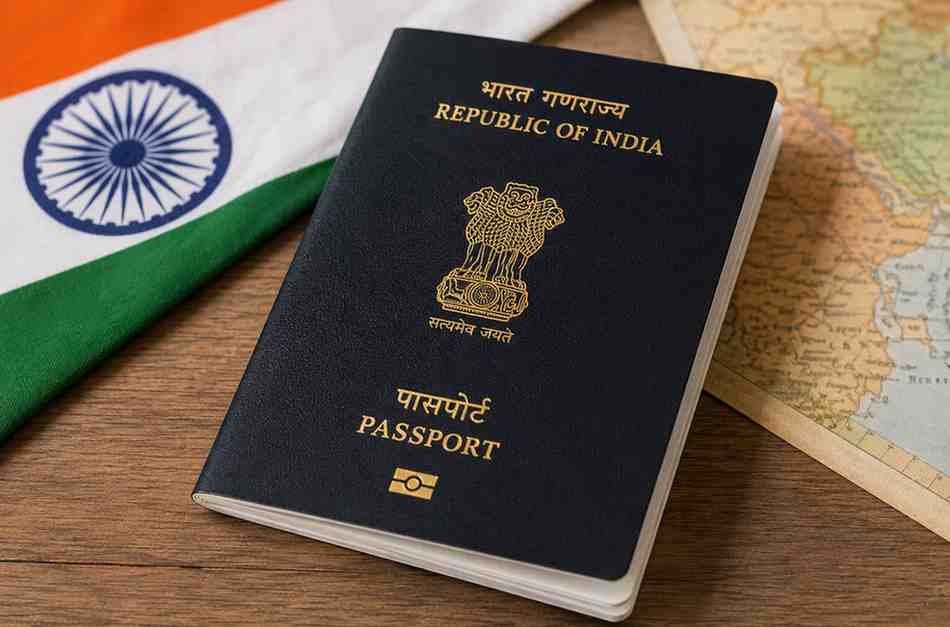
NEW DELHI: The Ministry of External Affairs (MEA) has clarified that an Indian passport is primarily a government-issued travel document meant to regulate the departure of Indian citizens from the country under the Passports Act, 1967. The clarification comes amid an ongoing debate over whether a passport can be treated as conclusive proof of Indian citizenship, particularly in discussions surrounding electoral roll verification.
Addressing the weekly media briefing, MEA spokesperson Randhir Jaiswal said passports are issued only after an established verification process. However, he emphasized that the legal purpose of the passport is defined by the Passports Act and relates to facilitating international travel and regulating the departure of Indian citizens from India.
Passport Issued Only After Verification
The ministry stressed that obtaining an Indian passport involves a detailed verification mechanism before issuance. Applicants undergo document scrutiny and police verification wherever required before the government grants the travel document.
Jaiswal noted that the passport is not issued casually but only after due verification in accordance with the law and established procedures. The clarification sought to underline that the issuance process remains rigorous, even though the passport’s legal purpose is distinct from serving as a standalone citizenship certificate.
Debate Triggered by Electoral Roll Verification
The latest clarification comes against the backdrop of questions over whether an Indian passport should be accepted as proof of citizenship during the Election Commission’s Special Intensive Revision (SIR) of electoral rolls being conducted in several states.
The issue gained attention after earlier remarks made during Passport Seva Divas on June 24, when senior MEA officials described the passport as primarily a travel document rather than a document specifically intended to establish citizenship. Those comments sparked political debate and public discussion, prompting the ministry to elaborate on its legal position.
What the Passports Act Says
According to the MEA, the legal framework governing passports is laid down in the Passports Act, 1967. The legislation states that passports are issued by the Government of India to regulate the departure of Indian citizens and certain other persons from the country.
The ministry reiterated that this statutory purpose should not be confused with the broader legal process through which citizenship is determined under India’s citizenship laws. The clarification focuses on the function assigned to passports by law rather than questioning the identity of passport holders.
Less Than Eight Percent of Indians Hold Passports
During the briefing, the MEA also highlighted that fewer than eight percent of India’s population currently possesses a passport.
Also Read: PM Modi Helped Prevent Putin’s Nuclear Move In Ukraine, Claims Polish Minister
The ministry pointed out that because passport ownership is limited to a relatively small section of the population, it cannot practically serve as a universal document for all citizens in administrative exercises involving the entire population.
Political Reactions Continue
The clarification has continued to fuel political debate, with opposition leaders questioning how a document issued after extensive government verification cannot automatically be regarded as proof of citizenship.
The government, however, has maintained that there is a distinction between the passport’s issuance process and its legal purpose under the Passports Act. Officials insist that while passports are granted only after verification, the document itself is designed primarily for international travel and regulating departure from India.
Understanding the Difference
Legal experts note that many government-issued documents serve different statutory purposes. A passport verifies identity for international travel and is issued only after prescribed checks, but citizenship may also be determined under separate legal provisions and documentary requirements depending on the context.
The MEA’s clarification therefore distinguishes between the administrative process of issuing passports and the legal framework governing citizenship. This distinction has become central to the current public discussion surrounding voter verification and documentation.
Government Reaffirms Existing Position
The ministry has not announced any change in passport issuance rules or citizenship laws. Instead, it has reiterated the government’s long-standing interpretation of the Passports Act, 1967.
Officials continue to maintain that Indian passports remain valid government-issued travel documents issued after due verification, while questions relating to citizenship are governed by the applicable legal framework and procedures under Indian law. As debate over documentation and citizenship continues, the MEA’s clarification is expected to remain an important reference point in discussions surrounding administrative and electoral processes.
Click here to join our WhatsApp Channel for real-time news updates and exclusive coverage.