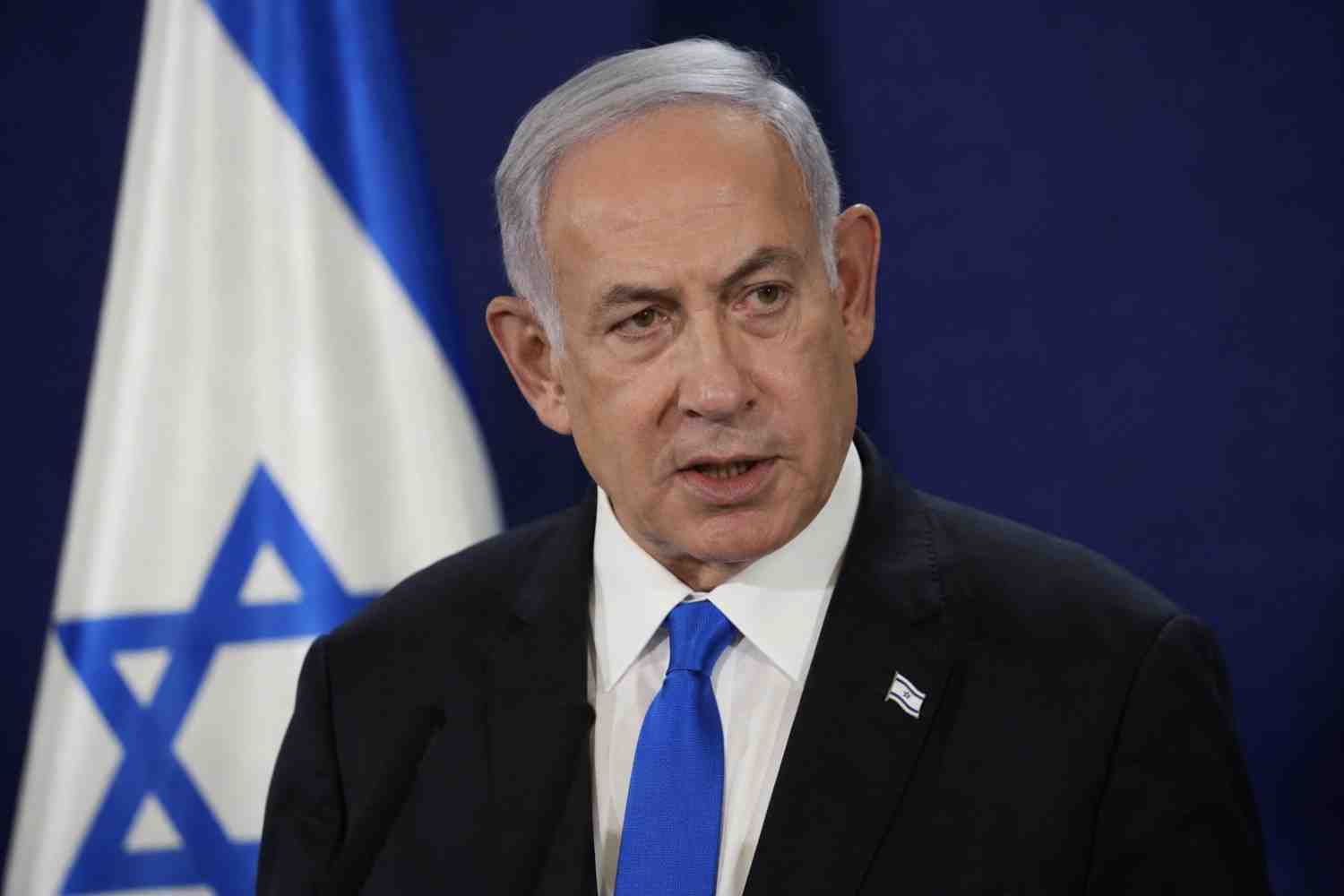
Israeli Prime Minister Benjamin Netanyahu delivered a forceful address at the state memorial ceremony for the late Ze’ev Jabotinsky at Mount Herzl in Jerusalem, declaring that preventing Iran from obtaining nuclear weapons remains one of his government’s highest priorities.
Making one of the strongest statements of his speech, Netanyahu pledged, “As long as I am the Prime Minister of Israel, Iran will not obtain nuclear weapons.” The remark underscored Israel’s longstanding opposition to Iran’s nuclear programme and reaffirmed the government’s commitment to taking whatever measures it considers necessary to safeguard the country’s security.
The Prime Minister used the memorial ceremony not only to honour Jabotinsky’s legacy but also to explain how his political philosophy continues to influence Israel’s security doctrine during one of the country’s most challenging periods.
Honouring the Legacy of Ze’ev Jabotinsky
Opening his speech, Netanyahu thanked those gathered for preserving the legacy of Ze’ev Jabotinsky, describing him as one of the founding figures of modern Zionism whose ideas continue to shape Israel today.
Reflecting on Jabotinsky’s writings, Netanyahu revisited the age-old debate over “the sword or the pen,” asking whether military victories or the power of ideas leaves the greater mark on history.
According to Netanyahu, Jabotinsky rejected the idea that military strength and intellectual leadership are opposing forces.
“The sword protects the nation and its values, while the pen grants meaning and heritage to our national existence,” Netanyahu said while describing Jabotinsky’s philosophy.
The Israeli leader noted that this year marks 100 years since Jabotinsky completed his influential novel Samson, which he described as a powerful symbol of courage, resilience and national determination.
Drawing Inspiration from Samson
Netanyahu used the biblical figure of Samson as a metaphor for Israel’s modern military posture. He recalled that Samson fought Israel’s enemies, including in Gaza, and described him as a symbol of extraordinary strength.
Referring to Israel’s recent military operations, Netanyahu said, “We have done the same this past year, through Operations Rising Lion and Roaring Lion, in which we struck severe blows against the terrorist regime in Iran and its proxies.”
He also cited Jabotinsky’s famous instruction to “Gather iron,” saying Israel is determined to strengthen its military capabilities while expanding domestic defence manufacturing.
“Israel must establish an independent weapons-production infrastructure,” he said, while also expressing gratitude for continued military assistance from the United States.
Praise for Israeli Forces
Netanyahu praised Israeli soldiers, commanders and security personnel, saying they had exceeded expectations during what he referred to as the “War of Redemption.”
He stated that the younger generation had demonstrated remarkable courage and sacrifice throughout the conflict.
“Our heroic fighters acted step-by-step with immense daring on land, in the air and at sea to crush the Iranian axis,” he said.
The Prime Minister also paid tribute to the late Avraham Azoulay of the Engineering Corps, who was killed during military operations in Gaza. Netanyahu referenced a recently composed song dedicated to Azoulay and fellow engineering soldiers, describing them as the “new Samsons” of Israel.
Revisionism and a New Security Doctrine
A significant portion of Netanyahu’s speech focused on Jabotinsky’s ideology of Revisionism, which he described as a willingness to challenge existing political realities and reshape national strategy.
Netanyahu argued that his government has adopted a similar approach in response to the October 7 attacks. “We have made a fundamental revision to our security doctrine,” he declared.
According to the Prime Minister, Israel has abandoned what he called a policy of containment and instead adopted a strategy of proactively confronting threats.
He claimed Israel has established buffer zones beyond its borders, stating:
“The Gaza envelope is now inside Gaza. The Lebanon envelope is inside Lebanon. The Golan envelope is inside Syria.” Netanyahu presented these measures as necessary to prevent future attacks against Israeli communities.
Warning to Iran
The Israeli Prime Minister issued a direct warning to Iranian leaders, stressing that Israel would respond decisively to any future aggression.
“Do not mistake us. If we are attacked, we will respond with power. But it will not be a replay. It will be a different event altogether, and even more powerful.”
He said Israel had demonstrated its willingness to strike hostile targets wherever necessary and insisted that the country would continue maintaining a high level of military readiness.
Regional Cooperation and Strategic Alliances
Beyond military operations, Netanyahu highlighted Israel’s growing diplomatic engagement with countries across the region and elsewhere.
He argued that Israel’s strengthened military position has encouraged more governments to develop closer ties.
“This cooperation is growing stronger behind the scenes. It is happening, and not just in one or two countries.”
According to Netanyahu, these relationships could eventually pave the way for broader regional normalisation and lasting peace.
The ‘Iron Wall’ in Modern Times
Netanyahu also revisited Jabotinsky’s famous concept of the “Iron Wall,” explaining how it has evolved in the modern era.
Rather than viewing it as a fixed defensive barrier, he described it as a dynamic military capability operating across multiple domains.
“The wall is dynamic. It moves from theater to theater with our pilots, with our missile boat and submarine crews, and with our infantry forces maneuvering on the ground.”
He added that Israel would continue maintaining security buffer zones wherever necessary to protect its population from future threats.
Military Strength and Moral Responsibility
Although much of the speech focused on security and defence, Netanyahu argued that Israel’s military actions are guided by moral principles.
He said Jabotinsky believed military strength should always serve freedom, democracy and civilisation rather than conquest.
“Today, we are fighting against the barbaric fanaticism that threatens us and the entire free world.”
Netanyahu linked this philosophy to Jabotinsky’s support during World War II for establishing a Hebrew army to fight alongside Allied forces against Nazi Germany.
According to the Prime Minister, Israel continues to see its struggle as part of a broader effort to defend democratic values.
Looking Ahead
Concluding his address, Netanyahu described Jabotinsky as a visionary whose ideas continue to inspire Israel’s political leadership and armed forces. “Israel is stronger than ever, and we are acting to ensure that it will be far stronger in the future,” he said.
He acknowledged that significant challenges remain but expressed confidence that Israel would continue strengthening its security, expanding domestic defence capabilities and protecting its national interests.
Ending on a note of remembrance, Netanyahu paid tribute to Jabotinsky’s enduring influence on his own life and on the State of Israel, saying his teachings remain central to the country’s identity.
The Prime Minister’s repeated pledge that “Iran will not obtain nuclear weapons” emerged as the defining message of the ceremony, reinforcing Israel’s determination to prevent Tehran from acquiring nuclear arms while outlining a broader vision of military preparedness, regional partnerships and national resilience.
Click here to join our WhatsApp Channel for real-time news updates and exclusive coverage.