
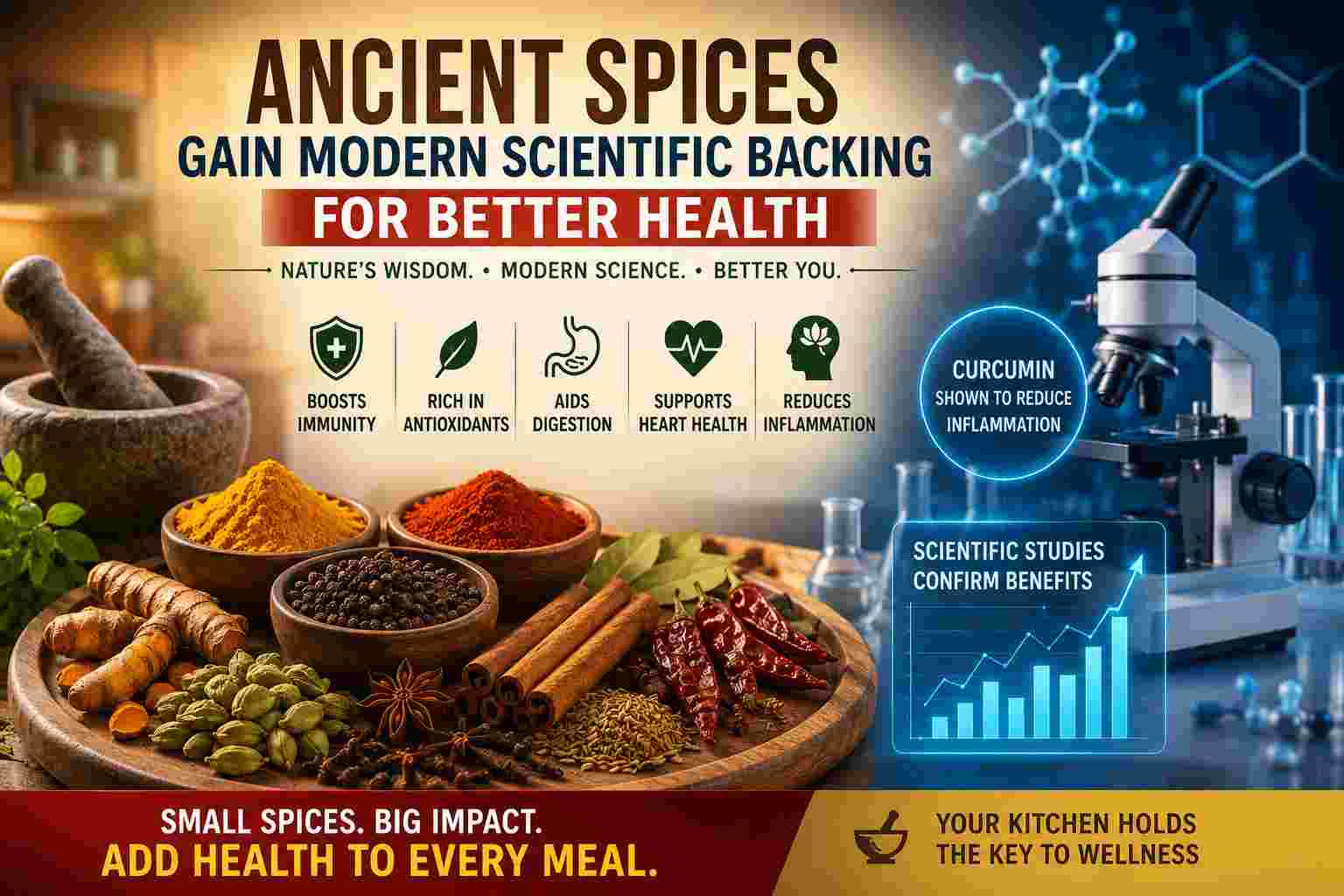
For centuries, kitchens across India, the Middle East, and the Mediterranean have quietly doubled as medicine cabinets. Long before laboratories and nutrition science entered the conversation, grandmothers were stirring turmeric into milk, adding black pepper to buttermilk, and brewing cinnamon-infused herbal teas to fight illness and strengthen the body. Now, modern scientific research is beginning to validate what traditional food cultures have believed for generations: common culinary spices may play a powerful role in improving gut, brain, and metabolic health.
A growing body of scientific literature, including research conducted at the UCLA Center for Human Nutrition and published in Nutrition Reviews, suggests that herbs and spices contain bioactive compounds capable of influencing inflammation, blood sugar, digestion, immunity, and even brain function. Researchers reviewed studies conducted between 2010 and 2024 and found that spices are far more than flavour enhancers. They may help reduce oxidative stress, improve gut microbiota, and support long-term health when consumed regularly as part of daily meals.
Cinnamon Emerges As A Metabolic Health Powerhouse
Among the most researched spices is cinnamon, a fragrant bark long treasured in Ayurvedic and Chinese medicine. Scientists at UCLA found that cinnamon supplementation reduced post-meal insulin and glucagon levels in both healthy and overweight participants. In another study involving adults with obesity and prediabetes, daily cinnamon intake appeared to improve average glucose levels and positively influence gut bacteria.
Researchers believe cinnamon’s health effects come from compounds such as cinnamaldehyde and polyphenols, which may improve insulin sensitivity and help the body process glucose more efficiently. Several recent reviews and meta-analyses also suggest cinnamon may contribute to lowering cholesterol levels and improving cardiovascular risk factors.
However, experts caution that cinnamon is not a miracle cure. Some participants in clinical studies experienced temporary spikes in blood sugar, indicating that individual responses can vary. Nutrition specialists advise consuming cinnamon in moderate culinary amounts rather than relying heavily on supplements without medical supervision.
Turmeric And Black Pepper Offer Anti-Inflammatory Benefits
Turmeric, often called the “golden spice,” has attracted global attention for its active compound curcumin, known for powerful anti-inflammatory and antioxidant properties. Studies indicate turmeric may help reduce chronic inflammation associated
with heart disease, diabetes, arthritis, and neurodegenerative disorders. When combined with black pepper, the absorption of curcumin improves significantly because pepper contains piperine, a natural compound that enhances bioavailability.
Scientists also believe turmeric may protect brain health by reducing oxidative stress and inflammation linked to cognitive decline. Researchers are currently exploring whether long-term dietary intake of turmeric can contribute to healthier ageing and lower risks of memory-related disorders.
Spices May Improve Gut Health And Immunity
One of the most exciting discoveries in recent nutrition science involves the gut microbiome — the trillions of bacteria living inside the digestive system. Researchers now believe spices may influence the composition of these microbes, supporting beneficial bacteria linked to digestion, metabolism, and immunity.
Cinnamon, oregano, ginger, rosemary, garlic, and cumin contain plant compounds called polyphenols, which act as antioxidants and may help beneficial gut microbes thrive. Scientists say these compounds can reduce oxidative stress and inflammation throughout the body.
Experts also note that many traditional spice combinations used in Indian cooking may naturally work together. For example, turmeric with black pepper, ginger with garlic, or cinnamon in warm beverages may create synergistic effects that enhance digestion and overall wellness.
Traditional Wisdom Meets Modern Nutrition
Health experts increasingly argue that modern diets rely too heavily on salt, sugar, and ultra-processed foods while neglecting natural flavour sources such as herbs and spices. The U.S. National Institutes of Health’s DASH diet now encourages people to replace excess salt with herbs and spices to help manage blood pressure and improve heart health.
Nutrition researchers emphasize that spices alone cannot replace balanced diets, exercise, sleep, or medical treatment. Yet incorporating small amounts of turmeric, cinnamon, ginger, black pepper, and other herbs into daily meals may offer cumulative long-term benefits.
What makes these findings especially remarkable is that many of these healing practices are not new discoveries at all. They are traditions preserved in households for generations. Science is simply beginning to understand the biochemical reasons behind them.
As researchers continue exploring the connection between food and health, the humble spice box sitting quietly in millions of kitchens may prove to be one of the most valuable wellness tools of all.