
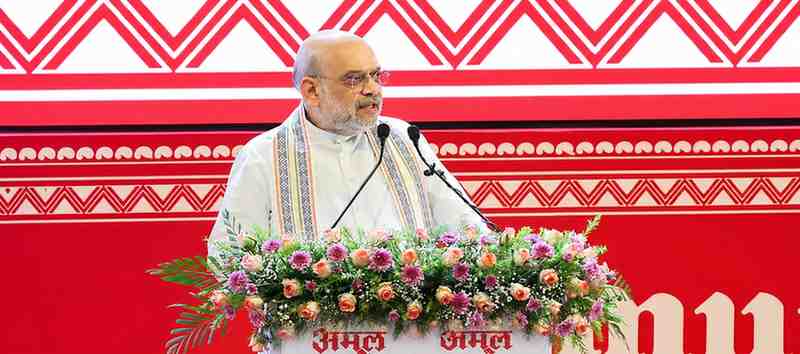
KOLKATA: The dairy sector in West Bengal received a major boost on Sunday as Union Home and Cooperation Minister Amit Shah virtually laid the foundation stone for what is being described as the world’s largest curd production plant. The ambitious project, to be developed by Amul under the Gujarat Cooperative Milk Marketing Federation (GCMMF), will come up at the Sankrail Food Park in Howrah with an investment of nearly ₹700 crore.
The project is expected to significantly enhance dairy processing capacity, generate employment, and improve income opportunities for lakhs of milk producers across eastern India.
A Landmark Investment in Eastern India
The proposed dairy facility is expected to become one of the largest dairy processing units in the country. According to details announced during the foundation ceremony, the plant will be capable of processing nearly 30 lakh litres of milk every day. In addition to handling massive volumes of milk, the factory is expected to produce around 10 lakh kilograms of curd daily along with several other dairy products.
Officials believe the project will strengthen the dairy supply chain in eastern India while reducing dependence on dairy products transported from other regions. The investment is also expected to encourage greater participation from local dairy farmers by creating a stable market for milk procurement.
Amit Shah Highlights Benefits for Farmers
Addressing the virtual event, Amit Shah described the project as a milestone for the dairy cooperative movement in eastern India. He said the new facility would directly benefit small dairy producers by expanding procurement networks and ensuring better returns for their produce.
Shah noted that strengthening cooperative institutions remains one of the central government’s priorities and said the project would help improve rural livelihoods. He also indicated that the Centre intends to promote livestock development and dairy infrastructure in West Bengal through greater cooperation with state authorities.
According to Shah, the project has the potential to improve earnings for nearly two to two-and-a-half lakh dairy farmers by creating stronger procurement systems and expanding milk processing capacity.
Political Remarks During the Event
The ceremony also witnessed political exchanges as leaders referred to earlier debates over industrial investment in West Bengal. Without naming any individual directly, Amit Shah and state leaders present at the programme spoke about the importance of welcoming investments that create employment and strengthen agriculture-linked industries.
The speakers argued that cooperative ventures such as Amul are intended to benefit local farmers rather than serve regional interests. They maintained that dairy development should be viewed as an economic opportunity capable of improving incomes and generating employment across rural communities.
Massive Processing Capacity Planned
Industry experts believe the proposed facility will rank among the most advanced dairy processing plants in the country. Besides manufacturing curd on a large scale, the plant is expected to produce a wide range of value-added dairy products.
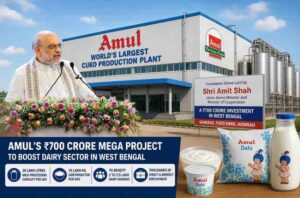
The advanced processing infrastructure is likely to include modern packaging systems, cold storage facilities, quality testing laboratories, and efficient logistics operations to ensure quick distribution across eastern and northeastern India.
The scale of production is expected to improve supply stability while reducing transportation costs for dairy products consumed across the region.
Employment and Rural Development
The project is also expected to generate substantial direct and indirect employment opportunities. Construction activities alone are likely to create thousands of temporary jobs, while the operational phase will require skilled technicians, engineers, logistics professionals, quality control experts, and plant workers.
Beyond factory employment, the project is anticipated to stimulate rural economic activity by encouraging more farmers to participate in dairy farming. Increased milk procurement could benefit transport operators, feed suppliers, veterinary services, equipment manufacturers, and small entrepreneurs associated with the dairy value chain.
Read Also: ‘Could Have Been Bombed Anytime’: Araghchi Opens Up About Secret US-Iran Negotiations
Experts believe that expanding cooperative milk collection networks can provide a more reliable source of income for rural households while promoting sustainable agricultural diversification.
Strengthening the Cooperative Model
Amul has long been recognised as one of India’s most successful cooperative dairy brands. The expansion into West Bengal represents another step in extending the cooperative dairy model into eastern India.
By linking local milk producers directly with a large processing network, the company aims to ensure better price realisation for farmers while supplying consumers with quality dairy products.
The initiative also aligns with the Centre’s broader emphasis on strengthening cooperative institutions under the Ministry of Cooperation.
State Government Sees Growth Opportunity
The West Bengal government has projected the project as an important industrial investment capable of accelerating economic activity in the state. Officials believe the new dairy facility will not only attract additional investments in food processing but also encourage further expansion of allied industries.
The project comes shortly after announcements regarding other industrial expansion plans in the state, indicating continued efforts to attract manufacturing and food-processing investments.
With its strategic location in Howrah, the facility is expected to enjoy efficient connectivity to major transport corridors, allowing faster movement of raw materials and finished products.
A New Chapter for Bengal’s Dairy Sector
The foundation of the mega dairy project marks an important milestone for West Bengal’s agricultural and industrial landscape. If completed as planned, the facility could emerge as one of India’s most significant dairy processing hubs, supporting thousands of farmers while expanding the availability of dairy products across eastern India.
As construction progresses, industry observers will closely watch how the investment reshapes the state’s dairy economy and contributes to employment, rural development, and cooperative growth. With substantial investment, modern infrastructure, and large-scale milk processing capabilities, the project has the potential to become a landmark development in India’s dairy industry.
Click here to join our WhatsApp Channel for real-time news updates and exclusive coverage.