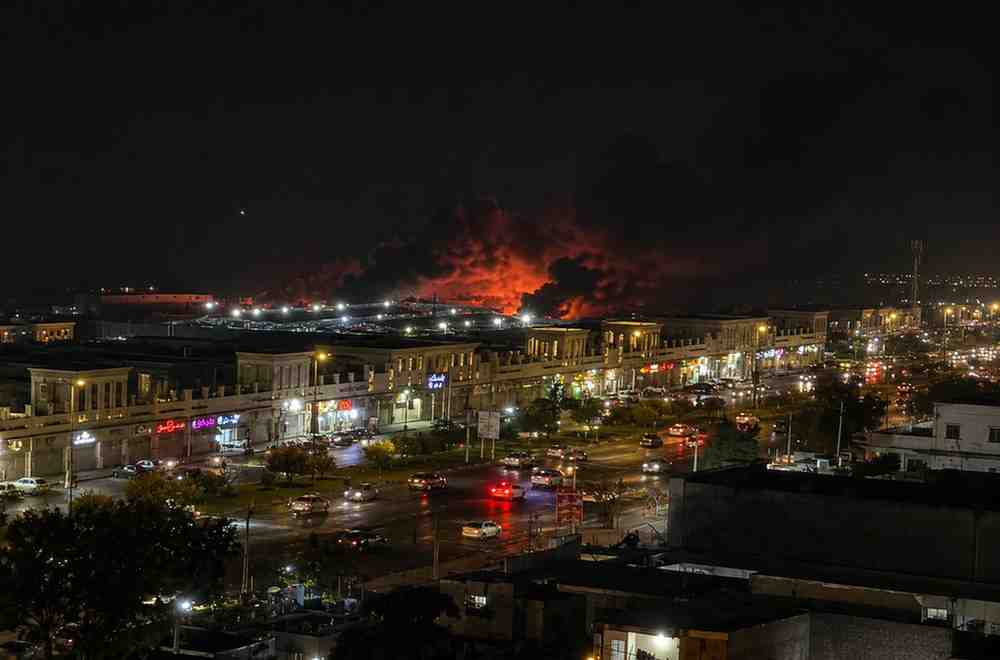
The United States has carried out one of its largest military operations against Iran in recent months, launching coordinated strikes on more than 80 military targets after a series of attacks on commercial oil tankers in the Strait of Hormuz.
The operation marks a sharp escalation in tensions between Washington and Tehran and raises fresh concerns over global energy supplies, regional security, and the future of diplomatic efforts between the two countries.
US Military Responds to Tanker Attacks
According to the US Central Command (CENTCOM), the military operation was launched after Iran allegedly targeted multiple commercial vessels transiting the Strait of Hormuz, one of the world’s most strategically important maritime trade routes. American officials described the attacks on civilian shipping as a serious violation of international maritime security and said an immediate response was necessary to protect global commerce.
The strikes reportedly hit more than 80 military objectives spread across southern Iran, including air defence installations, radar stations, drone launch sites, missile infrastructure, Revolutionary Guard naval facilities, and dozens of fast attack boats believed to have been used in operations around the Strait of Hormuz.
US officials maintained that the operation was carefully planned to degrade Iran’s military capabilities while reducing risks to civilians.
Strategic Targets Hit Across Southern Iran
Military officials said the strikes focused on facilities believed to be directly linked to attacks against international shipping. The operation included precision airstrikes on command-and-control centres, logistics hubs, coastal surveillance systems, and drone infrastructure.
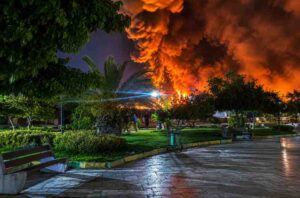
Among the assets reportedly destroyed were more than 60 boats operated by Iran’s Islamic Revolutionary Guard Corps (IRGC), which Washington says have frequently been used to threaten commercial vessels navigating the Strait of Hormuz.
US officials argued that dismantling these capabilities was essential to ensuring freedom of navigation in one of the world’s busiest energy corridors.
Washington Revokes Iran Oil Sales Permission
Alongside the military action, the US administration announced that it had revoked a temporary sanctions waiver that had allowed limited Iranian oil exports under earlier diplomatic arrangements.
Read Here: PM Modi, President Prabowo Offer Prayers At Indonesia’s Ancient Prambanan Temple
Officials said the decision reflected what they described as Iran’s repeated violations of commitments related to regional security. The move effectively restores tighter economic restrictions on Tehran and is expected to reduce Iran’s ability to generate oil export revenues.
The revocation also signals a significant shift in Washington’s approach, combining military pressure with renewed economic sanctions.
Iran Condemns the Operation
Iran strongly criticised the US strikes, calling them an illegal act of aggression and accusing Washington of violating the ceasefire framework that had helped reduce hostilities earlier this year.
Iranian officials insisted that the attacks represented another breach of diplomatic understandings and warned that Tehran reserves the right to respond to protect its sovereignty and national security.
Authorities also reported explosions in several southern regions, including areas near important military facilities and ports. Initial reports indicated damage to defence infrastructure, although complete assessments were still underway.
Strait of Hormuz Once Again at Centre of Crisis
The latest confrontation has once again placed the Strait of Hormuz at the centre of international attention.
Nearly one-fifth of global oil supplies normally pass through the narrow waterway connecting the Persian Gulf with international markets. Any disruption immediately affects global shipping, insurance costs and crude oil prices.
Recent attacks on commercial tankers had already raised concerns among shipping companies, many of which increased security measures or reconsidered routes through the region before the latest US military response.
Oil Markets React Immediately
Global energy markets reacted swiftly to the renewed military confrontation.
Crude oil prices climbed after news of the strikes and the cancellation of Iran’s oil export waiver, with investors fearing possible disruptions to supplies moving through the Strait of Hormuz.
Analysts warned that prolonged instability could increase transportation costs, tighten global energy supplies and place additional inflationary pressure on major economies already facing volatile commodity markets.
Energy traders are now closely monitoring developments to determine whether shipping traffic through the region can continue without further interruptions.
Diplomatic Efforts Face New Challenges
The escalation comes despite previous attempts by both sides to maintain dialogue following months of conflict.
Earlier understandings had temporarily eased tensions, but the latest military exchange threatens to undermine those efforts.
American officials said diplomacy remains possible if Iran refrains from further attacks on international shipping. Tehran, however, has insisted that negotiations cannot continue under military pressure and renewed sanctions.
Several regional governments are also monitoring developments closely, fearing that any wider conflict could destabilise the Middle East and affect international trade routes.
International Community Watches Closely
Governments around the world have expressed concern over the rapidly escalating situation, urging restraint from both Washington and Tehran.
Security experts believe additional military exchanges could further complicate efforts to restore stability in the Gulf region, where commercial shipping remains highly vulnerable.
With military operations continuing, sanctions tightened and diplomatic relations under increasing strain, the confrontation between the United States and Iran appears to have entered another dangerous phase.
The coming days are expected to be critical as the international community watches for Iran’s response, the security of commercial shipping through the Strait of Hormuz, and whether diplomatic channels can still prevent a broader regional conflict.
Click here to join our WhatsApp Channel for real-time news updates and exclusive coverage.