
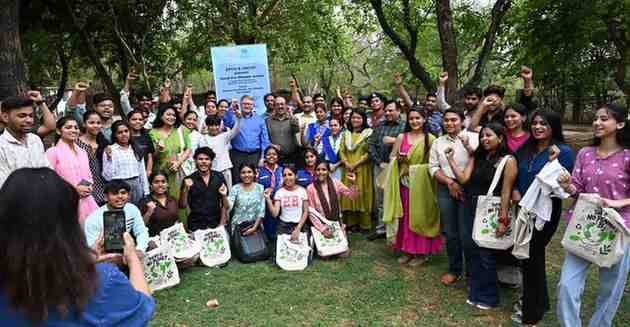
BHOPAL: Reinforcing the importance of youth participation in addressing environmental challenges, UNICEF India joined hands with the Ministry of Environment, Forest & Climate Change and the Environment Planning & Coordination Organization (EPCO) to organize a special programme titled “Youth for Climate Action” on the occasion of World Environment Day 2026. The event was held under the theme “Inspired by Nature, for Climate, for Future” and focused on empowering young people to become active contributors to climate resilience and sustainable development.
The programme brought together students and youth representatives from Dhar, Dewas, Indore, and Betul districts of Madhya Pradesh, along with child protection changemakers from Bhopal, members of Bharat Scouts and Guides, environmental experts, and climate advocates. The gathering served as a platform for young participants to share ideas, discuss environmental concerns, and explore practical solutions to address the growing impacts of climate change.
UNICEF India played a central role in encouraging youth engagement and amplifying the voices of young people who are increasingly becoming frontline advocates for climate action. The organization emphasized that children and youth are among the most affected by climate-related risks, including extreme weather events, heatwaves, water scarcity, and environmental degradation. At the same time, they possess the creativity, energy, and determination needed to drive meaningful change within their communities.
Throughout the programme, participants took part in a range of interactive activities designed to deepen their understanding of environmental sustainability. Discussions focused on critical issues such as climate adaptation, biodiversity conservation, waste management, water conservation, and the importance of adopting environmentally responsible lifestyles. Young attendees were encouraged to exchange experiences from their own communities and propose innovative ideas that could help build a greener and more sustainable future.
One of the key highlights of the event was the active involvement of students and youth leaders in presenting their perspectives on climate challenges. Participants shared local experiences related to environmental degradation and discussed community-based initiatives that have successfully promoted conservation and sustainable resource management. Their presentations underscored the importance of grassroots action and collective responsibility in combating climate change.
UNICEF India stressed that youth participation is essential for achieving long-term environmental goals. The organization noted that young people can act as catalysts for change by spreading awareness, influencing positive behavior, and mobilizing communities to take action on climate-related issues. By providing platforms for dialogue and engagement, UNICEF aims to ensure that youth voices remain at the center of climate and development policies.
The event also highlighted the connection between environmental protection and the well-being of children. Experts pointed out that climate change has far-reaching consequences for health, education, nutrition, and livelihoods, making it crucial to involve younger generations in decision-making processes. Participants were encouraged to view climate action not only as an environmental responsibility but also as an investment in a healthier and more secure future.
Representatives from various organizations emphasized the need for collaborative efforts among government institutions, civil society groups, educational institutions, and youth networks. They called for sustained engagement and capacity-building initiatives that would enable young people to contribute effectively to climate solutions at local, regional, and national levels.
The inclusion of child protection changemakers from Bhopal added another dimension to the discussions, highlighting how environmental challenges can affect vulnerable communities. Their participation reflected the broader understanding that climate action must be inclusive and responsive to the needs of children and marginalized groups.
As the programme concluded, participants reaffirmed their commitment to environmental stewardship and sustainable practices. The event showcased how informed and motivated young people can become powerful advocates for climate resilience and environmental conservation.
By supporting initiatives such as “Youth for Climate Action,” UNICEF India continues to strengthen youth leadership and encourage meaningful participation in addressing one of the most pressing challenges of the modern era. The World Environment Day programme served as a reminder that while the climate crisis is a global challenge, empowered young people have the potential to drive local action and inspire lasting change for future generations.