
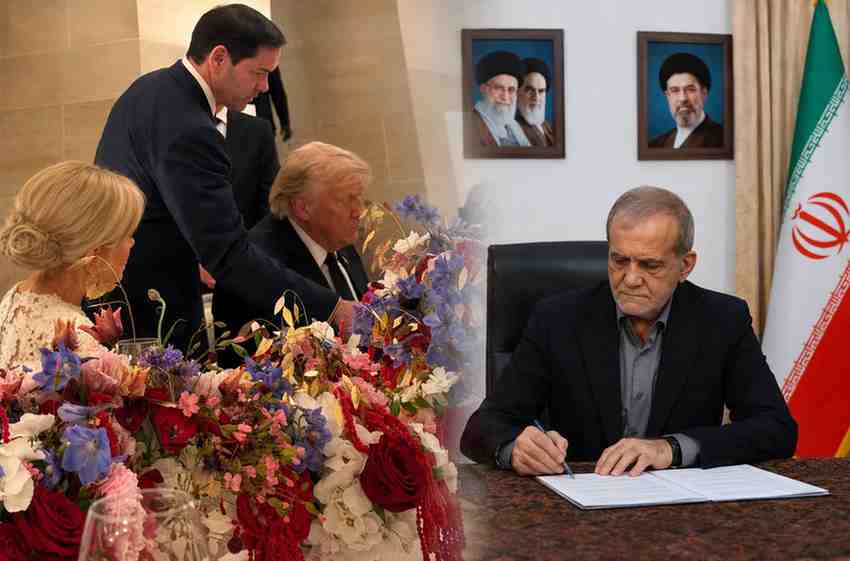
In a major diplomatic breakthrough, United States President Donald Trump and Iranian President Masoud Pezeshkian have officially signed a Memorandum of Understanding (MoU) aimed at ending months of conflict and opening the door for a broader peace process between Washington and Tehran. The agreement, which was electronically signed by both leaders, marks one of the most significant developments in US-Iran relations in recent years.
The announcement was confirmed by a White House official, while Iran’s Foreign Ministry spokesperson Esmaeil Baghaei said the document had been formally signed by both countries through electronic means. The move comes after weeks of negotiations involving diplomats and international mediators.
A Turning Point In US-Iran Relations
The agreement seeks to reduce tensions that have escalated over military confrontations, economic sanctions and disputes over Iran’s nuclear ambitions. Although the two countries have remained adversaries for decades, this MoU signals a willingness from both sides to pursue diplomacy over confrontation.
The signing also represents a symbolic victory for international mediators who have been working behind the scenes to prevent a wider regional conflict that could have destabilised global energy markets and affected international trade routes.
What Does The MoU Include?
According to reports, the memorandum contains multiple points designed to gradually restore stability in the region.
One of the most important provisions involves reopening the Strait of Hormuz, a strategic maritime route through which a significant portion of the world’s oil supply passes every day. Any disruption in this passage can immediately impact global energy prices.
The agreement also outlines a roadmap for future negotiations regarding economic sanctions imposed on Iran, regional security arrangements and nuclear-related concerns.
Reports suggest the MoU also contains commitments to avoid further military escalation and create channels for sustained diplomatic engagement between the two governments.
Nuclear Issue Remains A Sensitive Subject
Iran’s nuclear programme remains one of the biggest unresolved issues.
While both sides have agreed to continue discussions, several complex questions have been left for future negotiations. These include uranium enrichment limits, monitoring mechanisms and broader non-proliferation commitments.
The United States has long maintained that Iran should not develop nuclear weapons, while Iran has repeatedly insisted that its nuclear programme is intended for peaceful civilian purposes.
Experts believe the MoU is not a final settlement but rather a framework that creates space for detailed discussions in the coming weeks.
Impact On Global Economy
Financial markets have closely monitored developments between Washington and Tehran because both countries play influential roles in global geopolitics.
Any disruption around the Persian Gulf and the Strait of Hormuz can affect oil supply chains worldwide. A successful implementation of the agreement could ease market anxieties and help stabilise energy prices.
Economists also say reduced tensions could encourage investment and improve trade prospects across the Middle East. However, they caution that long-term stability will depend on how effectively both countries implement the promises made in the memorandum.
International Reactions
The agreement was welcomed by several international observers, who described it as an important step toward preventing a larger regional war.
French President Emmanuel Macron reportedly played a facilitating role during discussions held on the sidelines of the G7 summit, where Trump publicly acknowledged the difficulty of reaching the agreement.
At the same time, critics in the United States and some strategic analysts have expressed concerns that the agreement could provide Iran with significant economic advantages without fully addressing its military and missile capabilities.
Others argue that diplomacy remains preferable to prolonged conflict and that the memorandum should be viewed as an opportunity rather than a final solution.
Challenges Ahead
Despite the optimism, major hurdles remain.
Trust between the United States and Iran remains fragile due to decades of political hostility. Differences also persist regarding sanctions relief, ballistic missile programmes and Iran’s regional alliances.
Additionally, several aspects of the memorandum still require detailed implementation plans. Analysts say the coming weeks will determine whether both governments are prepared to convert diplomatic promises into concrete action.
Why This Matters
The US-Iran MoU is significant because it attempts to replace confrontation with diplomacy at a time when the Middle East has been facing multiple security challenges.
If successful, the agreement could reduce geopolitical tensions, secure international energy routes and create a foundation for broader regional stability. However, its ultimate success will depend on sustained negotiations and mutual compliance from both sides.