
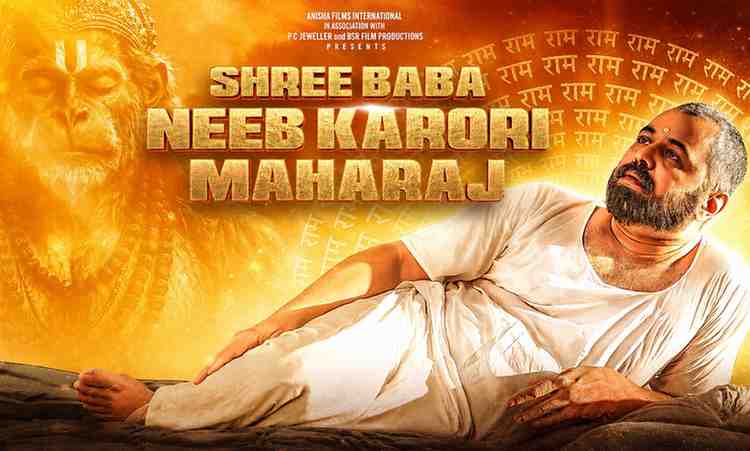
Religious and spiritual films have become a rarity in mainstream Indian cinema, with filmmakers increasingly focusing on action-packed entertainers and romantic dramas aimed at younger audiences. However, the newly released film Shri Baba Neeb Karori Maharaj appears to challenge that perception, drawing a significant number of young viewers to its preview and press screenings across the country.
Released nationwide this Friday, the film explores the life and teachings of the revered spiritual saint Neeb Karori Baba, who is widely believed by devotees to be an incarnation of Lord Hanuman. The saint’s influence extends far beyond India, with followers from across the globe continuing to visit his ashrams decades after his passing in 1973.
The film highlights not only Baba’s spiritual philosophy but also his global following, which reportedly includes several well-known personalities from the worlds of business, technology, and entertainment. Tech icons such as Steve Jobs and Mark Zuckerberg have often been associated with Neeb Karori Baba’s spiritual legacy, while Indian celebrities including Anushka Sharma and Virat Kohli are also counted among his admirers.
Producer Sharad Singh Thakur reportedly spent several years researching Baba’s life before bringing the project to the screen. According to the makers, the objective behind the film is to introduce younger generations to the teachings, values, and spiritual influence of Neeb Karori Baba. Extensive groundwork and research reportedly continued for nearly four years before production began.
Marathi actor Subodh Bhave portrays the role of Neeb Karori Baba in the film and has received appreciation for bringing depth and authenticity to the character. The filmmakers also met members of Baba’s family multiple times and obtained their consent before starting the project. Baba’s daughter Girija, now in her 80s, is said to have been consulted during the process.
What sets the film apart is its emphasis on realism and devotion rather than commercial spectacle. Much of the movie has reportedly been shot at real locations associated with the saint, lending an added sense of authenticity to the storytelling. The makers believe the project is more than just a biographical drama; it is an attempt to preserve and present a spiritual legacy for contemporary audiences.
The film also underlines the enduring popularity of spiritual cinema among Indian audiences. The strong presence of young viewers at screenings suggests that there remains a growing interest in stories rooted in India’s religious and cultural heritage. Industry observers believe this response may encourage filmmakers to revisit spiritual and devotional subjects that once formed an important part of Indian cinema.
While Shri Baba Neeb Karori Maharaj is primarily aimed at devotees of the saint, the film also seeks to appeal to family audiences and viewers interested in faith-based storytelling. Supporters of the film argue that projects highlighting India’s spiritual traditions deserve wider encouragement and visibility.
With a blend of devotion, biography, and cultural nostalgia, the film attempts to remind audiences that stories of saints and spiritual leaders can still find resonance in modern times—especially among younger generations searching for meaning beyond commercial entertainment.