Sawan 2026, the holiest month dedicated to Lord Shiva, begins on 30 July and concludes on 28 August. From the four Monday fasts to Shivratri, Hariyali Teej, Nag Panchami, Putrada Ekadashi, and Raksha Bandhan, here is the complete calendar, puja vidhi, important dates, and spiritual significance for devotees across North India.
The holy month of Shravan 2026 will begin on Thursday, 30 July 2026, and end on Friday, 28 August 2026, according to the North Indian Purnimanta calendar followed in Delhi, Uttar Pradesh, Rajasthan, Bihar, Madhya Pradesh, Haryana, Uttarakhand, Himachal Pradesh, and several other states. Considered the most sacred month for the worship of Lord Shiva, Sawan is observed with immense devotion through fasting, temple visits, Rudrabhishek, mantra chanting, charity, and spiritual discipline.
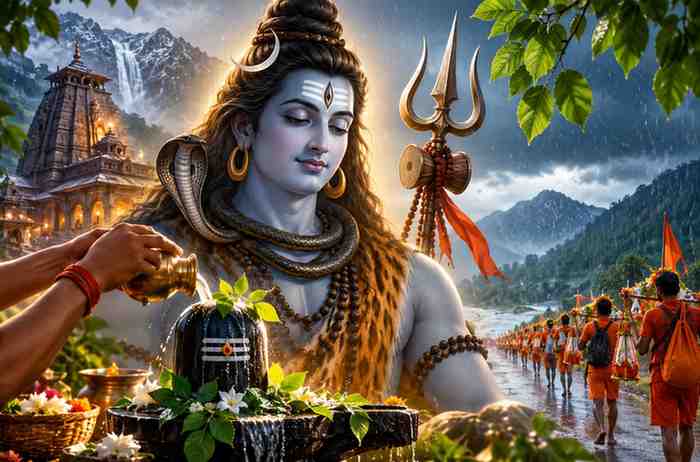
According to Hindu scriptures, Shrawan commemorates the period when Lord Shiva consumed the deadly Halahala poison during the Samudra Manthan (Churning of the Ocean) to save the universe. To reduce the intense heat generated by the poison, the gods continuously offered sacred water and milk over Lord Shiva. This divine event forms the basis of the tradition of offering Gangajal, milk, curd, honey, Bilva (Bel) leaves, white flowers, sandalwood paste, and Panchamrit to the Shiva Linga throughout the month.
Sawan 2026: Complete Calendar of Important Dates
30 July 2026 (Thursday) – Beginning of Sawan
The holy month officially begins. Devotees start observing Vrat, perform Rudrabhishek, recite the Shiva Chalisa, and chant the Maha Mrityunjaya Mantra and “Om Namah Shivaya” 108 times. Many devotees also begin reading the Shiva Purana during this period.
3 August 2026 (Monday) – First Sawan Somwar
The first Monday of Shravan is regarded as highly auspicious. Thousands of devotees visit Shiva temples before sunrise to offer Gangajal, Bilva leaves, milk, curd, honey, sugar, and white flowers to Lord Shiva while observing a day-long fast.
9 August 2026 (Sunday) – Kamika Ekadashi
Dedicated to Lord Vishnu, Kamika Ekadashi is believed to cleanse accumulated sins and bring spiritual merit. Many devotees observe fasting and perform Vishnu Puja while continuing their worship.
10 August 2026 (Monday) – Second Sawan Somwar and Soma Pradosh Vrat
This day is considered exceptionally auspicious because Shravan Somwar (Monday) coincides with Soma Pradosh Vrat. Devotees perform elaborate Rudrabhishek during the evening Pradosh Kaal, seeking relief from obstacles, improved health, and prosperity.
11 August 2026 (Tuesday) – Sawan Shivratri
One of the most significant festivals dedicated to Lord Shiva during the month of Shravan, devotees observe strict fasting, remain awake throughout the night, chant Shiva mantras, perform Rudrabhishek, and offer Panchamrit, Bilva leaves, Dhatura, Bhang, Gangajal, fruits, and white flowers to the Shiva Linga.
12 August 2026 (Wednesday) – Hariyali Amavasya
Hariyali Amavasya marks the New Moon during Shravan. It is considered highly auspicious for charity, ancestor remembrance (Pitru Tarpan), tree plantation, and Shiva worship.

15 August 2026 (Saturday) – Hariyali Teej
Dedicated to Goddess Parvati and Lord Shiva, Hariyali Teej celebrates the divine reunion of the celestial couple. Married women pray for their husbands’ long life, while unmarried women seek a loving and virtuous life partner. Women wear green attire, apply mehndi, observe fasts, and worship Goddess Parvati.
17 August 2026 (Monday) – Third Sawan Somwar and Nag Panchami
This is another highly auspicious day as Nag Panchami coincides with the Third Shravan Somwar. Serpent deities are worshipped because Lord Shiva adorns the serpent Vasuki around His neck. Devotees pray for protection from fear, health, prosperity, and spiritual blessings.
23 August 2026 (Sunday) – Shravana Putrada Ekadashi
Dedicated to Lord Vishnu, this Ekadashi is observed for the well-being, prosperity, happiness, and long life of children. Couples seeking family blessings observe fasting and special prayers.
24 August 2026 (Monday) – Fourth and Final Sawan Somwar
The last Monday fast of Shravan holds immense religious significance. Devotees conclude their Somwar Vrat by offering special prayers, Rudrabhishek, charity, food donations, clothes, and sweets to the needy.
25 August 2026 (Tuesday) – Bhauma Pradosh Vrat
Observed on Shukla Trayodashi, this Pradosh Vrat is dedicated to Lord Shiva. Evening worship during Pradosh Kaal is believed to remove obstacles and bring peace and prosperity.
28 August 2026 (Friday) – Shravana Purnima, Raksha Bandhan and Conclusion of Sawan
The holy month concludes on this day, which also marks Raksha Bandhan, Shravana Purnima, Gayatri Jayanti, Narali Purnima, and Sanskrit Diwas. Families celebrate the bond between brothers and sisters, while devotees worship Goddess Gayatri and perform sacred rituals associated with Purnima.
Most Powerful Days for Lord Shiva Worship
- 30 July – Beginning of Shravan
- 3 August – First Shravan Somwar
- 10 August – Second Shravan Somwar and Soma Pradosh
- 11 August – Shravan Shivratri
- 17 August – Third Shravan Somwar and Nag Panchami
- 24 August – Fourth and Final Shravan Somwar
Puja Vidhi: How to Worship Lord Shiva During Sawan
Devotees are advised to wake up before sunrise, bathe, and wear clean white or light-colored clothes. The Shiva Linga should first be bathed with Gangajal, followed by milk, curd, honey, sugar, and ghee (Panchamrit). Offer Bilva (Bel) leaves, white flowers, sandalwood paste, Dhatura, Bael fruit, and sacred water while chanting “Om Namah Shivaya” 108 times.
Also Read: Apple Enters $5 Trillion Club As Shares Scale Record Highs
Lighting a ghee lamp and incense sticks, reciting the Shiva Chalisa, Shiv Mahimna Stotra, and the Maha Mrityunjaya Mantra is considered highly auspicious. Devotees observing fasts generally consume only fruits, milk, and vrat-approved foods and conclude the fast after evening prayers or the following morning, depending on their tradition.
Things to Avoid During Sawan
Religious traditions advise devotees to avoid non-vegetarian food, alcohol, tobacco, anger, dishonesty, and negative speech. Many families also avoid onion and garlic throughout the month and emphasize purity of mind, body, and conduct. Charity, compassion, helping the poor, and maintaining self-discipline are considered essential aspects of Shravan observance.
Religious and Spiritual Importance of Sawan
Shravan is believed to be the month during which Lord Shiva is especially receptive to the sincere prayers of devotees. Observing Sawan Somwar fasts, performing Rudrabhishek, chanting sacred mantras, and reading the Shiva Purana are believed to bring peace, prosperity, happiness, spiritual growth, and divine blessings.
For unmarried women, the month symbolizes the devotion of Goddess Parvati, who performed intense penance to marry Lord Shiva. Married women pray for the longevity, health, and prosperity of their husbands and families.
From a seasonal perspective, Shravan coincides with the monsoon, when traditional Indian wisdom recommends a light vegetarian diet, moderation in eating, cleanliness, and disciplined living. Thus, the month beautifully combines religious devotion with practices that promote physical well-being and mental harmony.
As Sawan 2026 begins on 30 July, millions of devotees across India are preparing for a month filled with fasting, devotion, temple visits, Kanwar Yatra, Rudrabhishek, and prayer. Whether through the sacred observance of the four Shravan Somwar fasts, the celebration of Shravan Shivratri, or the worship performed during Hariyali Teej, Nag Panchami, and Putrada Ekadashi, the holy month continues to inspire faith, self-discipline, and spiritual awakening, reaffirming Lord Shiva’s timeless message of compassion, sacrifice, and inner transformation.
Click here to join our WhatsApp Channel for real-time news updates and exclusive coverage.