The Rashtriya Swayamsevak Sangh (RSS) on Friday sought to play down the controversy surrounding the term “Cockroach Janta Party” (CJP), asserting that public debates, criticism and differing opinions are a natural part of a vibrant democracy.
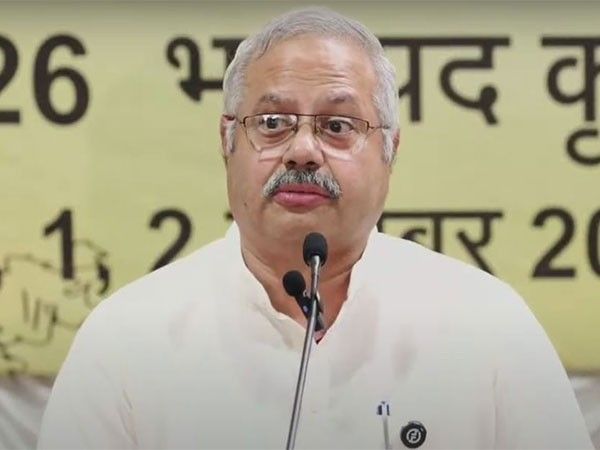
Speaking to reporters in Nagpur, RSS Prachar Pramukh Sunil Ambekar said India’s democratic framework is robust enough to accommodate open discussions across traditional and digital platforms. He emphasized that the rise of conversations on social media should not be viewed with concern but rather as a reflection of active democratic participation.
His remarks come amid growing social media discussions around the term “Cockroach Janta Party,” which has sparked political commentary and public debate online. Responding to questions on whether the RSS should intervene in such matters, Ambekar indicated that India’s democratic institutions are fully capable of addressing issues emerging from public discourse.
“We are an aware society, and we follow the democratic process. Within that democratic process, we have transparent elections, an open media, and now social media as well. Open forums take place every day. In a democracy, any kind of discussion and people expressing differing opinions should not be considered shocking. They are part of the normal democratic process,” Ambekar said.
The RSS leader maintained that discussions taking place in the public domain should be allowed to run their course and be handled by the stakeholders involved. According to him, institutions such as the media and political parties possess the independence and strength necessary to respond to criticism, debate and differing viewpoints.
“These are conversations, and the people involved will deal with those issues themselves. The media is free enough to handle them. Political parties are capable, and none of our institutions are weak. Our system is capable as well. Therefore, I do not think the organisation needs to rush into such matters immediately,” he said.
Ambekar’s comments underline the RSS’s view that democratic engagement inevitably brings disagreements and criticism, which should be seen as signs of a functioning political system rather than causes for alarm.
During the interaction, Ambekar also highlighted the role of India’s younger generation in the country’s progress. Referring to Gen Z, he described Indian youth as optimistic, forward-looking and deeply committed to the nation’s development within the framework of the Constitution.
He said young Indians have strong faith in the country’s future and are channeling their efforts toward constructive national growth.
“Our younger generation, sometimes called Gen Z, is very hopeful. They have tremendous faith in India. Whatever they do is within the constitutional process. Their contribution is towards taking India forward. The youth of our country have invested all their energy into this, and that is why the nation is progressing in every field,” Ambekar said.
The RSS leader’s remarks come at a time when political discourse is increasingly shaped by social media platforms, where debates often gain momentum rapidly. While acknowledging the growing influence of online conversations, Ambekar reiterated that India’s democratic institutions remain strong and capable of managing the challenges and opportunities that come with an open public sphere.