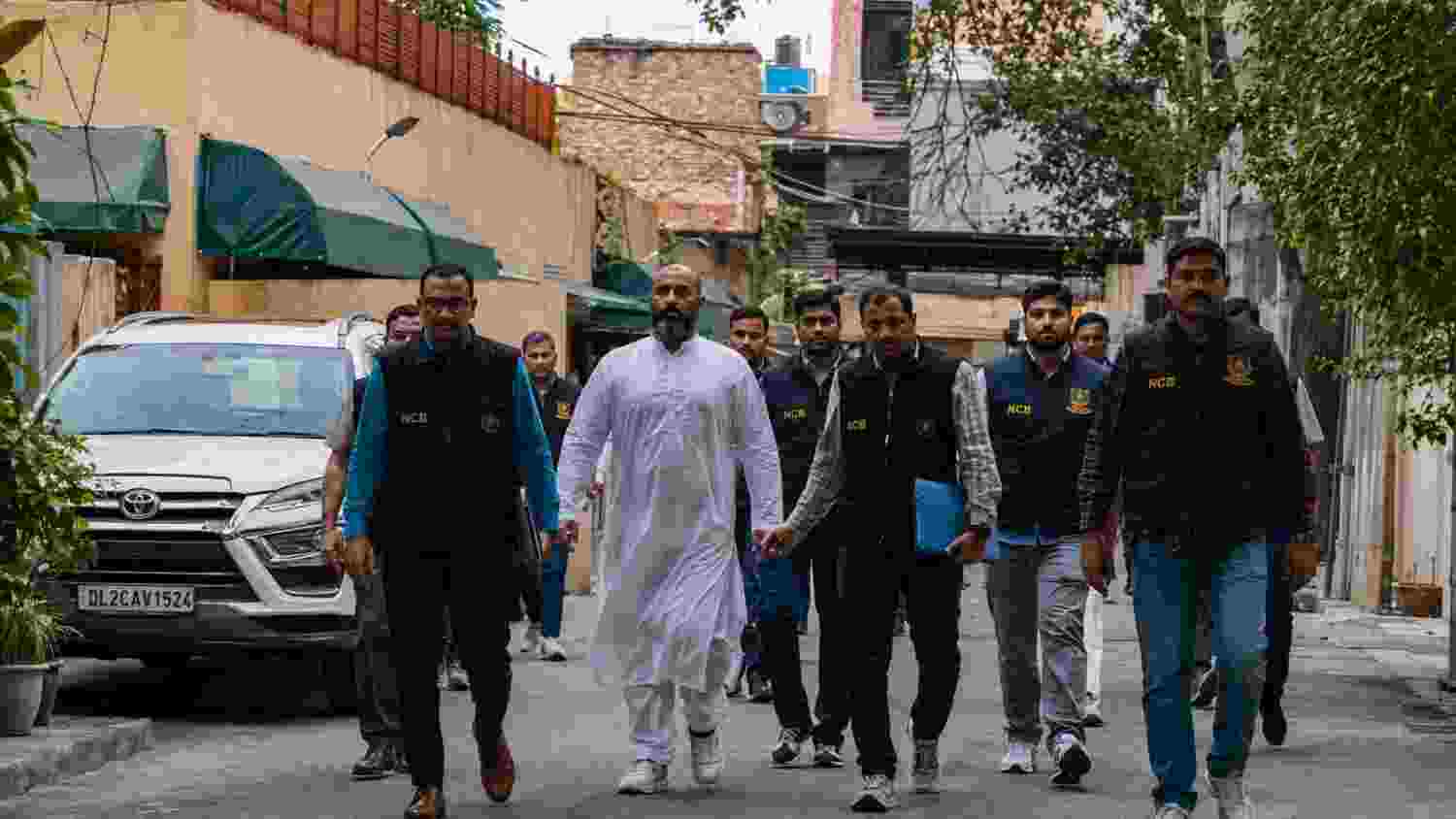
In a major breakthrough against international drug trafficking networks, the Narcotics Control Bureau (NCB) has secured the return of wanted fugitive Virender Singh Basoya, also known as Viru and Basoya, from the United Arab Emirates (UAE). The accused, a resident of Pillanji in Delhi’s Sarojini Nagar area, was taken into custody shortly after arriving at Indira Gandhi International Airport in New Delhi early Friday.
Basoya had been arrested in the UAE in June 2026 following an INTERPOL Red Notice issued at the request of Indian authorities. His extradition and return were facilitated through sustained coordination between Indian law-enforcement agencies and UAE authorities.
The development is being viewed as a significant step in India’s intensified campaign against drug traffickers operating across international borders.
Amit Shah Hails NCB Operation
Union Home Minister Amit Shah welcomed Basoya’s return, saying the government is relentlessly pursuing drug traffickers who attempt to operate from foreign countries.
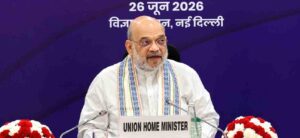
Shah said the Modi government is committed to dismantling the entire narcotics ecosystem and emphasized that international hideouts would not shield fugitives from Indian law.
He highlighted the NCB’s approach of investigating drug networks from both the top and bottom, aimed at identifying not only suppliers and couriers but also financiers, handlers and major overseas operators.
The Home Minister said the successful operation demonstrates that drug traffickers cannot permanently evade Indian agencies, regardless of where they attempt to hide.
Investigation Began With Mephedrone Seizure in Pune
The case dates back to February 2024, when Pune City Police seized approximately 500 grams of Mephedrone, triggering a wider investigation into a suspected narcotics trafficking network.
Investigators subsequently expanded their probe beyond the immediate seizure to identify the wider manufacturing, transportation, financing and distribution chain.
The investigation eventually led to major seizures across Pune and Delhi. Authorities recovered approximately 867 kg of Mephedrone from Pune and another 970 kg from Delhi, taking the total recovery to nearly 1,837 kg.
The case was later transferred to the Mumbai Zonal Unit of the NCB, which continued investigating the suspected international dimensions of the syndicate.
Basoya Allegedly Linked Domestic Network to Overseas Trade
According to investigators, Basoya emerged as a key overseas operative and alleged conspirator in the network.
Authorities allege that he coordinated activities from outside India and played a role in facilitating the movement of Mephedrone consignments from India to foreign destinations.
The recovery of around 970 kg of Mephedrone in Delhi was allegedly connected to preparations for international export through courier channels associated with Basoya.
Investigators believe his alleged activities represented an important link between domestic drug manufacturing and trafficking operations in India and distribution networks operating abroad.
Separate Cocaine Trafficking Case in Delhi
Basoya is also wanted in a separate case investigated by the Delhi Police Special Cell involving international cocaine trafficking.
In October 2024, the Special Cell dismantled a major drug cartel following coordinated raids at multiple locations in Delhi, Hapur and Ghaziabad, as well as a factory in Ankleshwar, Gujarat.
The operations resulted in the recovery of more than 1,300 kg of cocaine, Mephedrone and hydroponic weed, according to the authorities.
Investigators subsequently identified Basoya’s alleged involvement in coordinating the procurement, transportation, storage and distribution of cocaine and other narcotic substances.
Operation GLOBAL-HUNT Targets Overseas Drug Fugitives
Basoya’s return forms part of the NCB’s broader Operation GLOBAL-HUNT, an initiative aimed at locating and bringing back major narcotics traffickers and fugitives operating from foreign jurisdictions.
The operation relies on international law-enforcement cooperation, INTERPOL mechanisms and closer coordination between Indian agencies and their counterparts overseas.
The NCB has previously secured the return of other wanted drug traffickers, including Mohammad Salim Dola from Türkiye and Navin Chichkar from Malaysia, as part of its efforts to pursue fugitives beyond India’s borders.
India Intensifies Zero-Tolerance Drug Policy
The government has linked the pursuit of overseas narcotics fugitives to its broader Vision Document on Drug Control (2026–2029).
The roadmap emphasizes identifying, locating and bringing back major drug traffickers, financiers, handlers and other key figures who operate from foreign countries.
The NCB has reiterated that its efforts will continue to focus on dismantling entire trafficking ecosystems rather than limiting investigations to individual seizures or street-level operatives.
The agency said it remains committed to the government’s zero-tolerance policy against drug trafficking and will continue working with national and international partners to pursue narcotics syndicate leaders.
Basoya’s return to India therefore represents more than the apprehension of a single fugitive. It marks another major effort by Indian agencies to disrupt international drug networks, trace their overseas links and ensure that those accused of running such operations are brought back to face legal proceedings in India.
Click here to join our WhatsApp Channel for real-time news updates and exclusive coverage.