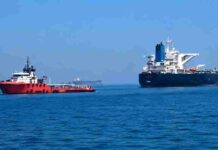
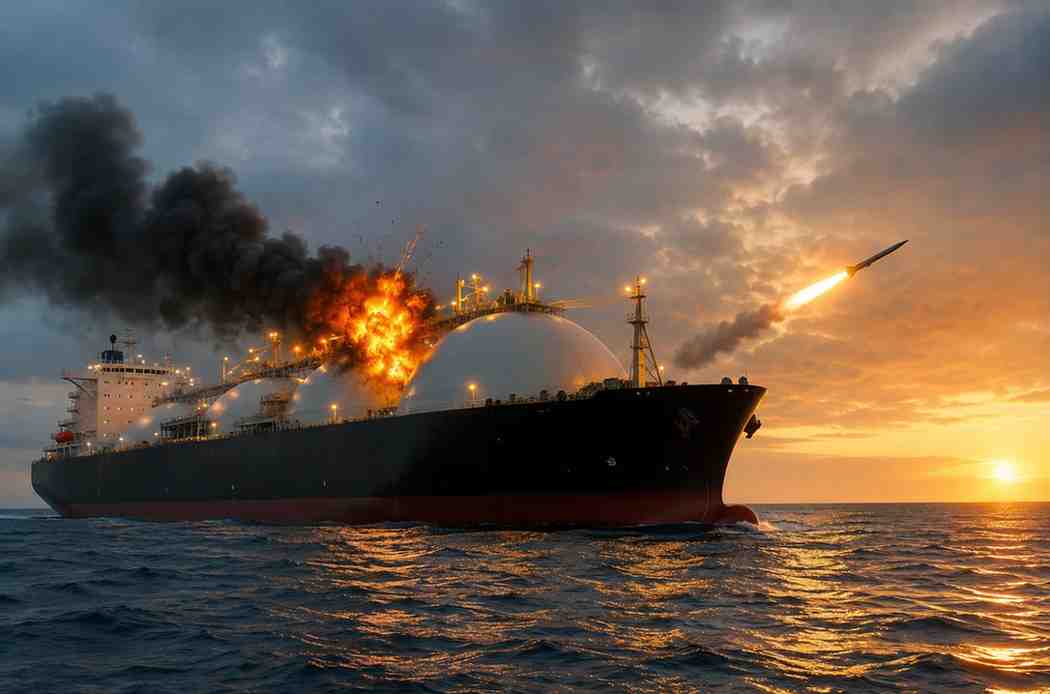
A Mozambique-flagged liquefied petroleum gas (LPG) tanker carrying 28 Indian crew members came under attack while navigating Iranian territorial waters, raising fresh concerns over the safety of commercial shipping in the Middle East. Despite the alarming incident, the Indian Embassy in Tehran confirmed that all Indian nationals aboard the vessel are safe and that no casualties have been reported.
The vessel, identified as DISHA, was reportedly struck while sailing through waters close to one of the world’s busiest energy shipping corridors. The incident occurred against the backdrop of escalating military tensions in the region, where attacks on commercial vessels have become increasingly frequent in recent weeks.
Indian Embassy Closely Monitoring the Situation
Soon after reports of the attack surfaced, the Indian Embassy in Tehran issued a statement confirming that it was aware of the incident involving the LPG tanker. Embassy officials said they were in constant communication with Iranian authorities as well as the ship’s management company to ensure the welfare of the crew.
According to the embassy, all 28 Indian sailors onboard have been accounted for and are safe. The mission added that it continues to monitor developments and remains ready to extend any assistance required by the crew members.
The confirmation brought relief to the families of the crew members, many of whom had been anxiously awaiting updates after initial reports of the attack emerged.
Attack Amid Escalating Regional Conflict
The attack comes during a period of heightened instability across the Middle East. Military confrontations involving the United States, Iran and their regional allies have significantly increased risks for commercial shipping operating in the Persian Gulf and nearby waters.
The Strait of Hormuz, located near the site of the incident, remains one of the world’s most strategically important maritime passages. A significant share of global crude oil and liquefied petroleum gas shipments passes through the narrow waterway every day, making any disruption a matter of international concern.
Also Read: Amayra Death Case: Court Reserves Cognizance Order Until July 27
Security analysts have warned that attacks on merchant vessels could further disrupt international trade and energy supplies if tensions continue to escalate.
Commercial Shipping Under Growing Threat
The attack on the DISHA tanker is the latest in a series of incidents targeting merchant vessels operating in and around the Gulf region. Shipping companies have increasingly been forced to review sailing routes, strengthen onboard security measures and monitor military developments before allowing vessels to transit through high-risk waters.
Insurance premiums for ships operating in the area have also risen sharply due to growing security concerns, increasing transportation costs for global energy supplies.
Although the tanker sustained damage during the attack, authorities have not indicated that it suffered any major structural failure or environmental hazard.
Indian Crew Demonstrate Professionalism
Maritime experts noted that the crew’s adherence to emergency protocols likely played an important role in ensuring there were no injuries during the incident. Commercial ships operating in conflict-prone waters regularly conduct emergency response drills to prepare for missile attacks, drone strikes and other security threats.
The Indian sailors reportedly remained on board as the situation unfolded while authorities coordinated an appropriate response.
India supplies a substantial number of trained seafarers to the global shipping industry, with Indian officers and crew serving on thousands of merchant vessels worldwide.
Government Maintaining Vigil
Indian authorities are closely following developments through diplomatic channels. Officials are expected to remain in contact with both Iranian authorities and the vessel’s operators until the ship reaches a secure location.
The government has consistently advised Indian nationals working in conflict zones and maritime sectors to remain vigilant and follow safety instructions issued by local authorities and employers.
While no evacuation of the crew has been announced, officials continue to assess the evolving security situation in the region.
Global Shipping Faces Continued Uncertainty
The latest attack highlights the growing vulnerability of commercial shipping in conflict-affected waters. International maritime organizations have repeatedly called for restraint and enhanced protection for civilian vessels navigating strategic sea lanes.
Any prolonged disruption in the Persian Gulf or the Strait of Hormuz could have significant implications for global energy markets, international trade and shipping operations.
For India, whose economy depends heavily on energy imports transported through these waters, ensuring the safety of Indian seafarers and maintaining uninterrupted maritime trade remain critical priorities.
Although the immediate crisis aboard the LPG tanker has ended without injuries, the incident underscores the increasingly complex security environment confronting merchant vessels in the region. Diplomatic engagement and international cooperation are expected to play a key role in safeguarding commercial navigation as geopolitical tensions continue to evolve.
Click here to join our WhatsApp Channel for real-time news updates and exclusive coverage.