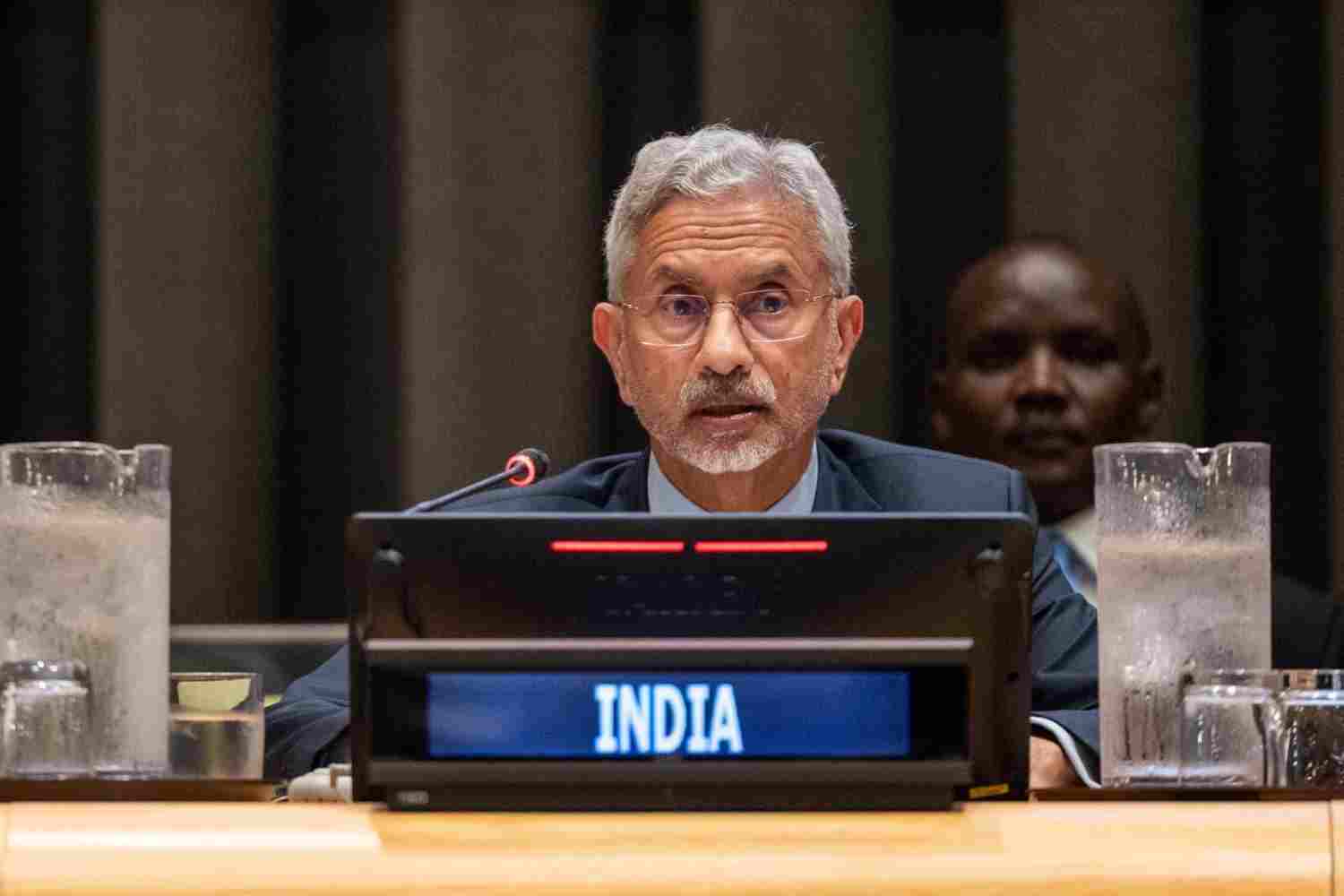
External Affairs Minister S. Jaishankar has highlighted terrorism and trade negotiations as two major issues creating difficulties in India-US relations, saying that a partnership can be affected when a country’s core security concerns are not adequately understood by its partner.
Speaking at an Asia Society event in New York following the high-level week of the 81st United Nations General Assembly, Jaishankar discussed the current state of India-US ties and the challenges confronting the strategic partnership. The conversation was moderated by former US diplomat Daniel Russel.
Terrorism Remains A Core Indian Concern
Jaishankar said terrorism remains one of India’s most important security concerns, particularly because of attacks that New Delhi says have originated from a neighbouring country over several decades.
“For us in India, what is particularly important is the issue of terrorism,” Jaishankar said, describing the experience as involving terrorism from a neighbour as part of what he characterised as a deliberate policy over many years.
He stressed that India expects its partners to understand the significance of the issue to New Delhi. According to Jaishankar, insufficient “understanding or appreciation or empathy” regarding a concern that matters deeply to India can create difficulties in bilateral relations.
“If one of my primary concerns is not fully appreciated by my partner, then clearly there is an impact on the relationship,” he said.
The minister’s remarks came amid continued US engagement with Pakistan and broader discussions over Washington’s approach to South Asian security. Other reports have linked the current tensions to differences between India and the US over terrorism, trade, tariffs and wider strategic priorities.
Trade Talks Add Another Layer Of Complexity
Jaishankar also identified trade negotiations as a significant source of friction between New Delhi and Washington.
He said the relationship had experienced “bumps” primarily because of the pace and complexity of trade discussions. India’s economic structure, including its large number of small producers, agricultural communities and factories, makes negotiations more complicated because a trade agreement can affect a wide range of domestic interests.
Jaishankar said there was now broadly an understanding regarding the trade agreement, but questions remained over changes in the US tariff framework.
He also referred to developments after US reciprocal tariffs were struck down and said a new process under Section 301 was still unfolding. The changing US trade framework, he suggested, had introduced another element of uncertainty into negotiations between the two countries.
India Seeks An Upward Trajectory
Despite highlighting the disagreements, Jaishankar said India wants its relationship with the United States to continue moving forward.
Also Read | FBI Adds Goldy Brar To Most-Wanted List, Offers $1 Million Reward
The New Indian Express reported that he expressed the expectation that bilateral ties would move “on an upward trajectory”, while acknowledging that differences between the two countries would need to be addressed.
His comments indicate that New Delhi views the relationship as important while simultaneously seeking greater understanding of its security and economic priorities.
The latest remarks follow a period of diplomatic engagement between India and the US at the United Nations in New York. Jaishankar had also met US Secretary of State Marco Rubio on the sidelines of the UN General Assembly, where Indian concerns included issues connected with US sanctions legislation and their potential economic implications for India.
Strategic Autonomy And A Multipolar World
Jaishankar also discussed the broader transformation of international relations and India’s approach to strategic autonomy.
He argued that the global system is becoming increasingly multipolar, with major powers maintaining relationships with multiple countries rather than aligning exclusively with one partner. He pointed to the United States’ relationships with countries and regions including China, Russia, Ukraine, Asia and Europe as an example of this changing diplomatic environment.
For India, maintaining multiple strategic partnerships has been a longstanding element of its foreign-policy approach.
Jaishankar’s latest comments therefore place the current India-US difficulties within a wider geopolitical context. While terrorism and trade remain immediate areas of disagreement, the two countries continue to engage across diplomatic, economic and strategic issues.
The minister’s remarks underline that New Delhi’s approach to Washington will continue to involve cooperation where interests converge, while also raising concerns where India believes its security and economic priorities require greater consideration.
Click here to join our WhatsApp Channel for real-time news updates and exclusive coverage.