Iran launched a major retaliatory missile and drone campaign against US military positions in the Middle East after American forces carried out fresh strikes on Iranian targets, pushing tensions between Washington and Tehran to their most dangerous level in weeks.
The latest escalation has raised fears of a wider regional conflict, with attacks reported in Jordan, Bahrain, Kuwait and Iraq. The confrontation is also threatening the strategically vital Strait of Hormuz, a key global energy corridor through which a significant share of the world’s oil normally passes.
US launches fresh strikes on Iranian military targets
The United States Central Command said American forces had completed a new wave of attacks against Iranian military infrastructure. The targets reportedly included air-defence systems, radar installations, maritime assets, mine-laying capabilities and communications facilities.
Washington said the operation was carried out in response to what it described as recent Iranian attempts to threaten commercial shipping in the Strait of Hormuz and American military personnel stationed in the region.
The strikes came after a series of incidents involving shipping and military targets around the strategic waterway, which has become the central flashpoint in the confrontation between the two countries.
The latest American operation reportedly struck several locations in southern Iran, including areas around Bandar Abbas, Chabahar, Jask, Sirik, Asaluyeh and Qeshm Island.
Iranian state media reported explosions at multiple sites and said parts of the electricity network in Hormozgan province were damaged, causing power disruptions.
Iran responds with missiles and drones
Iran’s Islamic Revolutionary Guard Corps said it had launched a powerful retaliatory operation against American military positions.
The IRGC claimed a heavy ballistic-missile assault was carried out against a US base in Jordan. Tehran claimed the attack caused significant American casualties, but US officials told Reuters that there were no reported US casualties from the strike based on initial assessments.
Jordan’s military said 13 ballistic missiles entered its airspace during the attack. Its air-defence systems intercepted 10 missiles, while the remaining three reportedly landed in remote areas away from populated locations.
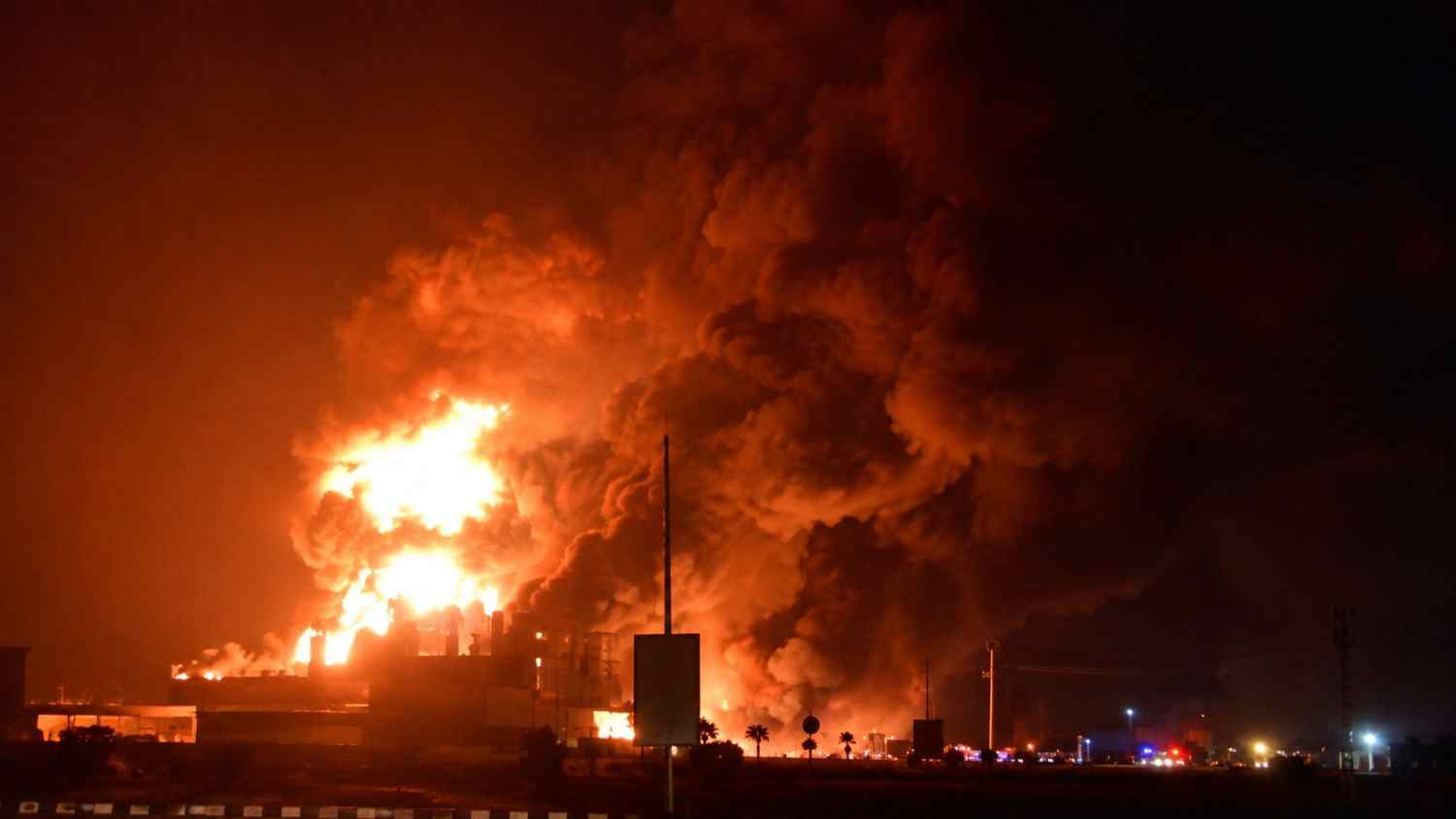
Explosions associated with missile interceptions were reported over Aqaba, where American military facilities are located.
Iranian forces also reportedly launched drones toward a US base in Bahrain. Bahraini authorities said their air-defence systems detected and destroyed Iranian drones.
Kuwait separately reported that its military was responding to a hostile drone attack, while Iran claimed its forces had also carried out coordinated missile and drone attacks against US positions in Erbil, northern Iraq. Those claims had not been independently confirmed by Iraqi or US authorities at the time of reporting.
Civilian casualties reported in southern Iran
The latest American strikes have also triggered allegations of civilian casualties.
Iranian officials and state media reported that five people were killed and at least 65 injured after a US strike hit a house hosting a wedding near Sirik in southern Iran. Iranian reports said a four-year-old child was among those killed.
Iranian officials strongly condemned the incident and vowed that the attacks would not go unanswered.
The US military said it was aware of reports concerning civilian casualties but stressed that the information had originated from Iranian state media. US Central Command maintained that American forces do not intentionally target civilians.
Trump issues fresh warning to Tehran
US President Donald Trump has responded to Iran’s retaliation with an uncompromising warning.
Trump threatened that Iran would face a significantly stronger American military response if it continued attacking US forces or interests.
His latest remarks indicate that Washington is prepared for further escalation rather than immediately returning to negotiations. Trump also expressed doubts about the durability of any future agreement with Tehran.
Iranian military officials, meanwhile, warned that the United States would face further retaliation. The IRGC and Iran’s military leadership described their planned response in increasingly forceful terms, signalling that Tehran was not prepared to back down.
Strait of Hormuz becomes key battlefield
At the centre of the confrontation is the Strait of Hormuz, one of the world’s most important energy chokepoints.
Roughly one-fifth of global oil supplies normally move through the waterway, meaning prolonged disruption could have serious consequences for international energy markets and global trade.
Iran has effectively restricted shipping through the strait since the conflict began, while the United States has sought to reopen the route and prevent Tehran from using mines, missiles or other weapons to threaten commercial vessels.
The renewed fighting has already unsettled energy markets. Oil prices rose by more than $4 a barrel, reaching a five-week high as investors reacted to the growing threat to regional supplies and shipping.
Escalation follows month-long lull
The latest exchange of attacks follows a period of relative calm between Washington and Tehran.
The two sides had largely avoided direct military confrontation for about a month, although tensions remained high and economic pressure continued.
The current escalation began with US strikes on Iranian rocket launchers on Larak Island in the Strait of Hormuz. Iran subsequently launched missile attacks toward US positions in Jordan, while regional countries reported intercepting Iranian drones and missiles.
The confrontation has now shifted once again from economic pressure and sanctions to direct military exchanges.
Iran had offered a possible path back to ceasefire
The escalation is particularly significant because Iranian President Masoud Pezeshkian had indicated only hours earlier that Tehran could return to an interim ceasefire arrangement reached with Washington in June.
Pezeshkian said Iran would reciprocate if the United States returned to its commitments under the earlier understanding.
That agreement had envisioned an immediate halt to fighting followed by negotiations aimed at achieving a broader settlement. However, disagreements over control of the Strait of Hormuz ultimately contributed to its collapse.
With missiles and drones now flying across several parts of the Middle East and Washington warning of a potentially larger offensive, hopes for an immediate diplomatic breakthrough appear increasingly fragile.
The latest confrontation also carries consequences far beyond the US and Iran. Any prolonged disruption around the Strait of Hormuz could affect oil supplies, shipping costs, global markets and economies dependent on Middle Eastern energy exports.
For now, both Washington and Tehran appear locked in a dangerous cycle of attack and retaliation, raising fears that the renewed conflict could expand across the wider Middle East.
Click here to join our WhatsApp Channel for real-time news updates and exclusive coverage.