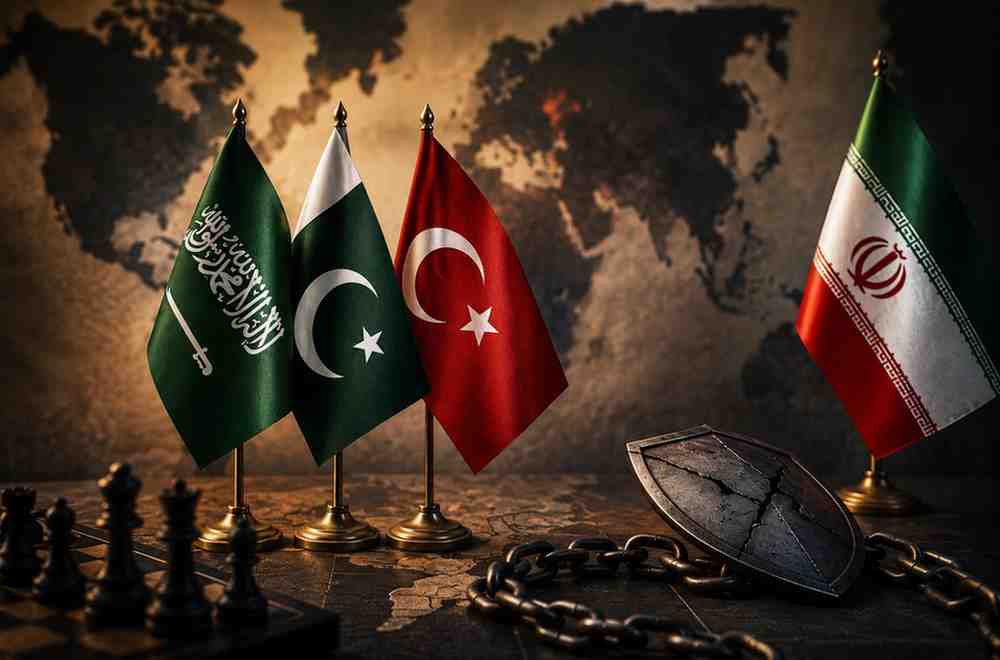
Iran has issued a sharp warning to Saudi Arabia following the signing of a landmark joint defence agreement with Pakistan and Türkiye, arguing that regional security cannot be achieved simply through military alliances or defence arrangements.
The warning comes at a highly sensitive moment for West Asia, where tensions remain elevated amid the wider Iran conflict, attacks involving regional actors and growing concerns over the future of Gulf security. Saudi Arabia, Pakistan and Türkiye signed the Mecca Joint Defence Agreement on Friday, August 7, committing to stronger collective defence cooperation.
Iran Sends Strong Message To Riyadh
Iran’s response reflects its concern over the emergence of a stronger security partnership involving three influential Muslim-majority countries.
The agreement signed in Mecca establishes a principle under which an armed attack against one of the participating countries would be treated as an attack against all three. The pact was signed by Saudi Crown Prince Mohammed bin Salman, Turkish President Recep Tayyip Erdogan and Pakistani Prime Minister Shehbaz Sharif.
The arrangement potentially marks a significant shift in the regional security landscape. Saudi Arabia has traditionally depended heavily on its security relationship with the United States, while Pakistan and Türkiye bring their own substantial military capabilities and strategic influence.
Iran’s warning therefore comes against the backdrop of a rapidly changing regional balance.
Saudi Arabia, Pakistan And Türkiye Deepen Military Ties
The new agreement is designed to strengthen military coordination and collective deterrence among the three countries.
Saudi Arabia brings considerable financial resources, strategic geography and a major defence infrastructure to the partnership. Türkiye possesses NATO’s second-largest military, while Pakistan is the world’s only Muslim-majority nuclear-armed state. Together, the three countries represent a significant combination of economic and military power.
Officials have stressed that the agreement is defensive in nature and is not aimed at any particular country. The pact also does not formally create a NATO-style alliance, despite comparisons being made by analysts and commentators.
The agreement nevertheless sends a powerful political signal at a time when Saudi Arabia is seeking to strengthen its ability to respond to external threats and diversify its defence relationships.
Pact Comes Amid Intensifying Regional Crisis
The timing of the agreement is particularly significant. The Middle East has experienced severe instability amid the continuing conflict involving Iran, Israel and the United States, with Gulf countries facing increasing security and economic risks. The situation has also affected energy infrastructure and shipping routes, including the strategically vital Strait of Hormuz.
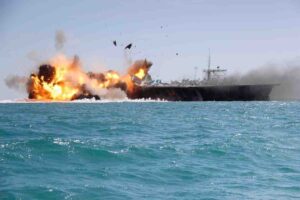
Recent developments have placed additional pressure on Gulf states to strengthen their defensive capabilities and reduce vulnerabilities. Reuters reported that the Saudi-Türkiye-Pakistan agreement comes amid escalating regional tensions, including Iranian missile attacks and disruptions affecting Gulf oil exporters.
At the same time, diplomatic efforts are continuing to prevent the crisis from triggering an even wider confrontation. Iran and Oman have been engaged in discussions concerning the reopening of the Strait of Hormuz, with Tehran saying negotiations were close to completion.
What The Mecca Defence Agreement Means
The agreement could have consequences extending well beyond the three signatories.
For Saudi Arabia, closer cooperation with Türkiye and Pakistan provides additional strategic options at a time when Riyadh is reassessing its security environment.
For Türkiye, the pact expands its role in Gulf affairs and strengthens its military and diplomatic influence across the broader Islamic world.
For Pakistan, the agreement reinforces its longstanding defence relationship with Saudi Arabia while providing an opportunity to deepen strategic cooperation with Türkiye.
The collective-defence clause is perhaps the most important element. By declaring that an attack on one country would be regarded as an attack on all three, the agreement aims to strengthen deterrence and raise the potential cost of military action against any member.
Iran-Saudi Tensions Add To Strategic Uncertainty
The development is especially significant because relations between Iran and Saudi Arabia have been complicated by years of strategic rivalry, although the two countries have also pursued diplomatic engagement and attempts at de-escalation.
Also Read: India Rebukes US Lawmaker Over FCRA Bill, Calls Foreign Funding Rules Internal Matter
The new defence partnership could add another layer to that relationship.
Tehran is likely to closely monitor how the agreement develops, particularly whether the three countries expand intelligence sharing, military exercises, defence production or operational coordination.
However, the pact does not automatically mean that Saudi Arabia, Türkiye and Pakistan are preparing for a direct confrontation with Iran. The signatories have described the agreement as defensive, while the broader objective is to strengthen collective security and deterrence.
A Major Shift In West Asian Security
The Mecca agreement highlights how rapidly the regional security architecture is evolving.
Saudi Arabia’s decision to strengthen defence ties with Pakistan and Türkiye comes as Gulf states face an increasingly complex strategic environment. The agreement could give Riyadh greater flexibility in balancing relationships with Washington, Ankara, Islamabad and other regional powers.
For Iran, however, the emergence of a stronger trilateral security framework represents a development that could complicate its strategic calculations.
As the regional crisis continues, the central question will be whether the new defence pact contributes to greater deterrence and stability—or becomes another factor in an already tense geopolitical environment.
For now, the message from Tehran is clear: Iran does not believe military partnerships alone can guarantee lasting security, while Saudi Arabia and its partners appear determined to build stronger collective defences in response to an increasingly uncertain region.
Click here to join our WhatsApp Channel for real-time news updates and exclusive coverage.