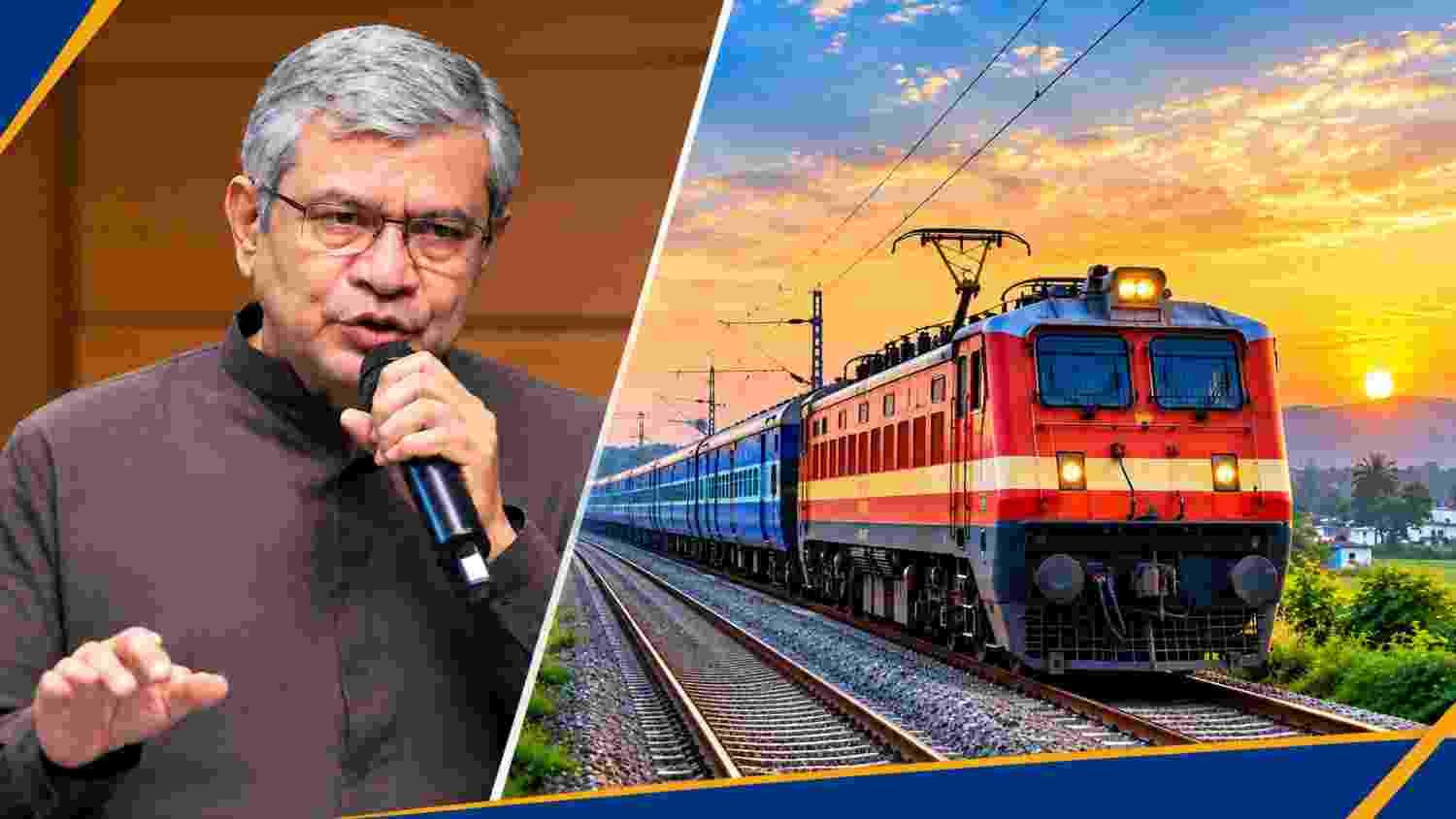
The Cabinet Committee on Economic Affairs (CCEA), chaired by Prime Minister Narendra Modi, has approved five major railway infrastructure projects with a combined estimated cost of approximately ₹10,021 crore. The projects, covering Tamil Nadu, Andhra Pradesh, Karnataka and Telangana, are aimed at expanding rail capacity, easing congestion and improving the movement of passengers and freight across key routes.
The approved works will add around 540 km to the Indian Railways network and strengthen connectivity across 17 districts. The projects are expected to improve operational efficiency, service reliability and logistics movement while creating better access to important economic, industrial and tourist destinations.
Five Major Railway Projects Approved
The projects cleared by the CCEA include four multi-tracking and doubling works and one major multitracking project.
- Arakkonam–Renigunta: Third and fourth lines covering 77 km.
- Whitefield–Bangarapet: Third and fourth lines covering 47 km.
- Hosur–Omalur: Doubling of 147 km.
- Salem–Karur–Dindigul: Doubling of 159 km.
- Secunderabad (Ghatkesar)–Kazipet: Multitracking covering 110 km.
Together, these projects are designed to substantially increase railway line capacity on important routes. The additional infrastructure will help streamline train operations, reduce bottlenecks and provide greater flexibility for handling growing passenger and freight traffic.
Connectivity to 2,121 Villages
The approved projects are expected to strengthen rail connectivity for approximately 2,121 villages with a combined population of around 52 lakh people. By improving access to railway services, the projects are intended to support regional development and provide communities with better opportunities for employment, business and self-employment.
The infrastructure push is also aligned with the broader vision of developing a more connected and self-reliant India. Improved rail links can facilitate the movement of people, agricultural produce, industrial goods and essential commodities while supporting economic activity along the project corridors.
Boost for Tourism and Regional Development
The railway capacity expansion will also improve connectivity to several prominent tourist and religious destinations. These include Tirupati, Subramaniya Swamy Temple at Tiruttani, Sri Padmavati Ammavaari Temple at Tiruchanur, Kotilingeshwara Devaalaya, Sri Seethi Byraveshwara Swamy Temple, Bangaru Tirupati and Kolar Gold Fields.
Also Read — ₹10,783 Crore Railway Mega Boost: Cabinet Approves Projects To Transform Connectivity
Other destinations expected to benefit from improved rail connectivity include Hogenakkal Falls, Hosur Fort, Mettur Dam, Kodaikanal Hills, Sathyamangalam Wildlife Sanctuary, Namakkal Anjaneyar Temple, Namakkal Fort and Kalyana Pasupatheswar Temple.
In Telangana, the projects will strengthen access to destinations such as Yadagirigutta Temple, Bhongir Fort, Surendrapuri and Swarnagiri Temple, further supporting tourism and local economic activity.
PM Gati Shakti to Drive Integrated Planning
The projects have been planned under the PM Gati Shakti National Master Plan, which focuses on integrated infrastructure planning and stronger multimodal connectivity. The approach is intended to improve coordination among different stakeholders and enhance the efficiency of logistics networks.
By creating seamless connectivity for the movement of people, goods and services, the projects are expected to strengthen the role of railways in India’s transportation and supply-chain infrastructure.
Freight Capacity Set to Rise
The projects are particularly significant for freight transportation. The routes are important for moving commodities such as coal, cement, iron and steel, containers, automobiles, food grains, petroleum products and fertilisers.
According to the project assessment, the capacity enhancement is expected to facilitate additional freight traffic of about 47 million tonnes per annum (MTPA). Higher rail freight capacity could help shift more cargo to an energy-efficient mode of transportation and reduce pressure on road-based logistics.
Environmental and Economic Benefits
The railway expansion is also projected to generate environmental benefits. As railways are considered an energy-efficient and comparatively environment-friendly mode of transport, increased rail capacity can contribute to reducing logistics-related emissions and fuel consumption.
The approved works are expected to help reduce oil imports by approximately 8 crore litres and lower carbon dioxide emissions by around 42 crore kg. The estimated reduction in emissions has been equated to the environmental benefit of planting approximately 2 crore trees.
With the five projects spanning 540 km across four states, the latest approval represents a significant investment in railway capacity and regional connectivity. The combination of passenger connectivity, freight expansion, tourism access and environmental gains is expected to strengthen the railway network and support long-term economic development along the project corridors.
Click here to join our WhatsApp Channel for real-time news updates and exclusive coverage.