
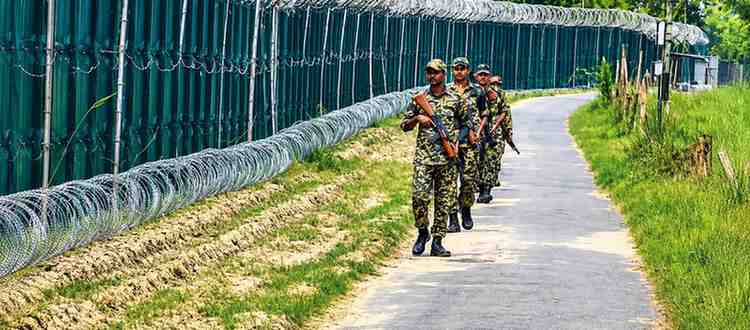
The Indian Army is set to begin raising its first Integrated Battle Groups (IBGs) under the XVII Mountain Strike Corps next month, marking a major milestone in the force’s ongoing transformation into a faster, more agile and technology-driven military. The initiative is designed to improve operational readiness and enable quicker deployment in response to evolving security challenges, particularly along India’s northern frontiers.
A New Era Of Military Transformation
The Integrated Battle Group concept has been developed as part of the Army’s long-term modernisation strategy. Unlike conventional military formations that rely on multiple command levels before deployment, an IBG is a self-contained combat unit that combines infantry, armoured elements, artillery, engineers, air defence, signals and logistics under a single commander.
This integrated structure allows the force to mobilise rapidly and launch operations with minimal delay, making it better suited for modern battlefield requirements.
Why The Mountain Strike Corps Was Chosen
The XVII Mountain Strike Corps has been selected for the first rollout because of its strategic role in safeguarding India’s northern borders. The challenging mountainous terrain demands highly mobile and self-sufficient formations capable of responding swiftly to any emerging threat.
Military planners believe that deploying IBGs in this sector will significantly strengthen India’s ability to conduct both defensive and offensive operations while maintaining operational flexibility.
Faster Response, Better Coordination
One of the biggest advantages of the Integrated Battle Group model is its reduced mobilisation time. Since all combat and support elements are permanently grouped together, commanders can initiate operations immediately without waiting for reinforcements from separate formations.
This streamlined command structure is expected to improve coordination among different combat arms, enhance battlefield awareness and enable faster decision-making during critical situations.
Equipped For Modern Warfare
The new battle groups are expected to be equipped with advanced surveillance systems, drones, secure communication networks, precision artillery and integrated logistics support. These capabilities will allow troops to operate independently for extended periods while maintaining high operational effectiveness.
The Army’s focus on technology-driven warfare reflects changing global military trends, where intelligence, speed and precision have become key factors in determining battlefield success.
Learning From Recent Conflicts
The introduction of IBGs is also influenced by lessons learned from recent international conflicts, which have demonstrated the importance of rapid deployment, integrated command systems and real-time intelligence sharing.
By combining multiple combat capabilities into a single formation, the Indian Army aims to improve its preparedness for future conflicts involving high-intensity and multi-domain warfare.
Key Highlights
- The Indian Army will operationalise its first Integrated Battle Groups under the XVII Mountain Strike Corps.
- Each IBG will combine infantry, armour, artillery, engineers, air defence, signals and logistics into one integrated combat formation.
- The initiative aims to reduce mobilisation time and improve operational readiness.
- The battle groups are expected to strengthen India’s defence posture along the northern borders.
- Modern technologies such as drones, surveillance systems and advanced communication networks will be integrated into the new formations.
- The reform is part of the Army’s broader effort to build a leaner, faster and more effective fighting force.
Strategic Importance
The launch of Integrated Battle Groups represents one of the most significant organisational reforms undertaken by the Indian Army in recent years. By integrating combat and support units under a unified command, the Army seeks to improve battlefield efficiency, enhance rapid response capabilities and strengthen national security. Defence experts believe that if the initial implementation proves successful, similar battle groups could gradually be introduced across other operational commands, making the Indian Army better prepared for future security challenges and modern warfare.
The introduction of Integrated Battle Groups marks a significant shift in the Indian Army’s operational strategy. By integrating combat and support units into self-sufficient formations, the Army aims to improve response time, battlefield coordination and combat effectiveness.
The reform reflects India’s focus on modern, technology-driven warfare and stronger border preparedness. If implemented successfully, the IBG model could redefine military operations and enhance India’s overall defence capability in future conflicts.