NEW DELHI: India has firmly reiterated that any outstanding boundary issues with Nepal must be resolved exclusively through bilateral mechanisms, rejecting suggestions of involving third parties in the process. The Ministry of External Affairs (MEA) emphasized that New Delhi remains committed to dialogue and diplomacy with Kathmandu but sees no role for outside countries in addressing the long-standing border dispute.
The clarification comes amid discussions triggered by recent remarks from Nepal’s Prime Minister, who suggested that countries such as the United Kingdom could also have an interest in the issue because the origins of the present boundary trace back to the era of British India. The comments sparked debate within Nepal and drew attention across the region.
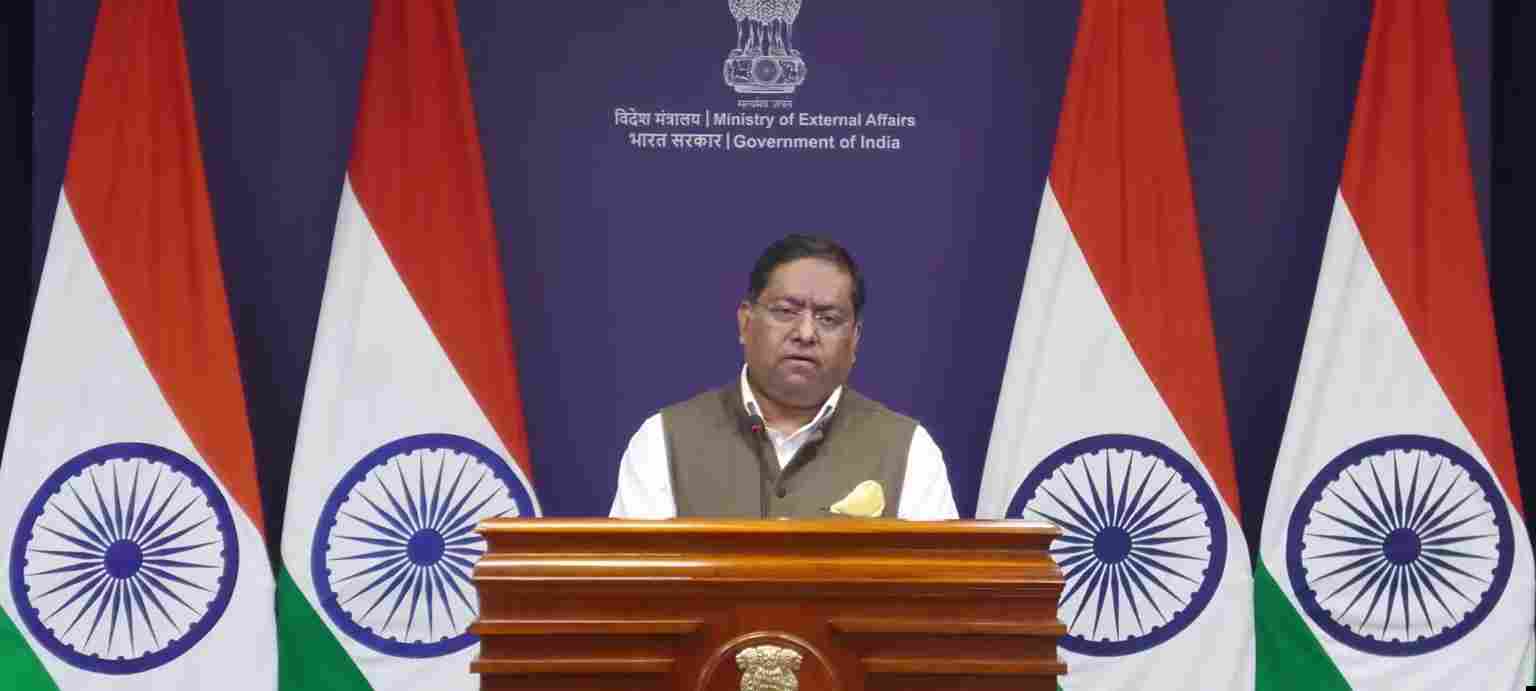
Responding to media queries, India’s MEA reiterated its consistent position that unresolved boundary matters should be handled through established bilateral channels between New Delhi and Kathmandu. The ministry stated that India remains open to constructive engagement with Nepal on all aspects of the relationship, including boundary-related concerns, through direct discussions.
The border dispute largely revolves around the areas of Kalapani, Lipulekh and Limpiyadhura, which have been a source of disagreement between the two neighbours for years. Nepal claims the territories as part of its sovereign land, while India maintains that Nepal’s claims are not supported by historical facts and evidence. New Delhi has repeatedly described unilateral territorial assertions as untenable while expressing willingness to continue diplomatic engagement.
The issue regained prominence after Nepal raised objections to activities linked to the Lipulekh region, including the resumption of the Kailash Mansarovar Yatra route through the pass. Nepal has continued to assert its claim over the area, while India has maintained its existing position and called for discussions through bilateral mechanisms.
Political reactions within Nepal have also intensified. Several opposition leaders and border experts questioned remarks suggesting that Nepal had encroached on Indian territory. Former diplomats and analysts argued that while there are instances of cross-border land use by local residents due to missing boundary markers and river course changes, these should not be equated with official territorial encroachment by the Nepali state.
Nepal’s Foreign Ministry later clarified that the Prime Minister’s comments referred to issues related to cross-border occupation and land use in border areas rather than any change in Nepal’s official position regarding disputed territories. The ministry stressed that Nepal continues to maintain its established claims over Kalapani, Lipulekh and Limpiyadhura.
Despite periodic tensions, both countries have repeatedly affirmed their commitment to peaceful resolution of differences through diplomatic channels. Experts note that the vast majority of the India-Nepal boundary has already been settled, with only a limited number of segments remaining under dispute. Officials on both sides have often indicated that negotiations involving diplomats, surveyors and technical experts remain the preferred path forward.
India and Nepal share deep historical, cultural and economic ties along their 1,751-kilometre open border. While boundary issues occasionally create friction, both governments continue to emphasize dialogue, cooperation and mutual respect as the foundation of their bilateral relationship.