
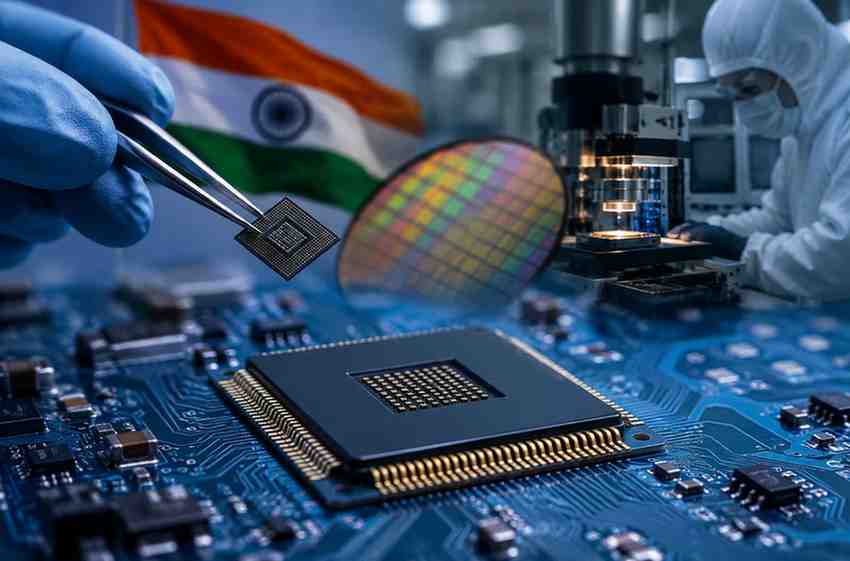
NEW DELHI: India has taken another major step toward becoming a global semiconductor manufacturing hub after the Union Cabinet approved the India Semiconductor Mission (ISM) 2.0 with an outlay of ₹1.27 trillion (₹1.27 lakh crore). The ambitious initiative is designed to strengthen the country’s semiconductor ecosystem, encourage domestic production, reduce dependence on imports, and attract large-scale investments in one of the world’s most strategic industries.
The approval comes at a time when semiconductors have become central to economic growth, technological innovation, artificial intelligence, electric vehicles, telecommunications, defence systems, and consumer electronics. Governments across the world are investing heavily in chip manufacturing to secure supply chains following disruptions experienced during the COVID-19 pandemic and rising geopolitical tensions.
A New Phase of India’s Semiconductor Journey
The newly approved Semiconductor Mission 2.0 builds upon the government’s earlier semiconductor programme launched in 2021. While the first phase focused on establishing fabrication units and packaging facilities, the second phase aims to create a more comprehensive ecosystem that includes raw materials, equipment manufacturing, design capabilities, research, and advanced production technologies.
Union Electronics and Information Technology Minister Ashwini Vaishnaw said the expanded mission reflects India’s long-term commitment to becoming a reliable partner in the global semiconductor value chain. According to the government, the new programme is expected to make India’s semiconductor industry more competitive while encouraging innovation and technology development.
Focus Beyond Chip Manufacturing
One of the most significant features of Semiconductor Mission 2.0 is its broader approach. Instead of concentrating only on fabrication plants, the programme extends incentives across the semiconductor supply chain.
The government plans to support manufacturers producing semiconductor-grade chemicals, specialty gases, silicon wafers, manufacturing equipment, and other essential materials required for chip production. Reports indicate these sectors will receive financial incentives to encourage domestic manufacturing and reduce reliance on imports.
The programme will also strengthen India’s chip design ecosystem by providing financial assistance through grants and equity support for innovative semiconductor companies and startups. Officials believe nurturing domestic design capabilities is critical to creating long-term technological leadership.
Strengthening India’s Electronics Ecosystem
The Cabinet’s decision is expected to complement India’s rapidly expanding electronics manufacturing industry. Over the past several years, India has emerged as one of the world’s fastest-growing mobile phone manufacturing destinations, with several multinational companies establishing production facilities across the country.

Experts believe the availability of locally manufactured semiconductor components will improve supply chain resilience, reduce production costs, and make India a more attractive destination for global electronics manufacturers.
The semiconductor initiative also aligns with the government’s broader vision of Atmanirbhar Bharat, which seeks to strengthen domestic manufacturing while reducing strategic dependence on imported technologies.
Boost for Employment and Investments
Industry analysts expect the expanded semiconductor programme to generate thousands of high-skilled jobs in engineering, manufacturing, research, design, and advanced technology development.
Read Also: Red Fort Closed To Visitors Till August 15 Ahead Of Independence Day Preparations
Large semiconductor projects require substantial investment in infrastructure, skilled manpower, and research facilities. As new fabrication plants, packaging units, testing facilities, and design centres are established, employment opportunities are expected to grow across multiple sectors.
The government also expects the initiative to attract both domestic and international investors looking to participate in India’s growing semiconductor ecosystem.
Strategic Importance in a Changing Global Market
The semiconductor industry has become a key strategic sector worldwide. Chips power everything from smartphones and laptops to automobiles, medical devices, industrial machinery, satellites, and defence equipment.
Recent global shortages exposed the vulnerability of international supply chains, prompting countries including the United States, Japan, South Korea, members of the European Union, and India to introduce major incentive programmes for semiconductor manufacturing.
India’s Semiconductor Mission 2.0 is expected to position the country as a trusted manufacturing destination while supporting global efforts to diversify semiconductor production beyond existing manufacturing centres.
Complementary Manufacturing Push
Alongside the semiconductor mission, the Cabinet also approved a ₹62,500 crore Mobile Phone Manufacturing Scheme, further strengthening India’s electronics manufacturing ecosystem. Together, these initiatives aim to create a complete value chain—from semiconductor production to finished electronic devices—within the country.
Officials believe the combined programmes will encourage greater localisation of manufacturing, improve exports, and enhance India’s competitiveness in global technology markets.
Looking Ahead
The approval of India Semiconductor Mission 2.0 represents one of the country’s largest investments in advanced technology manufacturing. By supporting fabrication facilities, semiconductor design, raw material production, equipment manufacturing, and research, the government aims to establish a robust ecosystem capable of serving both domestic and international markets.
As global demand for semiconductors continues to rise with the growth of artificial intelligence, electric vehicles, 5G networks, cloud computing, and digital infrastructure, India hopes this long-term investment will help transform it into a significant player in the global semiconductor industry.
With policy support, financial incentives, and increasing participation from private industry, Semiconductor Mission 2.0 is expected to play a crucial role in shaping India’s technological future while contributing to economic growth, innovation, and strategic self-reliance.
Click here to join our WhatsApp Channel for real-time news updates and exclusive coverage.