Delhi’s protest landscape has undergone a significant change after the Delhi Police removed Jantar Mantar from the list of designated venues for protests and demonstrations, naming three alternative locations where gatherings can be organised. The decision comes amid tensions surrounding political demonstrations in the national capital and renewed concerns over access to public spaces for peaceful protests.
According to a standing order dated October 11, 2026, Ramlila Ground, Burari Ground and CBD Ground in East Delhi have been designated as alternative venues for demonstrations. The directive was signed by Delhi Police Commissioner Anurag Kumar and modifies an earlier order issued on April 28, 2022, which had identified Jantar Mantar as an authorised location for protests.
The development could have wider implications for political parties, civil society groups and campaigners who have traditionally used Jantar Mantar to organise demonstrations and draw public attention to their demands.
Delhi Police Revises Rules for Protest Venues
The latest standing order represents a change in the existing arrangements for organising protests in the national capital. Under the previous framework, Jantar Mantar was among the recognised locations where demonstrations could take place, subject to the applicable police permissions and conditions.
With the revised order, Ramlila Ground, Burari Ground and CBD Ground in East Delhi have been identified as the alternative sites for such activities.
The police have also indicated that revised standard operating procedures (SOPs) governing demonstrations at the three designated locations will be issued separately. These procedures are expected to provide further guidance on how protests can be organised and managed at the newly identified venues.
However, the order, as described in the available information, does not provide further details about the specific operational arrangements that will apply to the alternative sites.
The change raises questions about how political organisations and other groups will be able to coordinate demonstrations, particularly when they seek to attract public attention in central Delhi.
CJP Seeks Permission to Hold Peaceful Protest
The decision has drawn attention from CJP, whose chief spokesperson, Saurav Das, said the party had formally informed the police of its intention to organise a peaceful demonstration at Jantar Mantar.
According to Das, the organisation had requested a date on which it could hold the proposed protest. He said the police had acknowledged the party’s communication but had not provided a date or explained the grounds for withholding permission.
The absence of a clear response has become a point of contention between the organisation and the authorities.
Das said CJP had given the police 24 hours to respond to its request. He warned that the party would announce a march if the authorities failed to provide a response within the specified deadline.
The statement signals the possibility of another political mobilisation in Delhi if the dispute over permission remains unresolved.
Although the organisation has maintained that its proposed demonstration would be peaceful, the timing and location of any future march will depend on the developments that follow the police order and the response to its request.
CJP Alleges Excessive Force During Crackdown
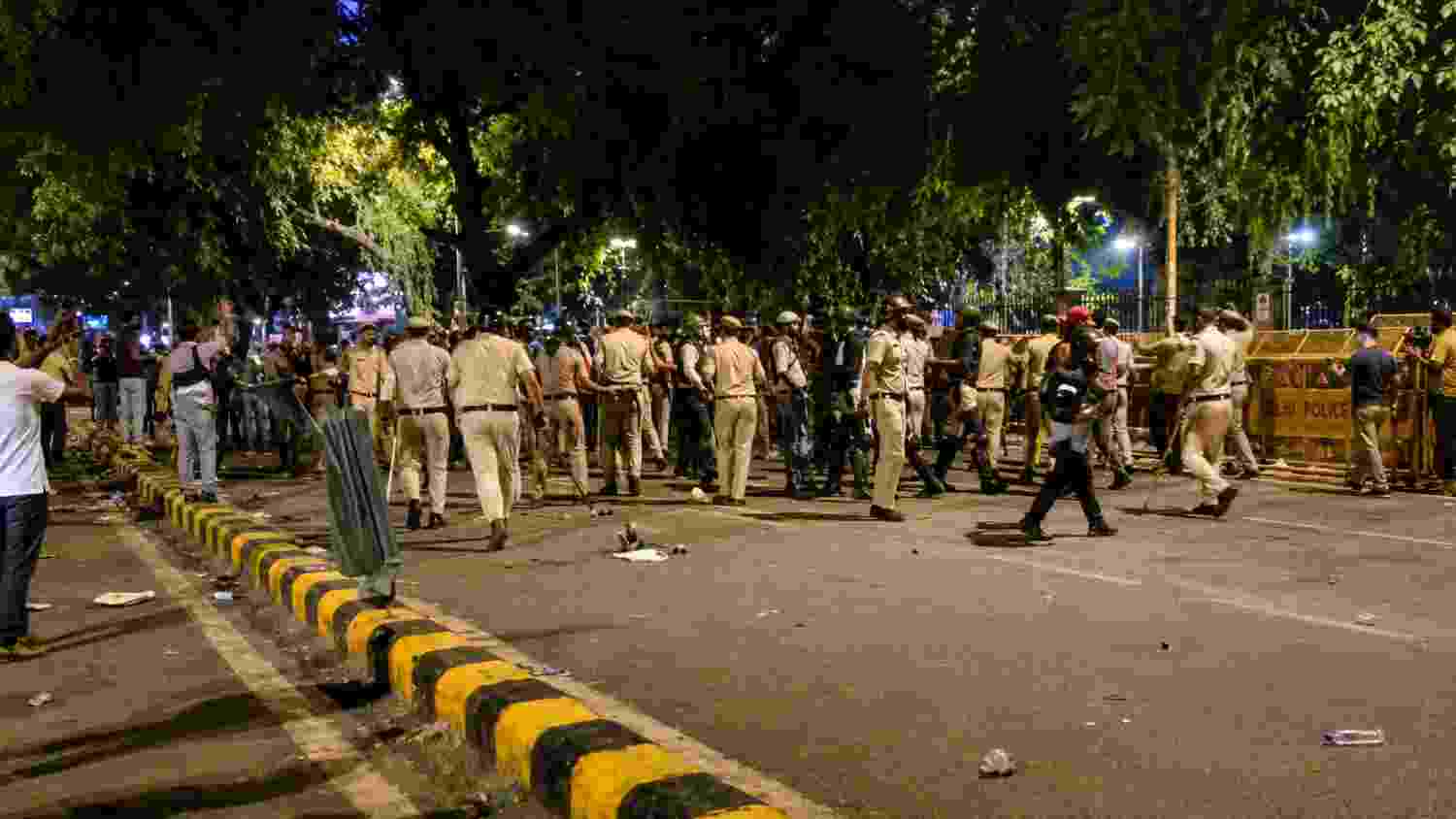
Apart from the dispute over the protest venue, Das levelled allegations of excessive force against the Delhi Police during a recent crackdown on demonstrators.

He claimed that protesters had been beaten inside buses during the operation. He also alleged that senior police officials, including the Deputy Commissioner of Police and the Additional Deputy Commissioner of Police, had avoided speaking to a delegation representing the organisation.
These allegations have not been independently established in the information available for this report. A detailed response from the Delhi Police addressing the specific claims was not included in the statement provided.
Das strongly criticised the authorities’ handling of the protesters, accusing the government of acting against its own citizens. “The Government of India is waging a war on its own citizens,” he said.
Also Read | INDIA Bloc March To Supreme Court: Rahul Gandhi Escalates ‘Vote Chori’ Battle Against CEC
Despite the allegations, Das reiterated that CJP intended to continue its protest activities peacefully. His remarks underline the growing disagreement between the organisation and the authorities over the treatment of demonstrators and the process for obtaining permission to hold public gatherings.
Jantar Mantar’s Changing Role in Delhi Protests
Jantar Mantar has long been associated with public demonstrations in Delhi, serving as a prominent location for political campaigns, social movements and protests over public policy.
Its central location has made it a recognisable gathering point for organisations seeking visibility and media attention. Removing the site from the designated list could therefore affect how groups plan their demonstrations and communicate their demands to the public.
The three alternative locations named in the October 11 order may provide designated spaces for protests, but the practical implications will depend on the forthcoming SOPs, permission requirements and arrangements governing access to these venues.
For political organisations, the immediate concern is whether the revised framework will allow demonstrations to take place without unnecessary obstacles while maintaining public order.
The issue also places renewed focus on the balance between police responsibilities, the management of public spaces and citizens’ ability to express their views through peaceful assembly.
Political Tensions Could Intensify Over Protest Restrictions
The decision to remove Jantar Mantar from the list of designated protest venues comes at a politically sensitive moment, with demonstrations and proposed marches drawing attention to the administration of public gatherings in Delhi.
CJP’s demand for a response within 24 hours adds urgency to the dispute. If the police do not provide the requested date or clarify their position, the organisation has indicated that it may announce a march.
Whether the proposed demonstration proceeds, and where it takes place, remains uncertain.
The revised order establishes three alternative venues, while the police have said that detailed operating procedures will follow separately. Until those arrangements are clarified and the dispute over CJP’s request is addressed, questions surrounding protest permissions and the future use of Jantar Mantar are likely to remain in focus.
The coming days may determine whether the disagreement is resolved through communication between the organisation and the police or develops into another confrontation over the right to demonstrate in the national capital.
Click here to join our WhatsApp Channel for real-time news updates and exclusive coverage.