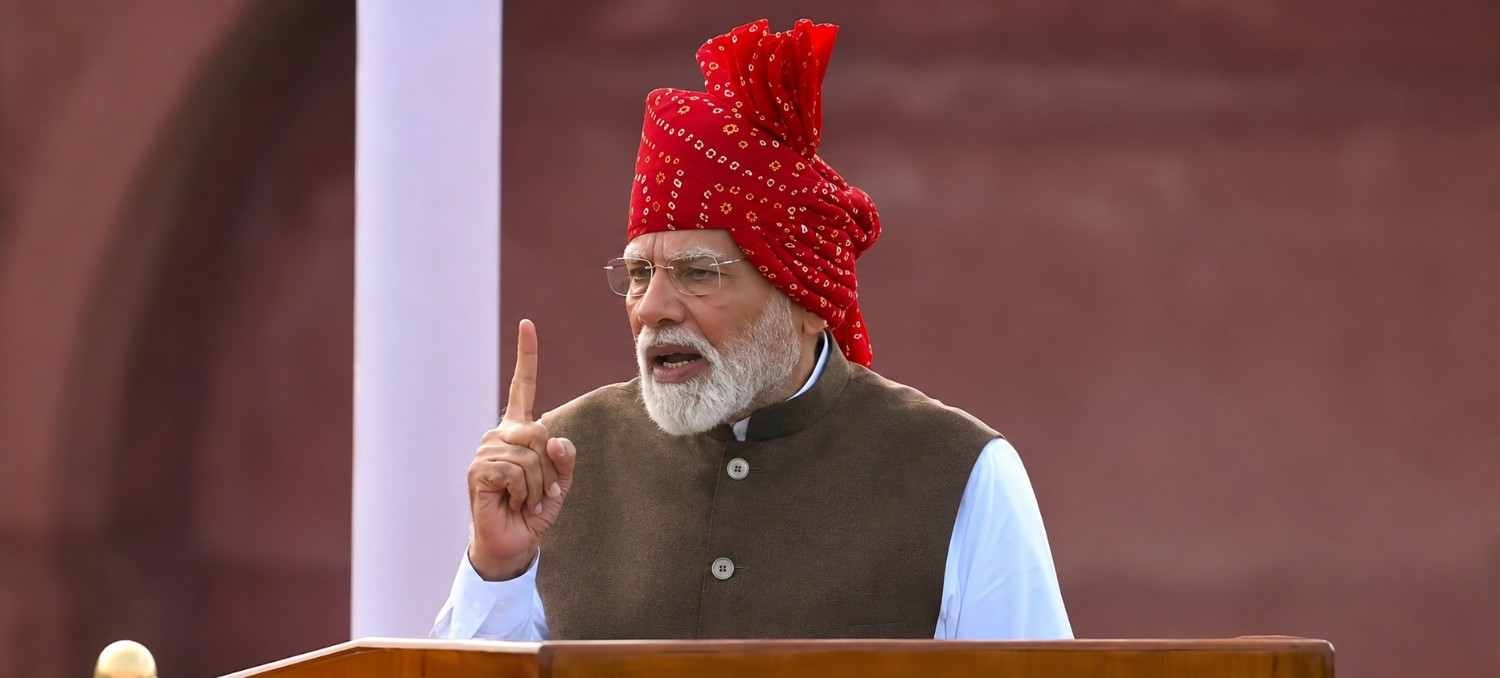
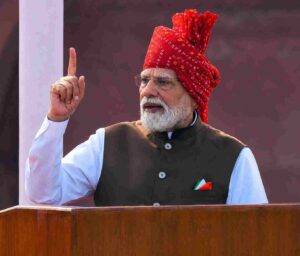
Prime Minister Narendra Modi’s Independence Day address from the Red Fort on August 15, 2026, delivered a sharp warning about what he described as a new dimension of the Naxal threat — the “Dimagi Naxals.” While asserting that armed Naxalism in forested regions has been pushed to the brink of extinction, Modi argued that a Naxal ideology or mentality continues to exist and can influence society from within.
What Did PM Modi Mean by ‘Dimagi Naxals’?
The phrase “Dimagi Naxals”, literally referring to people with a Naxal mindset, was used by Modi to distinguish ideological supporters from armed Maoist insurgents.
According to the Prime Minister, security forces have made significant progress against Naxals who operated with weapons in forest areas. However, he warned that individuals who allegedly continue to promote or sympathise with the ideology remain a challenge.
Modi said such people need to be identified and isolated, presenting the issue as part of the larger battle to protect young Indians from extremist influence.
From Armed Insurgency to an Ideological Battle
Naxalism in India has historically been associated with a Maoist insurgency that emerged from the 1967 Naxalbari uprising in West Bengal. Over subsequent decades, armed groups operated across parts of central and eastern India, particularly in remote and forested regions.
The conflict resulted in thousands of deaths and affected civilians, security personnel and local communities.
In his Independence Day speech, Modi highlighted the government’s long-running campaign against the armed movement. He recalled that after taking office in 2014, his government had resolved to work towards freeing the country from Naxalism.
The Prime Minister claimed that Maoist violence is now “breathing its last”, portraying the decline of armed insurgency as a major national-security achievement.
Why ‘Dimagi Naxal’ Has Become a Political Flashpoint
The expression is likely to generate political debate because “Dimagi Naxal” is not a formal legal classification. Rather, Modi used it as a political description for people whom he believes retain or promote a Naxal mindset despite the weakening of armed insurgency.
The speech therefore shifted the focus from conventional counter-insurgency operations to the ideological dimension of the conflict.
Modi argued that the country cannot become fully developed if extremist thinking continues to influence young people or create unrest. His warning came within a broader Independence Day address focused on national unity, economic strength, technology, self-reliance and the goal of building a developed India by 2047.
Modi Links Naxalism With Youth and National Development
A central element of the Prime Minister’s argument was the protection of India’s younger generation from what he described as destructive ideological influences.
Also Read — PM Modi’s Saptdhara Explained: 7 Sectors Set To Power India’s Next Jobs Revolution
Modi said that areas once associated with violence, fear and bloodshed are increasingly witnessing development and new opportunities. He presented this transformation as evidence that security operations combined with development can change regions previously affected by Maoist violence.
His warning about “Dimagi Naxals” was consequently framed not only as an internal-security issue but also as a challenge to India’s long-term development ambitions.
Political Opposition Questions the Term
The Prime Minister’s remarks have already triggered political criticism. Congress leaders questioned the use of the term and challenged the government’s interpretation of ideological opposition.
Critics argue that expressions such as “Dimagi Naxal” or similar labels can become controversial when applied broadly to political opponents, activists, academics or critics. Supporters of Modi’s position, however, view the warning as an attempt to expose ideological support for violent extremism even after armed groups have weakened.
The controversy highlights a larger question: where should the line be drawn between legitimate political dissent and support for violent extremist ideology?
A New Chapter in India’s Naxalism Debate
Modi’s “Dimagi Naxal” warning signals a possible change in the language surrounding India’s decades-old fight against Maoist violence. The government’s emphasis is increasingly moving from armed groups operating in remote areas to the ideological ecosystem that it believes can sustain extremist movements.
The Prime Minister’s message was unequivocal: eliminating armed Naxal groups, in his view, is not enough if the ideology behind them continues to influence people.
As India pursues its broader Viksit Bharat 2047 vision, the debate over “Dimagi Naxals” is likely to remain politically charged. For the government, it represents a warning about ideological extremism; for critics, it raises questions about how dissent and political disagreement are defined.
The Independence Day speech has therefore opened a fresh and emotionally charged chapter in India’s long-running debate over Naxalism, ideology, national security and the limits of political dissent.
Click here to join our WhatsApp Channel for real-time news updates and exclusive coverage.