India’s defence exports have crossed a historic milestone of over ₹38,000 crore, reflecting the growing global trust in indigenous defence manufacturing and the success of the Make-in-India initiative, Raksha Mantri Rajnath Singh said on Saturday.
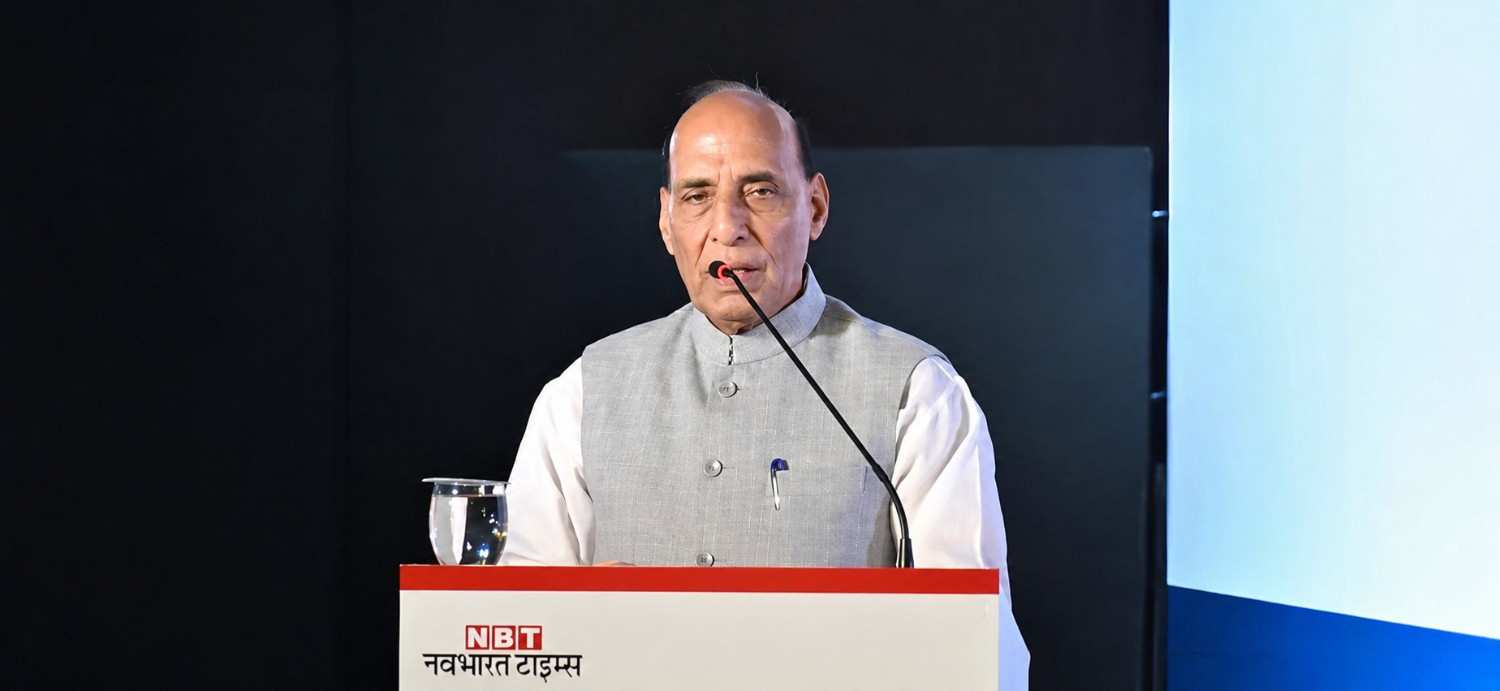
Addressing a programme organised by a media organisation in New Delhi, Singh highlighted the transformation of India’s defence sector over the last 12 years. He said the country’s rising defence production and exports demonstrate the effectiveness of policy reforms and the government’s focus on self-reliance in strategic sectors.
“Defence exports reached a record over ₹38,000 crore today, representing an increase of nearly 57 times and underlining the global confidence in Make-in-India platforms,” Rajnath Singh said.
He noted that India’s defence exports have witnessed remarkable growth from just ₹686 crore in FY 2013-14 to over ₹38,000 crore, making the country an increasingly important supplier of defence equipment to friendly nations.
Defence Production Reaches Historic High
The Raksha Mantri also announced that India’s annual defence production touched an all-time high of ₹1.78 lakh crore during the financial year 2025-26, nearly three times the production level recorded in 2014-15.
According to Singh, the steady rise in indigenous production reflects the government’s commitment to strengthening domestic manufacturing capabilities while reducing dependence on imports.
“The annual defence production touched an all-time high of ₹1.78 lakh crore in Financial Year 2025-26,” he said.
He emphasised that increased domestic production not only strengthens national security but also generates employment, promotes innovation, and enhances India’s competitiveness in the global defence market.
Make-in-India Driving Self-Reliance
Rajnath Singh credited the success of the Make-in-India initiative for transforming India’s manufacturing landscape across multiple sectors, including defence.

He recalled that when the initiative was launched in 2014, several critics questioned its viability. However, the programme has since emerged as a major driver of industrial growth and technological advancement.
“There has been a transformational change in India’s global stature. While the world earlier paid little heed to our voice, today it listens attentively to India’s perspective on global issues,” he said.
The minister said India’s expanding defence exports illustrate the growing confidence of international partners in Indian-designed and Indian-manufactured defence platforms.
Journey Towards Viksit Bharat
Highlighting the broader development agenda, Rajnath Singh described the past twelve years as a period of continuous transformation.
“India’s journey over the last 12 years has been a progression from shortages to self-reliance, from self-reliance to self-confidence, and from self-confidence towards building a Viksit Bharat,” he stated.
He said the first term of the government focused on addressing shortages and improving governance, while the second term accelerated the country’s journey towards Aatmanirbharta. According to him, the current term is laying the foundation for a developed India through the principle of “Reform, Perform, Transform.”
The minister expressed confidence that India would continue to strengthen its position as a global economic and strategic power through sustained reforms and indigenous innovation.
Growth Beyond Defence
Apart from defence manufacturing, Rajnath Singh highlighted progress in sectors such as semiconductor manufacturing, digital infrastructure, mobile production, automobile exports, and telecommunications.
He said India has made significant strides in emerging technologies, including semiconductor production and the nationwide rollout of indigenous 5G technology, while work is already underway on 6G development.
The minister also referred to India’s expanding digital economy, pointing out that 22.35 billion UPI transactions worth ₹29 lakh crore were recorded in April, showcasing the country’s leadership in digital payments.
He further highlighted reforms such as the JAM Trinity, Direct Benefit Transfer, and the Goods and Services Tax (GST), saying these initiatives have improved governance, reduced leakages, and strengthened cooperative federalism.
Read Also: ‘Zero Tolerance Against Terror’: Amit Shah Says MHA’s Action Against 23 Terrorists Reflects PM Modi’s Vision
Call for Responsible Journalism
During his address, Rajnath Singh also underlined the critical role of the media in an era of rapid technological change and artificial intelligence.
He said journalism must maintain a balance between technological efficiency and human sensitivity to preserve public trust.
“The future success of journalism will depend on how well it establishes a balance and synergy between the capabilities of AI and human empathy. While AI will make journalism faster and more precise, emotional intelligence will ensure that it remains humane and credible,” he said.
Emphasising the importance of responsible reporting, particularly on matters related to national security, the Defence Minister urged media organisations to uphold the highest professional standards.
“While being the first to report may be important in journalism, disseminating correct news is even more crucial.”
He added that misinformation can adversely affect society as well as the morale of the armed forces.
“Especially when the subject concerns the defence forces, national security, or the honour of those who make the supreme sacrifice in the service of the nation, every word becomes a matter of national responsibility. The media must always uphold the values of accuracy, objectivity, and impartiality,” Rajnath Singh said.
The Defence Minister concluded by asserting that India’s growing defence production and record exports are not merely economic achievements but also symbols of the country’s increasing strategic capability and global credibility under the Make-in-India initiative.
Click here to join us on WhatsApp Channel and get all the latest news updates