
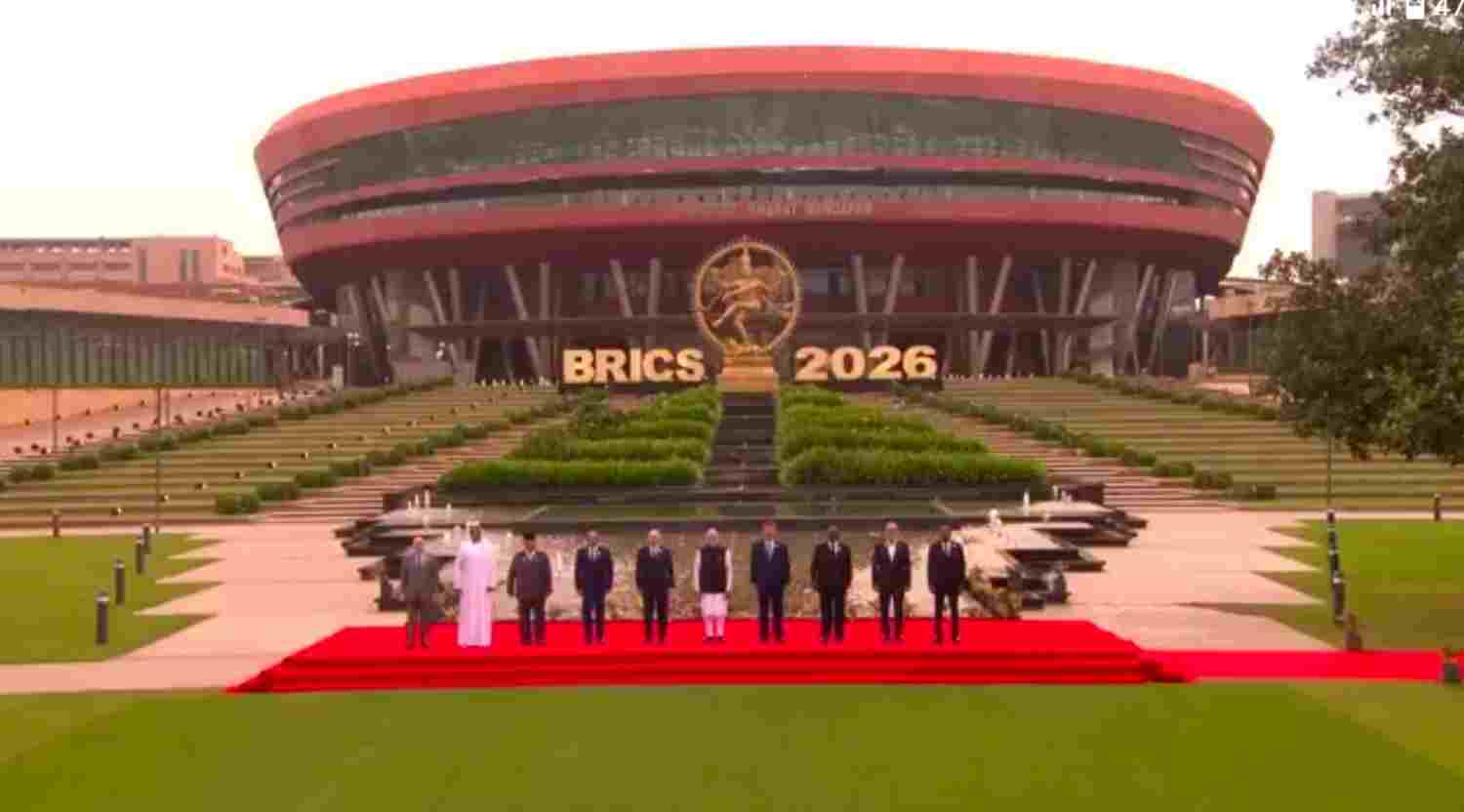
The BRICS nations have reached a significant consensus on the New Delhi Declaration, bringing together the expanded grouping despite sharp differences over the conflicts in West Asia. Prime Minister Narendra Modi announced the adoption of the declaration during the 18th BRICS Summit in New Delhi on Saturday, describing the grouping as having “come of age” and stressing the need to turn its unity and consensus into concrete outcomes on the global stage.
The agreement is being viewed as an important diplomatic achievement for India, which has been leading efforts to bridge differences among BRICS members. Negotiations had been particularly challenging because Iran and the United Arab Emirates have taken opposing positions amid the wider West Asian conflict.
BRICS Condemns Pahalgam Terror Attack
One of the significant elements of the New Delhi Declaration is its explicit reference to the April 22, 2025 terrorist attack in Jammu and Kashmir’s Pahalgam, in which 26 civilians were killed.
The BRICS statement strongly condemned the attack and reaffirmed the group’s commitment to fighting terrorism in all its forms and manifestations. It also highlighted concerns relating to the cross-border movement of terrorists, terror financing and the existence of safe havens.
The inclusion of the Pahalgam attack gives the declaration particular importance for India, as New Delhi has consistently pushed for a stronger international response against terrorism and its support networks.
The declaration’s language reflects a broader BRICS position that terrorism remains a serious international challenge requiring coordinated action. By referring to terrorism financing and safe havens alongside cross-border movement, the grouping has emphasized that counterterrorism efforts need to address both attacks and the networks that facilitate them.
BRICS Voices Concern Over West Asia War
The declaration also focuses heavily on the worsening security situation in the Middle East and West Asia. BRICS members expressed deep concern over the continuing escalation of tensions and called on all sides to exercise maximum restraint.

The bloc urged countries to avoid steps that could further intensify the conflict and stressed the importance of protecting civilians and civilian infrastructure. It also called for greater use of dialogue and diplomacy to achieve a long-term understanding capable of delivering peace, security and stability in the region.
Another important concern highlighted by the declaration is the impact of regional conflicts on international commerce. BRICS stressed the need to maintain the smooth movement of global trade, supply chains and energy flows in accordance with international law.
This economic dimension is particularly significant because prolonged instability in West Asia can affect energy markets, shipping routes, supply chains and the wider global economy.
Nuclear Risks And International Law
The New Delhi Declaration also raises concerns about the growing danger of nuclear conflict. At a time of heightened geopolitical tensions, the BRICS countries have underlined the need to prevent further escalation and support peaceful mechanisms for resolving disputes.
The declaration reiterates the importance of resolving international disputes through dialogue, consultation and diplomacy. It also advocates a multilateral approach that takes into account the national positions of different countries on major global issues.
BRICS additionally criticized unilateral coercive measures that it says are inconsistent with international law. The position reflects the grouping’s broader effort to promote a more multilateral international order and strengthen the voice of emerging and developing economies.
Major Diplomatic Breakthrough For India
The agreement on the declaration assumes added significance because BRICS had faced serious internal disagreements before the New Delhi summit. In particular, differences between Iran and the UAE over the West Asian conflict had complicated negotiations.
The two countries joined BRICS in 2024, adding greater geopolitical diversity to an already broad grouping. Their contrasting positions on the regional conflict made consensus over the wording of the declaration particularly difficult. BRICS negotiators, known as Sherpas, held discussions for several days in an effort to find language acceptable to all members.
India’s diplomatic balancing was central to the process. New Delhi maintains important relationships with both Iran and the UAE, while Prime Minister Modi held separate high-level meetings with Iranian President Masoud Pezeshkian and Abu Dhabi Crown Prince Khaled bin Mohamed bin Zayed Al Nahyan around the summit.
Trade And Financial Cooperation Remain Key Priorities
Beyond geopolitical conflicts, the declaration also addresses economic cooperation among BRICS members. The grouping supports continued discussions aimed at developing practical solutions for cross-border payments.
BRICS 2026: “Pioneering Role In Peace” — Xi Jinping Urges Bold Action On Middle East Crisis
The focus on payments forms part of the wider BRICS effort to strengthen economic cooperation and make transactions between member countries more efficient. The declaration also links economic stability with the uninterrupted movement of trade, energy and supply chains.
The consensus achieved in New Delhi therefore extends beyond a statement on wars and security. It seeks to reinforce BRICS as a platform where countries with different political positions can still cooperate on shared economic and international priorities.
New Delhi Declaration Signals BRICS Unity
The adoption of the declaration marks an important moment for India and the expanded BRICS grouping. Despite differences among members on major geopolitical questions, the bloc managed to reach a common position on terrorism, regional conflicts, nuclear risks, diplomacy, international law and economic cooperation.
For New Delhi, the outcome strengthens its argument that BRICS can serve as a platform for dialogue rather than simply as a bloc defined by opposition to any particular power. The agreement also demonstrates the challenges and possibilities of managing an increasingly diverse grouping.
As Prime Minister Modi emphasized, the next challenge for BRICS will be converting consensus into tangible results. The New Delhi Declaration provides the political framework; its long-term significance will depend on how effectively member countries translate those commitments into cooperation on peace, security, trade and global governance.
Click here to join our WhatsApp Channel for real-time news updates and exclusive coverage.