
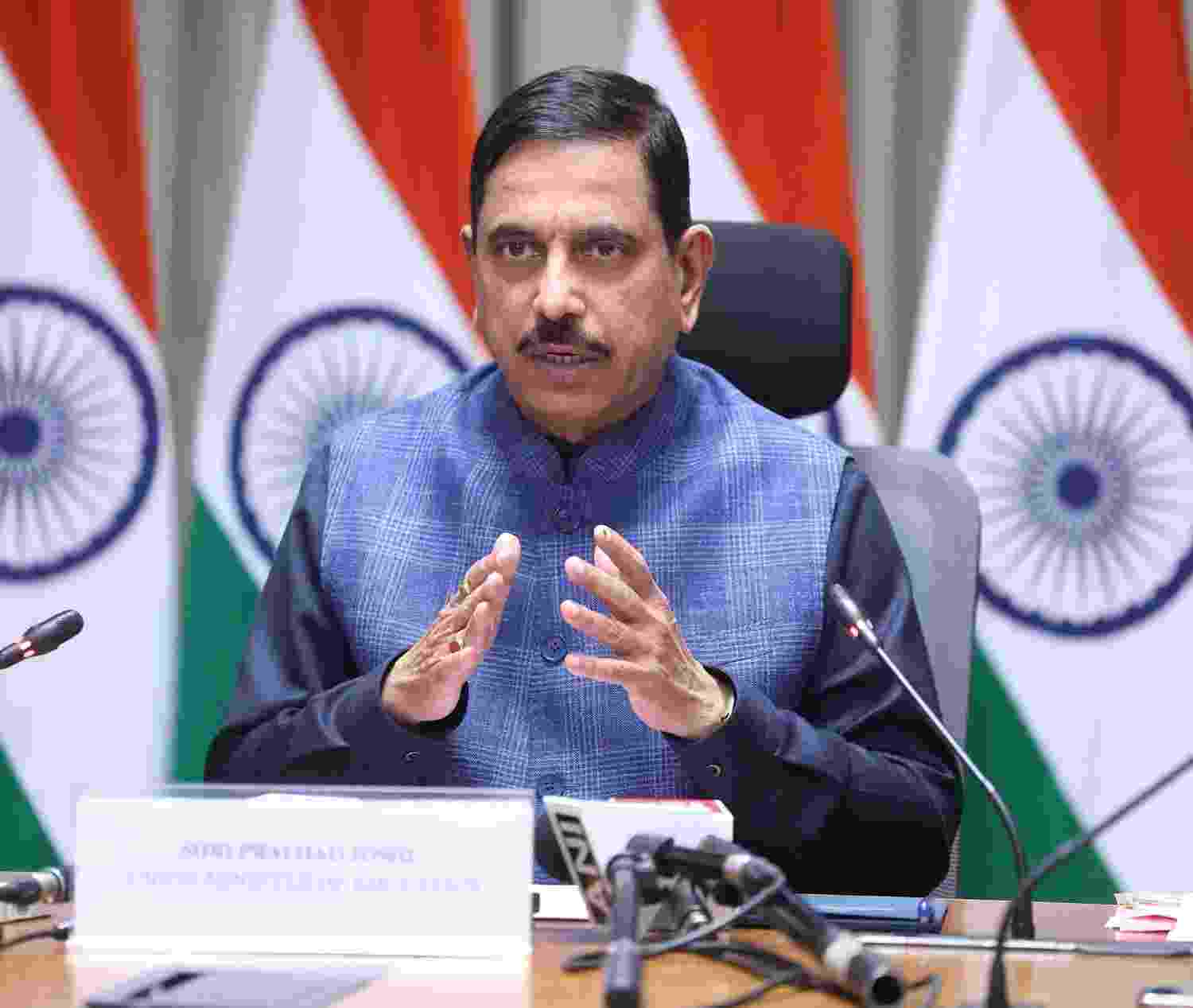
India is accelerating its efforts to establish itself as a global education hub, with the Union Ministry of Education stepping up initiatives to expand the international presence of Indian universities, attract foreign students and strengthen academic partnerships with leading institutions worldwide. The government’s latest push focuses on taking Indian higher education beyond national boundaries while creating greater opportunities for international universities to establish campuses in the country.
Union Education Minister Shri Pralhad Joshi chaired the first meeting of the Parliamentary Consultative Committee of the Ministry of Education for 2026, focusing on the internationalisation of Indian education. Union Minister of State for Education Shri Jayant Chaudhary, Secretary of the Department of Higher Education Ms. Deepti Gaur Mukerjee, Secretary of the Department of School Education and Literacy Shri T. K. Anil Kumar and other senior officials attended the meeting.
The discussions centred on the country’s growing educational influence, international academic cooperation, overseas expansion of Indian institutions and the government’s long-term vision of transforming the nation into a preferred destination for quality education.
India Seeks to Strengthen Its Global Education Footprint
Addressing the committee, Shri Pralhad Joshi highlighted the historical significance of the Indian Knowledge System and its contribution to intellectual and academic development across the world.
He emphasised that India’s traditional knowledge, educational practices and academic achievements have the potential to make a much greater impact internationally. The Ministry is therefore working towards expanding the global reach of Indian education through institutional partnerships, international campuses and collaborative research programmes.
The minister also highlighted the government’s efforts to facilitate the establishment of foreign university campuses in the country while encouraging Indian higher education institutions to expand their presence overseas.
According to the information shared during the meeting, approximately 21 foreign higher education institutions are currently operational in India, alongside several international academic and research collaborations.
The growing demand for Central Board of Secondary Education (CBSE) schools outside the country was also highlighted as an important indicator of the international acceptance and credibility of Indian educational programmes.
Four Major Strategies to Internationalise Higher Education
The Department of Higher Education presented its four-pronged strategy to strengthen the country’s position in the global education landscape.
The approach focuses on promoting international academic and research collaborations, attracting overseas students to Indian universities,10 facilitating the establishment of foreign university campuses in India and supporting Indian higher education institutions in setting up campuses abroad.

An important development highlighted during the meeting was the issuance of 17 Letters of Intent to foreign universities under the University Grants Commission (UGC) Regulations. These institutions include universities from the United Kingdom, the United States, Australia and Italy.
The initiative is expected to encourage international institutions to establish a stronger presence in the country, offering students greater access to globally recognised academic programmes without necessarily having to travel abroad.
The committee was also informed about several government-backed programmes designed to improve international academic engagement.
These include Bharat Innovates, the Scheme for Promotion of Academic and Research Collaboration (SPARC), the Global Initiative of Academic Networks (GIAN) and the Direct Admission of Students Abroad (DASA) scheme.
The revamped Study in India (SII) portal was another key initiative discussed. The platform aims to simplify access to information about Indian educational institutions and facilitate the admission process for international students interested in pursuing higher education in the country.
NEP 2020 and Viksit Bharat 2047 Drive Educational Transformation
The Department of School Education and Literacy outlined how the National Education Policy (NEP) 2020 and the vision of Viksit Bharat 2047 are guiding the country’s transformation into a globally competitive education system.
The department highlighted several measures aimed at aligning Indian school education with international standards while preserving the country’s linguistic and cultural diversity.
These initiatives include curriculum alignment with global benchmarks, multilingual education, international exchange programmes for students and teachers, and improvements in academic assessment systems.
The PARAKH National Assessment Centre is also playing an important role in promoting assessment quality, academic equivalence and consistency across educational institutions.
Also Read | India Economy 2026: Rising Inflation, Falling Rupee Raise Stagflation Fears
The government’s approach seeks to ensure that students receive education that meets international expectations while remaining connected to the country’s educational values and knowledge traditions.
268 CBSE Schools Operating Across 26 Countries
One of the significant developments discussed during the meeting was the expanding international network of CBSE-affiliated schools.
According to the department, 268 CBSE schools are currently operational across 26 countries, reflecting the growing demand for Indian school education among overseas communities.
To strengthen its international administration and coordination, CBSE has also established an overseas regional office in Dubai.
The department further informed the committee that a standardised assessment framework had been introduced across affiliated schools operating internationally. The objective is to maintain consistency in academic evaluation and ensure uniform educational standards across different countries.
The expansion of CBSE schools is particularly significant for Indian communities living abroad, as it provides students with access to an education system aligned with the country’s curriculum and academic structure.
It also creates opportunities to strengthen educational and cultural connections between the country and other nations.
Parliamentary Committee Welcomes Government Initiatives
Members of Parliament appreciated the initiatives undertaken by the Department of Higher Education and the Department of School Education and Literacy to promote the internationalisation of Indian education.
During the discussions, members also offered suggestions on strengthening the country’s educational ecosystem and improving the international competitiveness of Indian institutions.
Particular attention was given to expanding vocational education, enhancing skill-based learning opportunities and increasing the overseas presence of Indian educational institutions.
The suggestions are expected to contribute to further discussions on developing a more comprehensive international education strategy.
India Aims to Become a Global Education Destination
The government’s internationalisation strategy represents an important shift in the country’s education ambitions. Rather than limiting its focus to domestic educational development, the country is increasingly seeking to participate in global academic networks, attract international talent and establish its institutions as recognised centres of learning.
The expansion of foreign university campuses, international research partnerships and CBSE schools abroad could create new opportunities for students, educators and academic institutions.
With NEP 2020 providing the policy framework and Viksit Bharat 2047 setting the broader national vision, the government is seeking to make education more accessible, competitive and internationally connected.
The success of these initiatives will ultimately depend on the quality of academic programmes, research opportunities, institutional partnerships and the ability of Indian universities to compete with established global education destinations.
Nevertheless, the latest developments underline the country’s growing determination to strengthen its position on the international education map and emerge as a major global destination for learning, innovation and academic excellence.
Click here to join our WhatsApp Channel for real-time news updates and exclusive coverage.