
India has strongly rejected international criticism of its handling of recent protests, accusing United Nations human rights mechanisms of selective targeting and warning against using human rights concerns as a tool of political pressure.
The response comes after more than 20 UN human rights experts raised concerns over the alleged use of excessive force, mass detentions and restrictions on peaceful demonstrations in India. The experts have urged authorities to investigate reported violations and ensure accountability for those affected.
Barkha Tamrakar, Deputy Secretary in the Ministry of External Affairs, delivered India’s statement at the United Nations General Assembly’s Third Committee on Tuesday during discussions on the Working Group on Enforced or Involuntary Disappearances.
In her address, Tamrakar highlighted India’s constitutional protections and institutional mechanisms for addressing allegations of human rights violations. She stressed that human rights issues should not be used to exert political pressure or single out individual countries.
“Human rights should not be used as an instrument of political pressure or selective country targeting,” she said.
India Rejects Allegations of Selective Targeting
Describing India as a vibrant democracy governed by the rule of law, she pointed to constitutional safeguards and independent institutions as essential mechanisms for addressing allegations of human rights abuses.
Emphasising the seriousness of enforced disappearances, Tamrakar said such violations cause profound suffering for victims and their families. She urged countries to eliminate the practice through preventive action, accountability measures and protection for civil society.
India further noted that it had signed the International Convention for the Protection of All Persons from Enforced Disappearance and reaffirmed its continued engagement with international human rights mechanisms.
India reiterated its position that international human rights discussions should be guided by impartiality, transparency, cooperation and respect for national sovereignty. It objected to what it described as attempts to portray the country negatively through allegations and incomplete statistics.
India’s response reflects its broader objection to international institutions commenting on domestic law-and-order matters without, in its view, applying consistent standards across countries.
New Delhi has maintained that the right to peaceful assembly is constitutionally protected, subject to reasonable restrictions in the interest of public order. It has also argued that the country’s democratic institutions, independent judiciary and free media provide avenues for addressing grievances.
The government has previously described criticism from the UN human rights office concerning the Delhi protests as unwarranted interference in India’s internal affairs.
UN Experts Raise Alarm Over Police Action
The latest criticism followed a statement issued by independent UN human rights experts in Geneva on October 20. The experts expressed concern over reports that police used force against demonstrators, including students, despite the reportedly peaceful nature of some assemblies.
According to the experts, protesters were allegedly subjected to baton charges, arbitrary detention and restrictions that prevented thousands of people from participating in demonstrations. They also highlighted concerns about the treatment of student activists, journalists, lawyers and human rights defenders.

The experts called on Indian authorities to stop the excessive use of force, reconsider broad restrictions on public gatherings and avoid the misuse of digital surveillance, including biometric monitoring and internet disruptions.
They also sought an independent, impartial and comprehensive investigation into the conduct of police and other forces involved in the protests.
The experts stressed that allegations of abuse must be investigated and that victims should have access to justice and appropriate remedies.
These statements represent the experts’ assessment of reported incidents; the allegations require appropriate investigation and should not be treated as judicial findings.
Electoral Roll Revision Becomes Flashpoint
The protests have been fuelled by controversy surrounding the Election Commission’s Special Intensive Revision of electoral rolls. Opposition parties and youth-led groups have questioned the exercise, arguing that large-scale deletions could deprive eligible citizens of their voting rights.
The dispute has become particularly contentious following claims that approximately 130 million names were removed from electoral lists during the revision process. Critics have raised concerns about the potential impact on economically disadvantaged people, homeless citizens and minority communities.
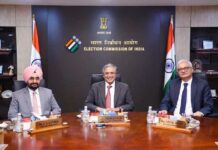
The Election Commission and the ruling Bharatiya Janata Party (BJP) have rejected allegations of manipulation. The commission has maintained that the exercise is intended to remove duplicate, deceased, relocated and otherwise ineligible voters.
It has also said that individuals whose names are wrongly excluded can pursue the prescribed appeal and correction procedures.
Concerns about the demographic impact of the deletions have added to political tensions. However, claims that particular communities have been disproportionately affected remain disputed, and the absence of comprehensive religion-wise data complicates independent verification of such assertions.
Also Read | India Slams OIC Over Anti-India Resolutions: “Malicious, Biased And False,” Says MEA
The controversy has broadened the demonstrations beyond their earlier focus on education-related grievances and brought electoral transparency to the centre of the protest movement.
Mass Detentions and Restrictions Under Scrutiny
The UN experts also expressed concern about reports of large-scale detentions during recent demonstrations in the national capital. Their statement referred to more than 7,000 young people, journalists, lawyers, human rights defenders and political workers reportedly detained over the relevant period.
Reports have also raised questions about the seizure of mobile phones, the deletion of protest-related material and restrictions on public movement.
Authorities have invoked legal provisions to regulate gatherings in parts of Delhi, citing public safety and law-and-order concerns. Such measures have triggered debate over the balance between maintaining public order and protecting the constitutional freedoms of expression and peaceful assembly.
The experts argued that restrictions must satisfy legal requirements and be necessary and proportionate to a legitimate objective. They warned that blanket prohibitions, arbitrary detention and disproportionate force could undermine fundamental rights.
India, meanwhile, has consistently maintained that law-enforcement agencies operate within the law and that citizens have access to judicial remedies.
India-UN Tensions Intensify Over Human Rights
The latest disagreement adds another chapter to the continuing debate over India’s engagement with international human rights institutions. New Delhi has repeatedly objected to what it sees as inconsistent scrutiny, arguing that international bodies must demonstrate impartiality when assessing domestic developments across different countries.
For the UN experts, the central concern is whether authorities are adequately protecting the rights of people participating in peaceful demonstrations and ensuring accountability where violations are alleged.
The standoff also raises broader questions about democratic accountability, electoral transparency and the limits of police powers during public protests.
With protest groups continuing to demand changes to the electoral revision process and accountability over alleged misconduct, the issue is likely to remain politically sensitive.
The immediate challenge for the Indian government is to address public concerns while maintaining law and order. For international human rights mechanisms, the challenge is to ensure that their assessments are evidence-based, consistent and focused on protecting fundamental freedoms.
The dispute ultimately places both domestic institutions and international observers under scrutiny over how democratic rights, public safety and accountability should be balanced.
Click here to join our WhatsApp Channel for real-time news updates and exclusive coverage.