
India has firmly rejected Pakistan’s allegations over the September 15 collision involving Indian and Pakistani naval vessels in the western Arabian Sea, with the Ministry of External Affairs saying the Pakistani warship’s manoeuvre violated established maritime safety rules and the 1991 bilateral agreement.
The diplomatic exchange followed a collision between the Indian Navy’s INS Kolkata and Pakistan Navy’s PNS Hunain on September 15. New Delhi said the incident occurred while INS Kolkata was carrying out a routine deployment in the western Arabian Sea.
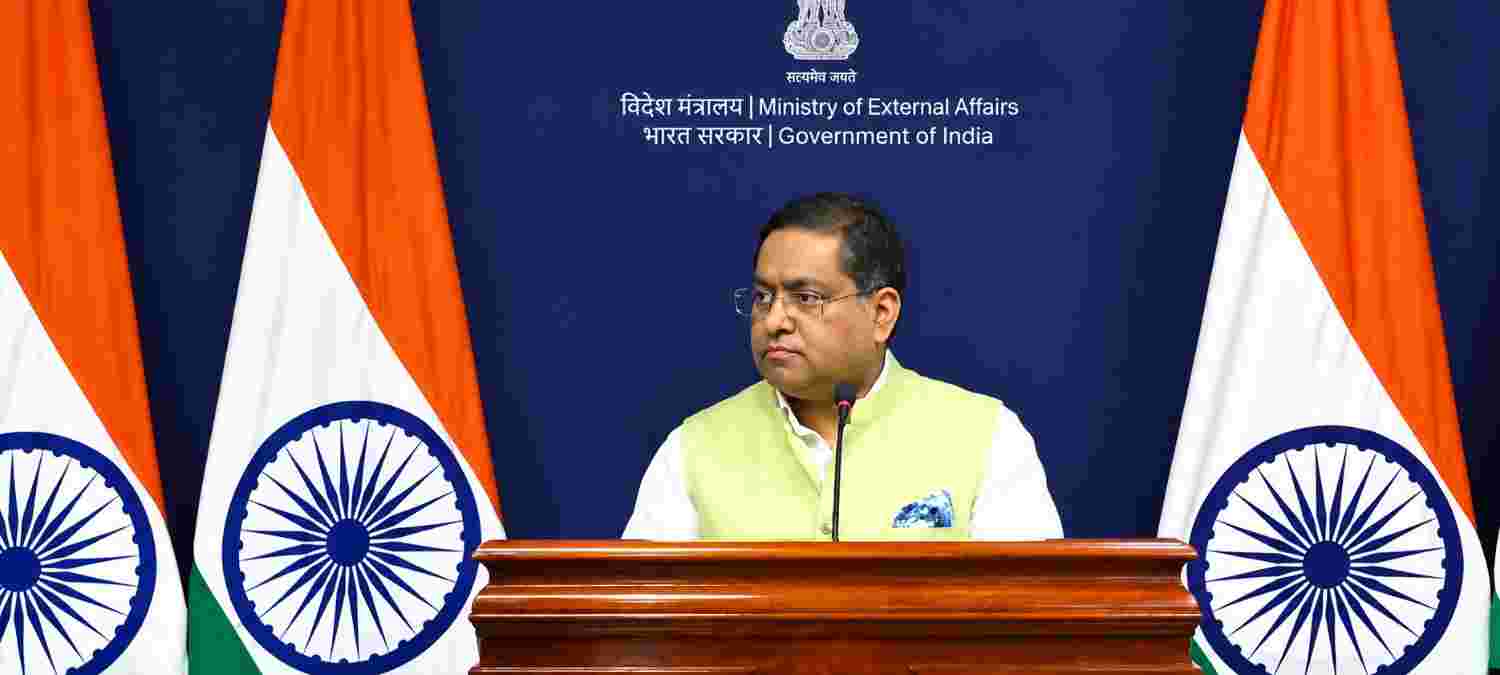
MEA spokesperson Randhir Jaiswal rejected Pakistan’s allegations during a media briefing on Friday, saying New Delhi had expected Islamabad’s response after New Delhi lodged a formal protest.
Jaiswal said India “categorically” rejected the allegations and insinuations made by Pakistan. According to the Indian account, PNS Hunain approached INS Kolkata in an unsafe manner, resulting in the collision.
New Delhi Cites 1991 Agreement
A key point in New Delhi’s response was the alleged violation of Article 10 of the 1991 Agreement between New Delhi and Islamabad on Advance Notice on Military Exercises, Manoeuvres and Troop Movements.
According to Jaiswal, PNS Hunain carried out what New Delhi described as a dangerous overtaking manoeuvre. He said the agreement requires naval units operating at sea to maintain a separation of three nautical miles.
New Delhi also alleged that the Pakistani vessel violated the International Regulations for Preventing Collisions at Sea, commonly known as COLREGs, which establish international standards intended to reduce the risk of accidents between vessels.
The 1991 agreement is particularly relevant because it was designed to reduce the possibility of misunderstandings and accidental incidents arising from military activities by New Delhi and Islamabad.
Pakistan Disputes India’s Allegations
Pakistan has presented a different account of the incident. Islamabad accused the Indian warship of conducting what it described as aggressive manoeuvres close to PNS Hunain.
Pakistan’s Foreign Ministry said the incident occurred during the Pakistani Navy’s SEASPARK-26 exercise and alleged that the Indian vessel had operated dangerously close to the Pakistani ship.
Islamabad also claimed that the incident occurred within Pakistan’s exclusive economic zone. Pakistan subsequently summoned India’s Charge d’Affaires in Islamabad and lodged a diplomatic protest.
New Delhi, however, has rejected that version of events and maintained that INS Kolkata was on a routine deployment when the Pakistani vessel’s manoeuvre led to the collision.
INS Kolkata Suffers No Major Damage
New Delhi said the collision did not result in major damage to INS Kolkata. Jaiswal stated that the warship remained at sea following the incident.
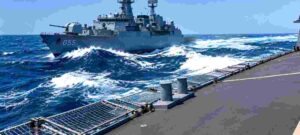
Reports have indicated that PNS Hunain sustained damage and subsequently returned towards port, although the two countries have offered conflicting accounts about the circumstances leading to the collision.
The identification of INS Kolkata as the warship involved was also significant. Jaiswal described it as a stealth guided-missile destroyer and said it was conducting a routine deployment in the western Arabian Sea when the incident occurred.
Naval Incident Comes Amid Strained India-Pakistan Ties
The collision comes against the backdrop of continuing tensions between India and Pakistan. It is the first reported military incident involving the two countries since the four-day hostilities in May 2025.
Relations between New Delhi and Islamabad have remained strained for several years, with diplomatic engagement significantly reduced. The two countries have not had high commissioners in each other’s capitals since 2019.
Also Read — “Creative Economy Can Power Viksit Bharat”: Dr. Murugan Highlights AVGC, AI And Jobs
The relationship deteriorated further following the April 2025 Pahalgam terror attack and the subsequent military confrontation between India and Pakistan. India later announced several diplomatic and economic measures in response to the attack.
Against this backdrop, the latest naval incident has added another point of friction between the two countries.
India Calls for Greater Maritime Caution
While rejecting Pakistan’s allegations, India also called for military units from both countries to exercise due care and follow existing agreements and international maritime regulations.
Jaiswal said Pakistan had again been advised about the importance of respecting relevant bilateral agreements and ensuring that military vessels operate with appropriate caution to prevent similar incidents in the future.
The emphasis on maritime safety is significant because encounters between naval vessels can carry risks beyond the immediate incident, particularly when ships from countries with strained relations operate in close proximity.
Earlier India-Pakistan Naval Collision
The latest incident also recalls a previous collision between Indian and Pakistani naval vessels in 2011.
During an anti-piracy patrol in the Gulf of Aden, INS Godavari was involved in a collision with Pakistan Navy vessel PNS Babur. The Indian warship sustained marginal damage.
The incident was later discussed in Parliament, where then Defence Minister AK Antony said the Pakistani vessel had approached INS Godavari at high speed while the Indian ship was moving towards the merchant vessel MV Suez, which had been hijacked by pirates.
The September 2026 collision is therefore being viewed in the context of previous maritime encounters as well as the broader security relationship between New Delhi and Islamabad.
For now, both countries have placed different versions of responsibility on the other side. New Delhi has pointed to the alleged violation of the 1991 agreement and international collision-prevention regulations, while Pakistan has accused the Indian warship of aggressive manoeuvres. The diplomatic exchange underscores the continuing sensitivity surrounding military activity between the two neighbouring countries.
Click here to join our WhatsApp Channel for real-time news updates and exclusive coverage.