
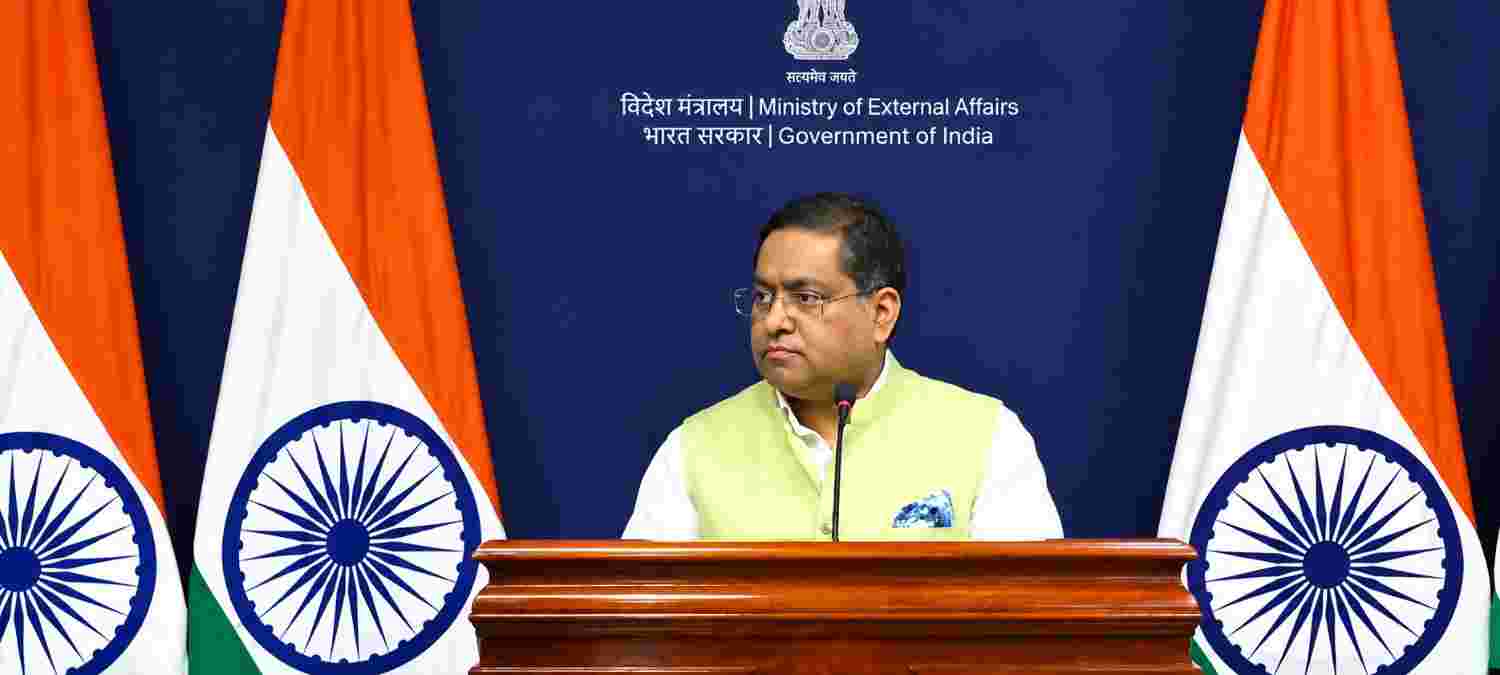
India has strongly criticised Pakistan’s decision to increase the reward for information leading to the capture of Jaish-e-Mohammed chief Masood Azhar, describing the announcement as another symbolic gesture rather than credible action against a long-standing security concern.
Pakistan has listed Masood Azhar in its 2026 list of most-wanted individuals and raised the reward for information leading to his arrest or conviction to 70 lakh Pakistani rupees. The development has drawn sharp attention because of Azhar’s long-standing status as a United Nations-designated terrorist and the continuing questions surrounding his whereabouts and activities.
India Questions Pakistan’s Latest Announcement
Indian officials have dismissed the Pakistani announcement as unconvincing, arguing that declarations and reward announcements alone cannot demonstrate a genuine commitment to counterterrorism.
New Delhi’s response reflects its long-standing concerns over Pakistan’s handling of individuals and organisations linked to violent extremist networks. New Delhi has repeatedly maintained that effective action requires more than official statements and should include verifiable investigations, arrests, prosecutions and disruption of terrorist networks.
The latest criticism comes after Pakistan formally included Azhar in its updated list of wanted individuals and increased the financial reward for information about him. Indian officials have questioned whether the announcement represents substantive enforcement or is primarily intended to create the appearance of stronger counterterrorism action.
Reward Raised to 70 Lakh Pakistani Rupees
According to reports, Pakistan’s Federal Investigation Agency increased the reward for information about Azhar to PKR 70 lakh. The amount was previously lower, with the latest increase coming ahead of an expected review by the Financial Action Task Force, or FATF.
The timing has added significance to the announcement. Pakistan has faced international scrutiny over measures designed to prevent terrorist financing and strengthen its counterterrorism framework.
By identifying Azhar as a fugitive and placing him on its most-wanted list, Pakistani authorities appear to be signalling that action is being taken against a figure who has remained at the centre of India-Pakistan security concerns for decades.
Masood Azhar Remains a Major Security Concern
Masood Azhar is the founder and chief of Jaish-e-Mohammed, a Pakistan-based organisation designated by the United Nations as a terrorist group. He has been associated with several major attacks and militant activities targeting India.

Azhar was arrested by Indian authorities in the 1990s but was later released in 1999 following the hijacking of Indian Airlines flight IC-814. His release subsequently became a major point of concern for Indian security agencies.
Over the years, New Delhi has repeatedly sought international action against Azhar and his organisation. The United Nations Security Council designated Azhar as an international terrorist in 2019 following years of diplomatic efforts.
FATF Review Adds Political Significance
The latest Pakistani announcement is also being viewed against the backdrop of an upcoming FATF review. The global financial watchdog assesses countries on their efforts to combat money laundering and terrorist financing.
Pakistan’s decision to publicly identify Azhar as a fugitive and increase the reward for information may therefore carry significance beyond the immediate issue of his arrest.
However, India’s reaction indicates that New Delhi is looking for demonstrable action rather than announcements. Indian officials have stressed that credible counterterrorism measures must be supported by enforcement and measurable results.
India Calls for Concrete Action
The dispute once again highlights the deep security divide between India and Pakistan. New Delhi has consistently argued that Pakistan must take concrete steps against terrorist groups and individuals operating from its territory.
For India, the issue is not simply whether a reward has been announced but whether authorities are genuinely prepared to locate, arrest and prosecute individuals facing serious terrorism-related allegations.
9/11 Tribute Takes Strong Turn As FIA-Chicago Calls For Action Against Terrorism
Pakistan’s latest move will therefore face scrutiny over whether it leads to tangible action. The increase in the bounty and inclusion of Azhar on the most-wanted list could be viewed as an administrative step, but its credibility will ultimately depend on enforcement.
As diplomatic and international attention remains focused on Pakistan’s counterterrorism record, India is expected to continue pressing for verifiable measures against terrorist networks and their leadership. The latest exchange underscores New Delhi’s position that symbolic announcements cannot substitute for sustained and transparent action against terrorism.
Click here to join our WhatsApp Channel for real-time news updates and exclusive coverage.