
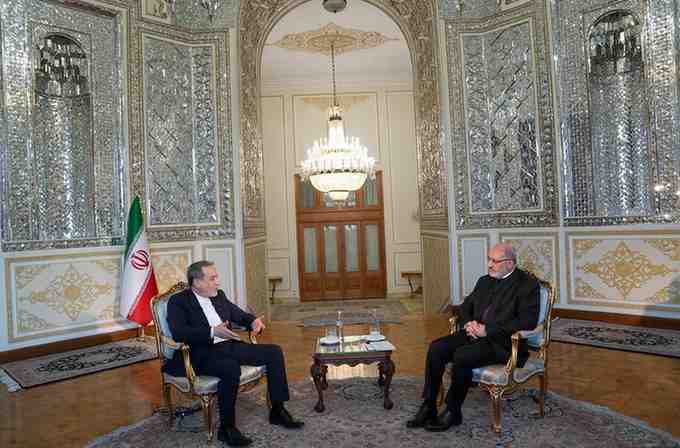
Iranian Foreign Minister Abbas Araghchi has said that indirect communication between Iran and the United States continues despite the absence of formal negotiations, while emphasizing Tehran’s commitment to achieving what he described as a “dignified peace” in the region.
Speaking in an interview with Lebanon-based Al Mayadeen television, Araghchi stated that recent exchanges between Tehran and Washington included discussions aimed at preventing a potential Israeli military strike on Beirut. He stressed that developments in Lebanon remain closely connected to the broader regional tensions involving Iran, the United States, and Israel.
According to the Iranian foreign minister, any agreement intended to end ongoing hostilities must address all fronts of the conflict, including Lebanon. He argued that Lebanon has endured significant consequences from the regional crisis and should not be excluded from ceasefire negotiations.
Araghchi said Iran has consistently maintained that a halt in fighting should apply not only to Iran but also to other areas affected by the conflict. He reiterated Tehran’s position that lasting stability can only be achieved through a comprehensive cessation of hostilities across the region.
The minister also claimed that a planned large-scale Israeli attack on Beirut was averted through a combination of factors, including the deterrence capabilities of resistance groups, Iran’s military preparedness, diplomatic engagement, and pressure exerted by regional countries. He said Iran had warned the United States that any major strike on Beirut could undermine existing ceasefire arrangements and potentially provoke a response from Iranian armed forces.
While emphasizing that Iran remains prepared to respond to any future violations of ceasefire agreements, Araghchi noted that communication channels with Washington remain active. However, he acknowledged that no significant breakthrough has been achieved in recent days.
According to him, both sides are currently reviewing existing proposals and frameworks. He indicated that formal negotiations could resume if circumstances become favorable and if discussions align with Iran’s national interests, the rights of its citizens, and broader efforts to end violence affecting both Iran and Lebanon.
Addressing concerns about a possible escalation of conflict, Araghchi argued that recent developments have demonstrated Iran’s military strength and domestic unity. He said assumptions by some Western governments that Iran was vulnerable or weakened had proven inaccurate.
At the same time, the foreign minister reiterated that Tehran is not seeking a new war. Instead, he said Iran’s objective remains securing peace while preserving its national dignity and interests.
Araghchi also rejected allegations that Iran had linked the Lebanese situation to its own diplomatic engagements. He argued that the connection emerged because Israel expanded military operations into Lebanese territory, making Lebanon an inseparable part of the broader regional conflict.
He maintained that any durable resolution must include an end to military operations and occupation-related issues in Lebanon.
The Iranian minister further praised Hezbollah’s ability to withstand challenges following the killing of its longtime leader, Sayyed Hassan Nasrallah. He expressed confidence in the leadership of the group’s current Secretary General, Sheikh Naim Qassem, and said Hezbollah remains a significant force in Lebanon.
On bilateral relations, Araghchi stated that Iran seeks constructive and respectful ties with Lebanon. He added that the Iranian embassy in Beirut operates within the framework of official diplomatic relations and respects Lebanon’s sovereignty.
His remarks come amid continued regional tensions and ongoing diplomatic efforts by multiple countries to prevent a wider conflict in the Middle East. Iran’s latest statements suggest that while major differences remain, channels of communication with the United States are still open, leaving the possibility of renewed negotiations on the table.
Iran’s latest message reflects a dual-track strategy of deterrence and diplomacy. While Tehran continues to project military strength and readiness to respond to any escalation, it is also signaling that communication with Washington remains open. By linking stability in Lebanon to broader regional ceasefire efforts, Iran is attempting to position itself as a key stakeholder in any future peace arrangement.
The remarks also suggest that both sides are avoiding direct confrontation despite deep disagreements. The emphasis on a “dignified peace” indicates that Tehran seeks negotiations that preserve its strategic interests while reducing the risk of a wider Middle East conflict.