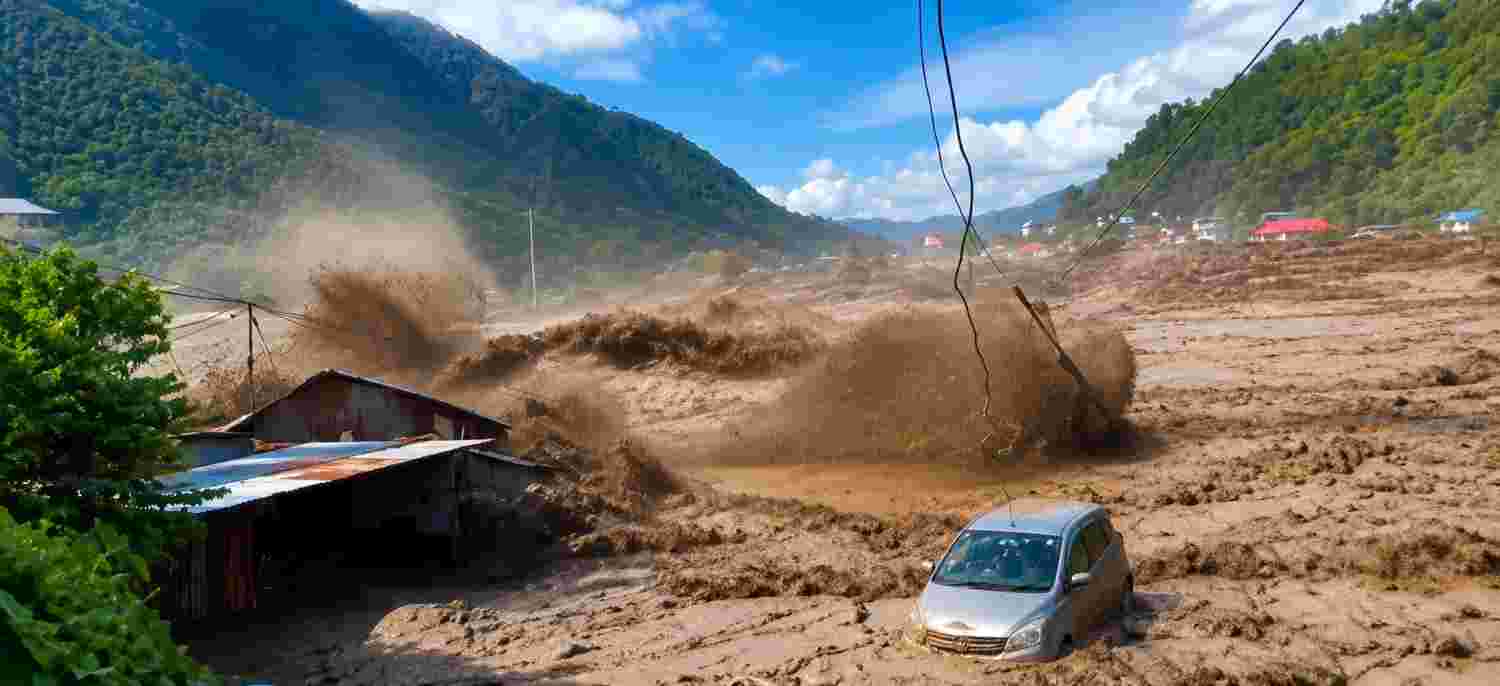
Nepal has thanked India for its swift humanitarian assistance after devastating flash floods struck the Himalayan nation, leaving at least 98 people dead across Nepal and Tibet and hundreds still unaccounted for. The catastrophe has triggered an intense rescue operation while raising fresh concerns over the safety of tourists, pilgrims and residents in the Nepal-Tibet border region.
Nepal Thanks India for Swift Assistance
Nepal Prime Minister Balendra Shah expressed gratitude to Prime Minister Narendra Modi after the Indian leader offered assistance following the disaster. Shah said the Indian response reflected the enduring friendship and close ties between the two neighbouring countries.
Nepal Foreign Minister Shisir Khanal also thanked External Affairs Minister S Jaishankar and the Indian government for sending emergency relief. India has dispatched humanitarian supplies, including temporary shelters, blankets, hygiene kits, solar lamps and medicines, along with 10 tonnes of humanitarian assistance and essential medical supplies.
Modi spoke with Shah and conveyed condolences over the loss of lives. He assured Nepal that India was prepared to provide all possible humanitarian assistance and that Indian teams were coordinating closely on rescue and relief operations.
Death Toll Rises as Search Operations Continue
The disaster has caused widespread destruction in Nepal’s Rasuwa district and other areas near the Tibet border. Nepalese authorities reported 95 deaths in the country, while three deaths were reported in Tibet, taking the combined toll to 98.
Hundreds of people remain missing or out of contact. Nepal’s tourism authorities said 398 tourists, including 133 Indian nationals, could not initially be reached through their tour operators. Officials stressed that being out of contact does not necessarily mean that all of them are missing, as some may have moved to safer or higher ground.
Several missing people were travelling on the Kailash Mansarovar pilgrimage, while others were undertaking the Langtang and Gosaikunda treks. The disaster has therefore raised particular concern over foreign tourists and pilgrims who were travelling through remote Himalayan areas.
Flash Flood Devastates Rasuwa
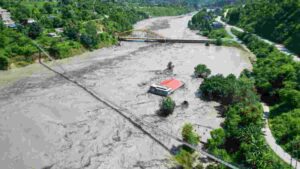
The worst destruction has been reported around the Bhote Koshi River and nearby settlements. Floodwaters swept away buildings, roads, bridges and infrastructure, while several hydropower projects were damaged.
Nepal’s disaster management authorities said preliminary satellite analysis indicated that a snow-and-rock landslide near the Nepal-China border caused a glacier-related flood in the Lhende River. Scientists are examining whether an ice avalanche blocked the river temporarily, allowing water to accumulate before a sudden release sent a powerful surge downstream into the Bhote Koshi system.
Also Read: Delhi’s SHG Monsoon Mela 2026 Celebrates Women Entrepreneurs And Handmade Products
Reuters, citing experts, has also reported that an ice-rock avalanche may have triggered the catastrophic flood. Investigations into the precise sequence of events remain underway.
India Places Border States on High Alert
The disaster has also prompted precautionary measures in northern India because floodwaters could travel downstream through interconnected river systems.
The National Disaster Response Force has placed teams on high alert in Bihar and Uttar Pradesh. Authorities are closely monitoring the Gandak River and other waterways amid warnings that the flood wave could move downstream.
In Bihar, NDRF teams have been positioned in vulnerable districts, while local administrations have been instructed to monitor embankments and dams. Some villages have also begun precautionary evacuations even though floodwaters had not yet reached them.
Uttar Pradesh authorities have similarly been asked to remain vigilant in districts including Maharajganj and Kushinagar because of rising water levels in the Gandak and Narayani rivers.
India Coordinates Rescue Efforts for Its Nationals
The Indian Embassy in Kathmandu is coordinating with Nepalese authorities to help locate and rescue Indian nationals affected by the floods. Emergency helpline numbers have also been issued for Indians seeking assistance.
Indian officials are particularly concerned about tourists and pilgrims who were travelling near the Nepal-Tibet border. Reports have indicated that several Indian nationals were among those who could not initially be contacted following the disaster.
The Indian response has extended beyond diplomatic coordination. Relief materials and medical supplies have been sent to Nepal, while rescue agencies along India’s northern border remain prepared for any downstream emergency.
Nepal Army Leads Rescue Operation
The Nepal Army has intensified rescue efforts, deploying helicopters and personnel to reach people stranded in affected areas. However, damaged roads, communication disruptions, unstable terrain and continuing risks have complicated operations.
Nepal’s Prime Minister has urged citizens to remain patient and united, assuring affected communities that the government is mobilising resources for rescue, treatment, food and shelter.
The disaster has also affected China’s Tibet region. China’s Gyirong border port suffered damage, with roads, communications and power infrastructure disrupted. Chinese authorities have launched search operations for missing people and called for stronger monitoring and early-warning mechanisms.
A Himalayan Disaster With Regional Consequences
The scale of the destruction has turned the Nepal floods into a major regional humanitarian emergency. With hundreds still unaccounted for, rescue teams are racing against time to reach isolated communities and determine the fate of missing tourists and workers.
For Nepal, the immediate priorities remain rescuing survivors, locating missing people, restoring damaged infrastructure and providing emergency medical care. India’s rapid humanitarian response and close coordination with Nepal underline the longstanding ties between the two countries as the Himalayan nation confronts one of its most devastating flood emergencies in recent years.
Click here to join our WhatsApp Channel for real-time news updates and exclusive coverage.