
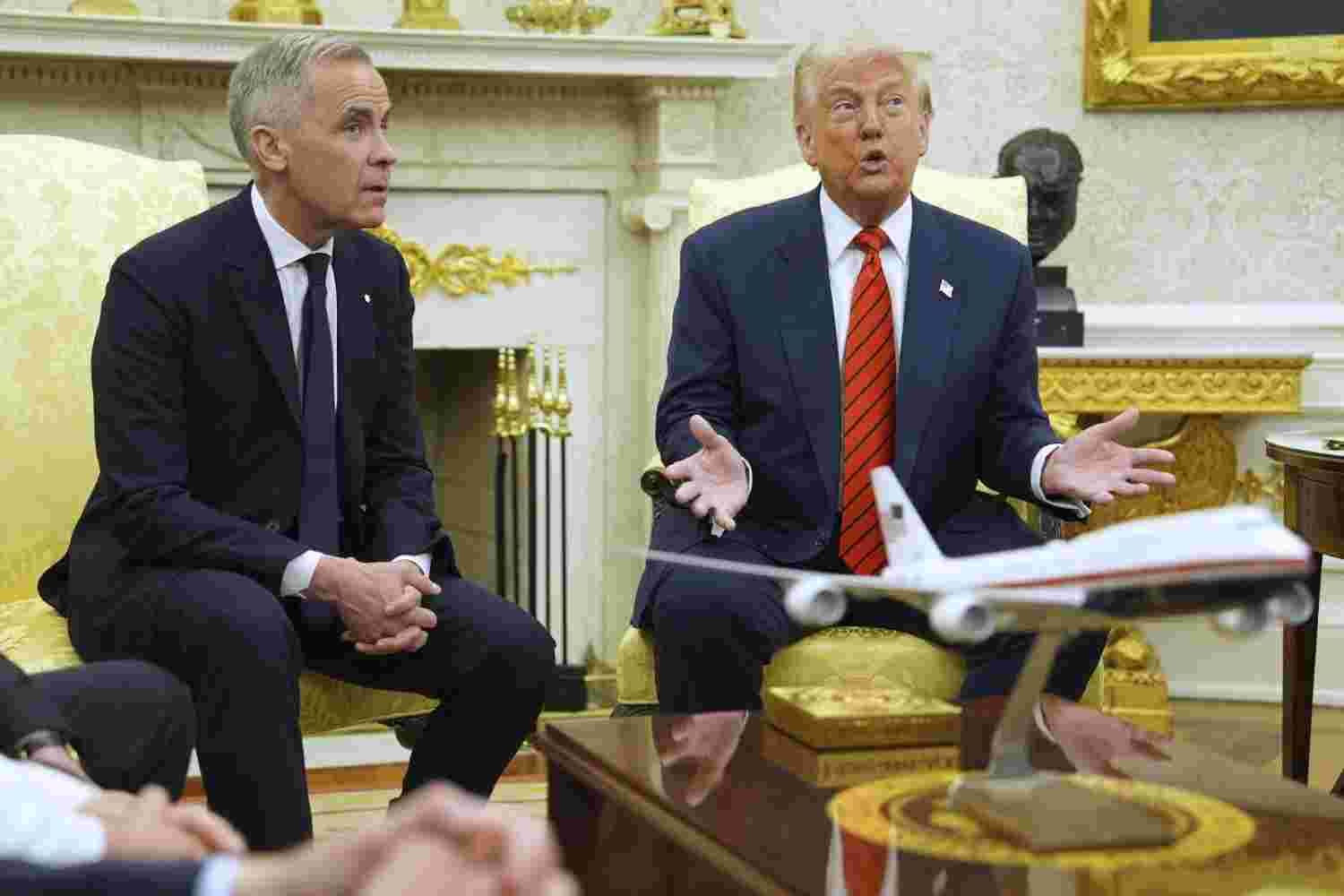
The United States has imposed a steep 50% tariff on around $20 billion worth of Canadian products, escalating an already tense trade dispute between the two North American neighbours after last-minute negotiations failed to produce an agreement.
The new tariffs took effect on Saturday after Washington and Ottawa were unable to finalise a trade deal despite several days of intensive discussions. Canadian Prime Minister Mark Carney responded by suspending further negotiations and warning that Canada would retaliate against the United States on a “dollar-for-dollar” basis.
The dramatic breakdown marks a fresh deterioration in economic relations between the two countries, which share one of the world’s largest bilateral trading relationships. Analysts and business groups have warned that prolonged tariff escalation could put additional pressure on companies, workers and consumers on both sides of the border.
US-Canada Trade Talks Collapse
The latest tariff escalation came after Washington and Ottawa spent days attempting to resolve their differences and reach a broader trade understanding.
US officials said Canada had failed to finalise the proposed agreement, while Canadian officials argued that last-minute changes demanded by Washington were unacceptable and did not adequately protect Canadian economic interests.
Carney said the progress made during negotiations was insufficient to meet Canada’s objectives. He subsequently ordered Canada’s negotiating team to return home and indicated that Ottawa would respond firmly to the new American duties.
The collapse was particularly significant because both governments had appeared close to an agreement earlier in the week. The Trump administration had temporarily paused the threatened tariffs for three days to allow negotiators additional time to work out the remaining differences. That window closed without a final deal.
$20 Billion in Canadian Goods Face New Tariffs
The latest US measures cover approximately $20 billion in Canadian exports, representing roughly 5% of Canada’s exports to the United States, according to Reuters.
Products affected include a range of manufactured and consumer goods, with examples including hockey sticks and other equipment. Energy products and several categories outside the targeted list are treated differently under the broader tariff framework.
The relatively limited share of Canadian exports directly covered by the new duties does not necessarily mean the economic impact will be small. Canadian industries dependent on the US market could face higher costs, weaker demand and increased uncertainty if the dispute continues.
The latest action also comes on top of other American tariffs affecting major Canadian sectors, including steel, aluminium and automobiles.
Carney Promises Dollar-for-Dollar Retaliation
Canada’s response has been swift and forceful. Prime Minister Mark Carney said Ottawa would match the US tariffs “dollar for dollar”, signalling that Canada is prepared to impose equivalent duties on American products.

The Canadian government has also suspended further trade negotiations, reducing the immediate possibility of a diplomatic breakthrough. The retaliatory strategy is intended to pressure Washington while protecting Canadian businesses and workers from what Ottawa considers unfair trade measures.
The move risks creating a cycle of retaliation in which each government responds to the other’s tariffs with additional trade barriers.
Growing Threat of a North American Trade War
The latest confrontation raises fresh concerns about the future of economic cooperation between the United States and Canada.
The two nations have deeply integrated supply chains, particularly in automobiles, manufacturing, energy, agriculture and other industries. A prolonged tariff dispute could therefore affect companies that rely on cross-border trade for raw materials, components and finished products.
Also Read: MATECIA 2026 Opens In Delhi, Uniting India’s Building Materials And Design Industry
The uncertainty could also complicate efforts to renegotiate or preserve the framework governing trade between the United States, Canada and Mexico under the USMCA. Reuters reported that the tariff dispute is making the broader relationship between Washington and Ottawa increasingly difficult.
Trade between the United States and Canada is enormous. US Census data cited by Axios showed bilateral trade reached about $376 billion during the first half of 2026, highlighting the economic stakes involved in the dispute.
Businesses Brace for Higher Costs
The immediate concern for businesses is the possibility that tariffs will increase production and import costs.
Canadian exporters selling directly into the US market could become less competitive because American importers may have to pay significantly more for their products. Those costs could then be absorbed by businesses, passed on to consumers or result in reduced orders from American buyers.
US businesses that depend on Canadian supplies could also face higher expenses, particularly where Canadian products are difficult to replace quickly with domestic or alternative imports.
Economists have repeatedly warned that tariff conflicts can create broader economic consequences when they persist for extended periods.
No Immediate Resolution in Sight
Despite the sharp escalation, the dispute does not necessarily mean that negotiations will remain permanently frozen.
Both countries have powerful economic incentives to avoid a prolonged trade war. Their economies are closely connected, and companies on both sides have benefited from decades of integrated supply chains and cross-border commerce.
However, the latest breakdown has significantly raised the political and economic stakes.
For now, Washington’s 50% tariffs are in effect on the targeted Canadian products, while Ottawa is preparing its retaliatory response. Carney’s dollar-for-dollar pledge means the next phase of the dispute could involve another round of tariffs, potentially deepening uncertainty for businesses and consumers.
The collapse of the talks therefore represents more than another disagreement over individual products. It has become a major test of the future of US-Canada trade relations, with the risk of a broader North American trade conflict now looming over both economies.
Click here to join our WhatsApp Channel for real-time news updates and exclusive coverage.