
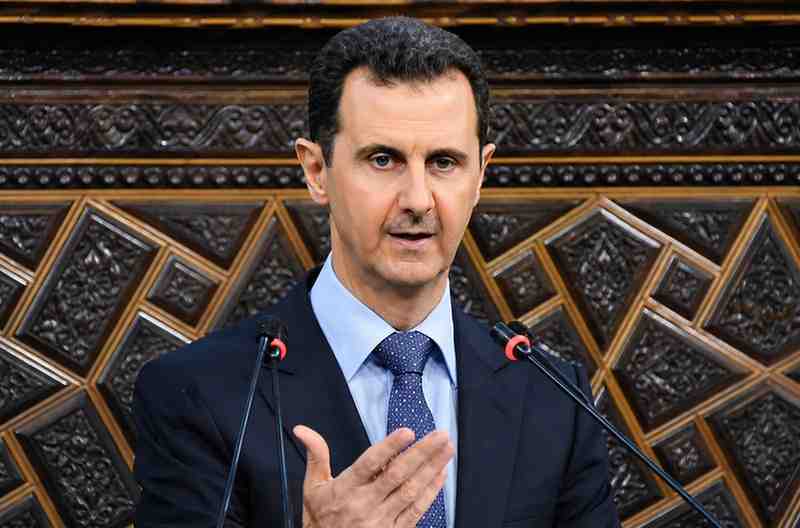
The fall of Syria’s former ruler Bashar al-Assad has entered a dramatic new chapter after a criminal court in Damascus sentenced him to death for crimes committed during the country’s nearly 14-year civil war. The landmark verdict marks the first conviction against Assad since his regime collapsed in December 2024.
The court convicted the former Syrian president of serious crimes including premeditated murder, torture, arbitrary arrests and crimes against humanity. Assad was tried in absentia, as he is currently living in Moscow after fleeing Syria when rebel forces seized Damascus and ended his family’s decades-long rule.
The verdict represents a major moment for Syria’s transitional authorities, who have been pursuing legal action against senior figures associated with the former regime. The proceedings are being closely watched because of the scale of alleged abuses committed during the conflict and the long-standing demands of victims and survivors for accountability.
Damascus Court Delivers Historic Death Sentence
The Damascus court found Assad responsible for grave offenses linked to the violence that engulfed Syria after anti-government demonstrations erupted in 2011. According to Reuters, the charges included the premeditated and intentional killing of multiple people, including children, torture, arbitrary arrest and crimes against humanity.
Assad’s government responded to the 2011 uprising with a violent crackdown. What began as protests demanding political reforms eventually developed into a devastating civil war involving Syrian government forces, opposition groups, extremist organisations and foreign powers.
The conflict caused enormous human suffering, with hundreds of thousands of people killed and millions forced from their homes. The Assad government faced extensive allegations involving unlawful killings, detention, torture, enforced disappearances and attacks on civilian areas.
Assad Fled Syria After Regime Collapse
Bashar al-Assad became president in 2000 after the death of his father, Hafez al-Assad, who had ruled Syria for nearly three decades. His succession continued the Assad family’s political dominance, which ultimately lasted for around five decades.
That era ended abruptly in December 2024 when rebel forces launched a rapid offensive and entered Damascus. Assad fled the capital as his government collapsed and later settled in Russia with members of his family.
Assad remains outside Syria, meaning the death sentence was handed down without him physically appearing before the court. His younger brother Maher al-Assad also fled to Russia following the collapse of the regime, according to AP. Syria’s new authorities have sought the return of the Assad brothers.
Atef Najib Also Sentenced to Death
The court’s verdict was not limited to Bashar al-Assad. Atef Najib, Assad’s cousin and former head of Political Security in Daraa province, was also sentenced to death.

Najib was tried in person and convicted of serious crimes, including premeditated murder and torture. His role in Daraa has particular significance because the southern province became the starting point of the 2011 uprising.
Najib’s security forces were involved in the crackdown on protesters during the early days of the uprising. The arrest and reported torture of teenagers accused of writing anti-government graffiti became one of the incidents that helped fuel wider demonstrations against the Assad government.
Allegations of Torture and Detention
For years, international investigators and rights organisations documented allegations of systematic abuses under the Assad government. These included torture inside detention facilities, arbitrary arrests, enforced disappearances and deaths in custody.
The former Syrian government was also accused of using chemical weapons during the civil war. International investigations attributed several chemical attacks to Syrian government forces, including the 2013 sarin attack in the Eastern Ghouta area near Damascus.
Also Read – Colombia Earthquake: 7.4-Magnitude Quake Kills 164, Triggers Massive Destruction
The allegations became a central part of international efforts to establish accountability for atrocities committed during the conflict. Several former Syrian officials have also faced criminal proceedings in European countries over alleged abuses linked to the Assad-era security apparatus.
What the Verdict Means for Syria
The death sentence comes at a sensitive moment for Syria, which is attempting to rebuild its political institutions after years of war and authoritarian rule.
For supporters of the transitional authorities, the prosecution of former regime figures represents an attempt to establish accountability and demonstrate that senior officials can no longer avoid justice.
For victims and families who lost relatives during the conflict, the verdict could become an important symbolic step. However, the fact that Assad remains in Russia creates a major obstacle to enforcing the sentence.
The Russian government granted asylum to Assad after his government fell, and Syria’s new authorities have sought his extradition. Whether Moscow will cooperate remains a crucial question surrounding the verdict.
A Dramatic End to Assad’s Long Rule
Assad’s death sentence represents a striking reversal for a leader who once appeared firmly entrenched in power. After succeeding his father in 2000, he remained president for more than two decades, surviving years of armed rebellion, international pressure and military intervention.
His eventual removal in December 2024 brought an end to the Assad family’s decades-long dominance of Syria.
Now, less than two years after his dramatic fall, a Syrian court has delivered its strongest judicial verdict against him yet. The ruling is likely to have consequences beyond the courtroom, potentially shaping Syria’s ongoing transition, its relationship with Russia and the broader international debate over accountability for crimes committed during the Syrian civil war.
Click here to join our WhatsApp Channel for real-time news updates and exclusive coverage.