
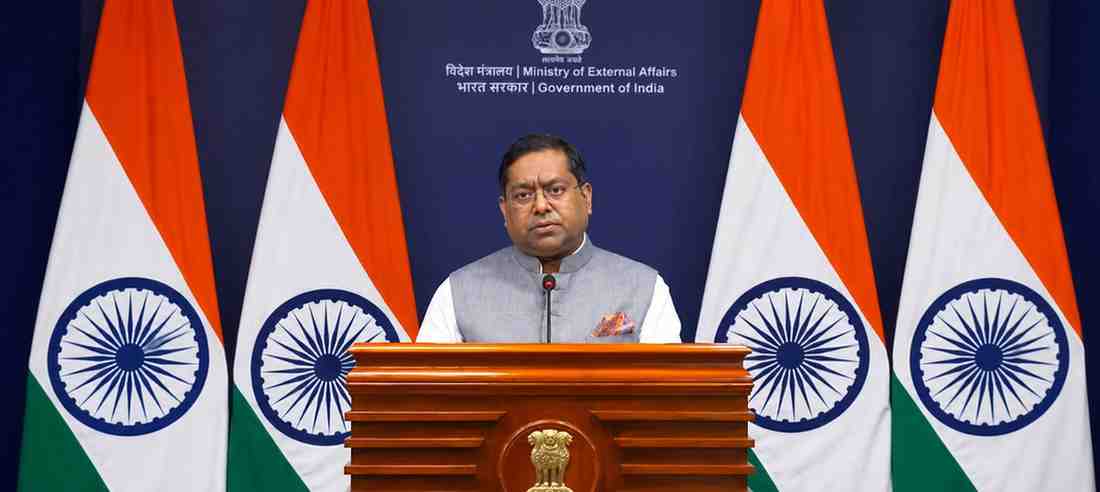
India has firmly dismissed Pakistan’s latest attempt to link the ongoing Indus Waters Treaty dispute with claims surrounding the ancient Indus Valley Civilisation, describing the argument as historically and diplomatically untenable. The development comes as tensions between the two neighbouring countries continue over the future of the 1960 Indus Waters Treaty (IWT), which India has kept in abeyance following security concerns and repeated allegations of cross-border terrorism.
The latest disagreement emerged after Pakistan reportedly sought to strengthen its case by highlighting the Indus Valley Civilisation as part of its historical and cultural identity while raising concerns over India’s position on the treaty. Indian officials rejected the argument, maintaining that historical or archaeological narratives have no bearing on the legal and strategic issues surrounding the water-sharing agreement.
India Separates History From Treaty Obligations
According to official sources, India believes Pakistan’s references to the Indus Valley Civilisation are an attempt to reshape the narrative surrounding the Indus basin. New Delhi has maintained that the dispute revolves around present-day treaty obligations, national security concerns and Pakistan’s continued support for cross-border terrorism rather than ancient history.
Officials argued that cultural heritage cannot determine the interpretation or implementation of an international treaty signed between two sovereign nations in the modern era. They stressed that India’s stand remains consistent and has already been communicated through diplomatic channels.
Pakistan’s Historical Argument
Reports indicate that Pakistan has increasingly highlighted archaeological sites such as Mohenjo-daro and the broader Indus Valley Civilisation while presenting its position internationally. Islamabad has attempted to project itself as the principal inheritor of the civilisation because many of its major archaeological sites lie within present-day Pakistan.
India, however, has rejected this interpretation, pointing out that the Indus Valley Civilisation extended across a vast geographical region that includes several sites located in present-day India. Experts also note that the civilisation predates the creation of both modern India and Pakistan by thousands of years, making contemporary political ownership claims highly contentious.
Treaty Remains Central To Current Dispute
The Indus Waters Treaty, signed in 1960 with the mediation of the World Bank, governs the sharing of waters from the Indus river system between India and Pakistan. Under the agreement, India received rights over the eastern rivers—Ravi, Beas and Sutlej—while Pakistan was allocated the western rivers—Indus, Jhelum and Chenab, subject to specific conditions allowing limited Indian use.
Also Read: Suvendu Adhikari Announces Early Salaries, 20% DA Hike Ahead Of Durga Puja
Following the terrorist attack in Pahalgam in 2025, New Delhi announced that the treaty would remain in abeyance until Pakistan takes credible and irreversible steps against cross-border terrorism. Since then, New Delhi has consistently reiterated that its position has not changed despite repeated diplomatic appeals from Islamabad.
Diplomatic Exchanges Continue
The issue has recently featured in international diplomatic discussions, including meetings at regional forums where Pakistan raised concerns regarding the treaty. New Delhi responded by rejecting Pakistan’s statements as baseless and reaffirming that the suspension of the treaty is linked directly to national security considerations rather than technical disagreements over water sharing.
Indian officials have repeatedly stated that terrorism and meaningful bilateral cooperation cannot coexist. They insist that progress on bilateral agreements depends upon Pakistan ending support for cross-border terrorism in a verifiable manner.
Experts See Cultural Narrative As Diplomatic Strategy
Observers believe Pakistan’s renewed emphasis on the Indus Valley Civilisation is aimed at strengthening its international messaging during the ongoing water dispute. By highlighting cultural heritage associated with the Indus basin, Islamabad appears to be attempting to build broader global sympathy for its concerns over water security.
However, historians note that the Indus Valley Civilisation covered a much larger region than modern Pakistan alone. Important archaeological sites, including Dholavira in Gujarat, Rakhigarhi in Haryana and Kalibangan in Rajasthan, are located within India, underscoring the civilisation’s shared historical legacy. Consequently, experts argue that no single modern nation can claim exclusive ownership of the ancient civilisation.
Maintains Unchanged Position
Despite Pakistan’s renewed historical arguments, India’s official position remains unchanged. New Delhi continues to maintain that the Indus Waters Treaty issue is linked to present-day security realities and bilateral obligations rather than archaeological or civilisational claims.
With diplomatic engagement continuing at various international platforms, the Indus Waters Treaty remains one of the most sensitive issues in India-Pakistan relations. For now, New Delhi’s message is clear, historical narratives cannot substitute for concrete action on security concerns, and the country’s position on the treaty will remain unchanged until those concerns are addressed.
Click here to join our WhatsApp Channel for real-time news updates and exclusive coverage.