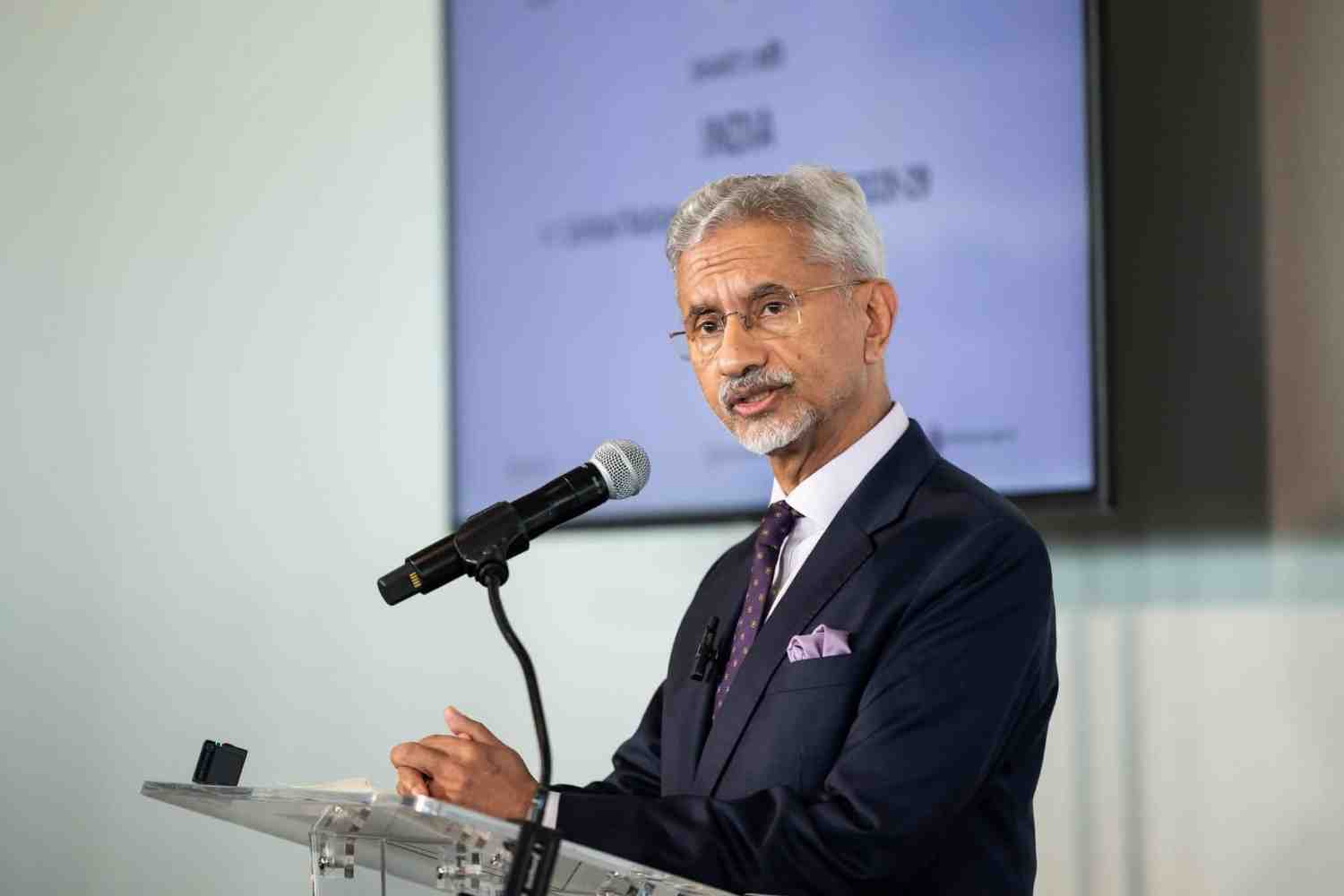
External Affairs Minister Dr. S. Jaishankar outlines India’s priorities for the UN Security Council campaign, focusing on Global South, peacekeeping reforms, AI governance, maritime security, and counter-terrorism.
India has officially launched its campaign for a non-permanent seat on the United Nations Security Council (UNSC) for the 2028-29 term, with External Affairs Minister Dr. S. Jaishankar presenting a comprehensive vision centered on global cooperation, peace, security, and inclusive development. The campaign highlights India’s commitment to representing the interests of developing nations while advocating reforms in the global governance system.
Unveils ‘SHANTI’ as the Guiding Principle
Launching the campaign, Dr. Jaishankar introduced New Delhi’s approach under the acronym SHANTI – Securing Holistic Advancement through Norms, Trust and Integrity. The framework reflects nation’s intention to promote peace, strengthen international cooperation, and make multilateral institutions more effective and representative.
Announcing the campaign, Jaishankar said, “Pleased to launch India’s campaign for the United Nations Security Council 2028-29.” He emphasized that New Delhi’s engagement with the Security Council would be guided by principles of trust, integrity, dialogue, and inclusive global progress.
The campaign comes as the country seeks broader support from UN member states while reiterating its long-standing demand for reforms in the Security Council.
Global South to Remain at the Centre
One of the key pillars of India’s campaign is strengthening the voice of the Global South in international decision-making. According to Jaishankar, developing nations deserve a much larger role in shaping global peace and security policies.
He stated, “The Global South must play a greater role in determining our common future.”
The country has consistently positioned itself as a leading advocate for emerging and developing economies through platforms such as the G20 and the Voice of Global South Summit. The latest campaign further reinforces New Delhi’s commitment to ensuring that the concerns of these nations receive greater attention at the United Nations.
Push for Reformed Multilateralism
India has once again called for meaningful reforms in global institutions, particularly the United Nations Security Council.

Jaishankar stressed that international institutions must become more democratic, representative, and capable of addressing contemporary global challenges.
He said that our approach would remain rooted in dialogue, cooperation, and bridging differences, rather than confrontation. According to the External Affairs Minister, a reformed Security Council is essential for maintaining global credibility and effectively responding to modern security concerns.
He also said that werepeatedly argued that the current UNSC structure reflects the realities of 1945 rather than today’s geopolitical landscape.
Modernising UN Peacekeeping Operations
Another major priority highlighted during the campaign launch is the modernization of UN peacekeeping missions.
Read Also: India Urges Global Community To Hold Pakistan Accountable Over Crackdown On PoK Protests
We proposed making peacekeeping operations better equipped, technologically advanced, and focused on clearly defined mandates. Jaishankar also underlined the importance of increasing women’s participation in peacekeeping missions.
He said that we would continue supporting the Women, Peace and Security agenda while championing the role of women peacekeepers across UN missions.
India remains one of the largest contributors to UN peacekeeping operations and has deployed thousands of personnel in conflict zones across the world over several decades.
Human-Centric Artificial Intelligence
Recognising the growing influence of emerging technologies, India has also placed Artificial Intelligence at the centre of its global agenda.
Jaishankar said India supports a human-centric vision of Artificial Intelligence based on inclusivity, security, and public good.
At the same time, he warned against the misuse of AI technologies that could threaten international peace and security.
The minister said India is determined to work with the international community to establish responsible governance frameworks that encourage innovation while preventing malicious applications of artificial intelligence.
Maritime Security and International Law
India also reaffirmed its commitment to protecting global maritime security.
The campaign prioritises promoting a free, open, inclusive, and rules-based maritime order in accordance with international law, particularly the United Nations Convention on the Law of the Sea (UNCLOS).
Jaishankar said India would focus on ensuring the uninterrupted flow of maritime commerce, combating piracy, safeguarding seafarers, and strengthening Humanitarian Assistance and Disaster Relief (HADR) missions.
These priorities reflect India’s growing role as a major maritime nation in the Indo-Pacific region and its continued emphasis on secure global shipping routes.
Strong Stand Against Terror Financing
Counter-terrorism remains another central element of India’s UNSC campaign.
Jaishankar called for stronger international cooperation to curb terror financing and demanded a transparent sanctions mechanism based on objective evidence.
He stressed the importance of sustained global efforts against terrorism and advocated evidence-based proposals for listing terrorist organisations under international sanctions frameworks.
India has consistently maintained that terrorism remains one of the biggest threats to international peace and security and has urged the global community to adopt a zero-tolerance approach.
India Seeks Broader Global Support
Concluding the launch, Jaishankar reiterated India’s belief that the Security Council must evolve to reflect present-day realities.
He stated, “A reformed, representative and results-driven Security Council needs a voice of the Global South at the table.”
India’s campaign for the 2028-29 UNSC seat aims to build international consensus around inclusive governance, stronger multilateral cooperation, sustainable peace, technological responsibility, maritime security, and decisive action against terrorism.
As New Delhi expands its diplomatic outreach, the SHANTI framework is expected to form the foundation of India’s engagement with UN member states, presenting the country as a responsible, reform-oriented, and constructive global partner committed to addressing the challenges of the 21st century.
Click here to join our WhatsApp Channel for real-time news updates and exclusive coverage.