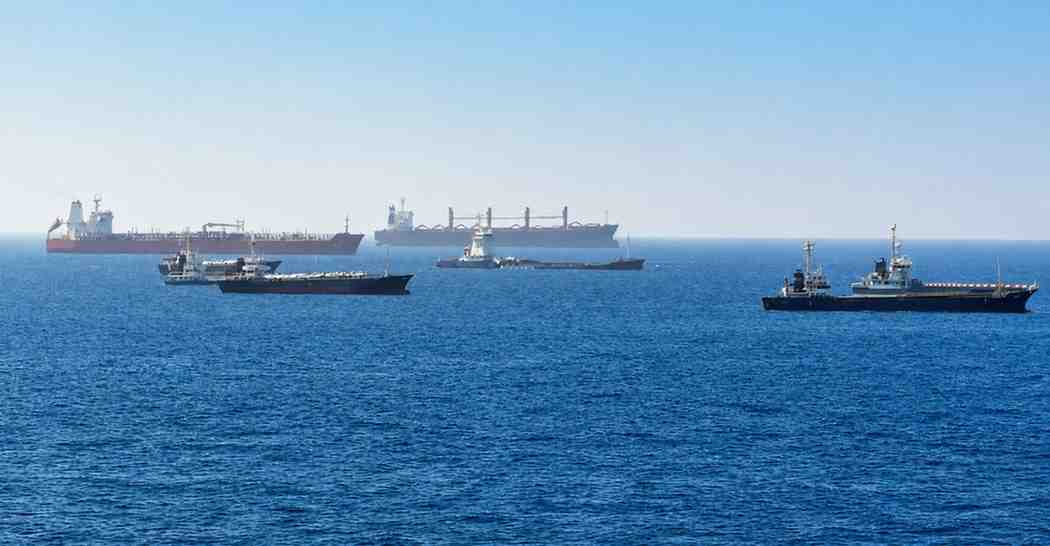
Iran has announced the closure of the strategically vital Strait of Hormuz “until further notice” after the Islamic Revolutionary Guard Corps (IRGC) fired warning shots at a vessel it claimed was using an unauthorized route through the waterway. The move has sharply escalated tensions in the Gulf and sparked fresh concerns over global energy supplies, international shipping, and the possibility of a wider regional conflict.
Iranian state media reported that the vessel ignored repeated instructions from Iranian authorities before being stopped by warning fire. Soon after the incident, the IRGC declared that all maritime traffic through the Strait of Hormuz would remain suspended until further notice.
The announcement has immediately drawn global attention because the Strait of Hormuz is one of the world’s most important maritime chokepoints, carrying a substantial share of internationally traded crude oil and liquefied natural gas.
Vessel Stopped After Alleged Navigation Violation
According to Iranian media reports, the ship attempted to transit through what Iranian authorities described as an unauthorized shipping corridor. The IRGC stated that the vessel was warned multiple times before warning shots were fired, forcing it to halt its movement.
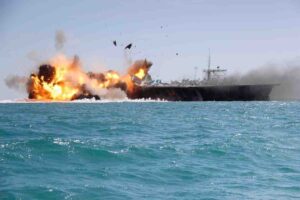
Iranian officials argued that the action was necessary to enforce maritime security and protect national interests. They have not released detailed information regarding the vessel’s ownership or cargo.
The latest maritime incident comes amid already heightened military tensions involving Iran and the United States, making the situation particularly sensitive for regional security.
Strait of Hormuz Holds Massive Strategic Importance
The Strait of Hormuz connects the Persian Gulf with the Gulf of Oman and the Arabian Sea. It serves as the primary export route for oil-producing nations including Saudi Arabia, Iraq, Kuwait, the United Arab Emirates, Qatar, and Iran itself.
Every disruption in the narrow shipping lane immediately affects global energy markets because millions of barrels of crude oil pass through it every day.
Shipping companies, insurers and energy traders closely monitor developments in the Strait since even temporary restrictions can increase freight costs, insurance premiums and crude oil prices worldwide.
The latest closure has therefore raised concerns among governments, financial markets and multinational energy companies.
Global Markets Brace for Impact
Energy analysts believe prolonged disruption could significantly affect international oil and gas supplies. Any sustained interruption in shipping could reduce available exports from Gulf producers, creating supply shortages and increasing volatility in international crude prices.
Also Read: Amit Shah Inaugurates NDMC’s Ultra-Modern Jayaprakash Narayan Public Library
Apart from oil, the Strait also handles significant shipments of liquefied natural gas, making Asian and European energy markets particularly vulnerable.
Financial markets are expected to closely watch future developments, especially whether commercial vessels are allowed to resume transit safely.
Regional Security Situation Continues to Deteriorate
The announcement comes during a period of growing confrontation between Iran and the United States, with military activity increasing across the region.
Recent weeks have witnessed multiple incidents involving commercial shipping, military deployments and exchanges of accusations between Tehran and Washington.
Iran has repeatedly warned that foreign military presence in the Gulf threatens regional stability, while the United States has maintained that freedom of navigation must be protected in international waters.
The latest closure is likely to further complicate diplomatic efforts aimed at reducing tensions.
International Shipping Industry on Alert
Global shipping companies are expected to reassess vessel movements through the Gulf until the security situation becomes clearer.
Marine insurers often increase war-risk premiums whenever geopolitical tensions rise in the region, leading to higher transportation costs for cargo operators.
Several maritime security agencies are monitoring developments and advising vessels to exercise extreme caution while approaching the Strait.
Industry experts say prolonged uncertainty could force shipping companies to delay departures or seek alternative operational strategies where possible.
Diplomatic Reactions Expected
Governments across the world are expected to closely monitor the evolving situation.
Major oil-importing nations may intensify diplomatic engagement to ensure uninterrupted energy supplies, while international maritime organizations are likely to call for restraint from all parties.
The Strait of Hormuz has historically remained one of the most sensitive geopolitical flashpoints, and any restrictions on navigation typically trigger immediate international concern.
Diplomatic efforts are expected to focus on preventing further escalation and restoring safe commercial navigation through the waterway.
Uncertainty Over Duration of Closure
Iran has not indicated how long the Strait will remain closed, stating only that restrictions will continue “until further notice.”
The absence of a clear timeline has added to uncertainty across global energy and shipping sectors.
Market participants, governments and security analysts will continue monitoring official announcements from Tehran as well as responses from the United States and regional allies.
With the Strait serving as one of the world’s most critical maritime corridors, developments over the coming days are expected to have significant geopolitical and economic consequences extending far beyond the Middle East.
Click here to join our WhatsApp Channel for real-time news updates and exclusive coverage.