
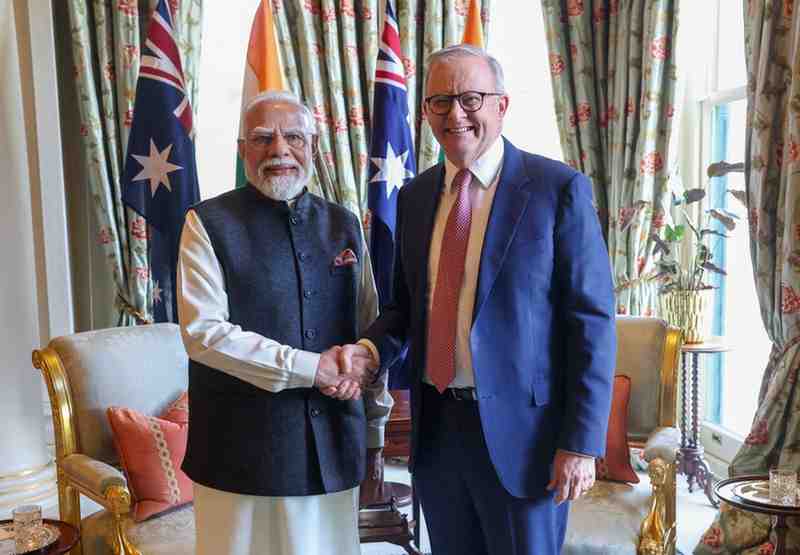
Australia and India have signed a landmark agreement that paves the way for the commercial export of Australian uranium to India, marking one of the most significant developments in bilateral relations since the two countries signed their Civil Nuclear Cooperation Agreement more than a decade ago. The breakthrough is expected to strengthen India’s long-term energy security while elevating strategic cooperation between the two Indo-Pacific partners.
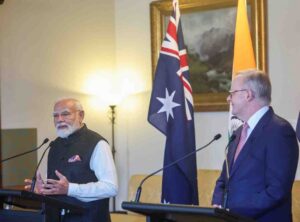
The agreement was finalised during Prime Minister Narendra Modi’s visit to Australia, where he held bilateral talks with Australian Prime Minister Anthony Albanese. Besides uranium exports, both leaders announced enhanced collaboration in defence, maritime security, critical minerals, emerging technologies, renewable energy and resilient supply chains, reflecting the growing strategic convergence between New Delhi and Canberra.
A Long-Delayed Nuclear Partnership Becomes Reality
Although India and Australia signed a Civil Nuclear Cooperation Agreement in 2014, uranium exports had remained stalled due to regulatory procedures and concerns surrounding nuclear safeguards. The newly signed administrative arrangements now clear those hurdles, allowing Australian companies to begin supplying uranium exclusively for India’s civilian nuclear power programme under international monitoring mechanisms.
Australia possesses some of the world’s largest known uranium reserves, making it one of the most reliable suppliers of nuclear fuel globally. India, meanwhile, has been seeking diversified uranium sources to support its rapidly expanding fleet of nuclear reactors.
The agreement ensures that Australian uranium will be used solely for peaceful electricity generation under established international safeguards, addressing long-standing non-proliferation concerns.
Why This Uranium Deal Is So Important for India
The significance of the agreement goes far beyond a fuel supply contract. It directly supports India’s ambitious plans to dramatically expand nuclear power generation over the coming decades.
Read Also: BMS Urges Delhi CM To Fill Vacancies, End Contract Hiring In Government-Funded Colleges
India has set a target of increasing its installed nuclear power capacity to around 100 GW by 2047 as part of its long-term clean energy strategy. Achieving this objective requires a steady and reliable supply of uranium, something domestic production alone cannot guarantee.
The agreement is important for India for several reasons:
- Energy Security: Imported uranium reduces India’s dependence on limited domestic uranium reserves and ensures uninterrupted fuel supplies for existing and future nuclear reactors.
- Clean Energy Transition: Nuclear power produces electricity with very low carbon emissions. Greater uranium availability supports India’s climate commitments while reducing dependence on coal.
- Growing Electricity Demand: India’s rapidly expanding economy requires massive additions to electricity generation. Nuclear energy provides stable baseload power that complements renewable sources such as solar and wind.
- Diversified Supply Chains: Australia joins other friendly countries supplying nuclear fuel to India, reducing risks arising from geopolitical disruptions.
- Support for Manufacturing and Industry: Reliable electricity from nuclear power strengthens industrial growth, digital infrastructure and advanced manufacturing.
Experts note that unlike solar and wind energy, nuclear plants can generate electricity continuously regardless of weather conditions, making them an essential component of India’s future energy mix.
Strengthening the India-Australia Strategic Partnership
The uranium agreement also signals a broader strategic shift in India-Australia relations.
Both countries have steadily expanded defence cooperation in recent years through joint military exercises, maritime security initiatives and Indo-Pacific partnerships. The latest agreements include stronger collaboration on critical minerals, trusted technologies, cybersecurity, resilient supply chains and green hydrogen.
Australia is also expected to play a larger role in supporting India’s manufacturing ambitions by supplying key minerals needed for batteries, renewable energy systems and advanced electronics.
The two governments reaffirmed their shared commitment to maintaining a free, open and inclusive Indo-Pacific while strengthening economic resilience amid global geopolitical uncertainty.
Benefits for Australia
The agreement is equally significant for Australia.
The country holds some of the world’s largest uranium resources but has relatively limited domestic demand for nuclear fuel because it does not operate nuclear power plants. Exporting uranium to one of the world’s fastest-growing energy markets opens substantial commercial opportunities for Australian mining companies.
The deal also helps Australia diversify its export markets while deepening trade ties with India, now one of its fastest-growing strategic and economic partners.
Part of a Wider Economic Agenda
The uranium pact forms part of a broader package of agreements announced during the bilateral summit.
The two countries pledged to accelerate cooperation in:
- Defence and maritime security
- Critical minerals
- Renewable energy
- Green hydrogen
- Trusted technologies
- Artificial intelligence
- Supply chain resilience
- Infrastructure investment
Australian investment institutions also expressed interest in expanding investments in India’s infrastructure sector, highlighting growing economic confidence between the two nations.
Looking Ahead
The uranium export agreement represents more than an energy partnership—it marks a strategic milestone in India-Australia relations.
For India, it provides access to a dependable source of nuclear fuel essential for achieving its long-term energy security, reducing carbon emissions and supporting sustained economic growth. For Australia, it opens a major export opportunity while reinforcing its strategic partnership with one of the Indo-Pacific’s leading economies.
As both nations expand cooperation across defence, technology, trade and clean energy, the uranium agreement is expected to become a cornerstone of an increasingly comprehensive bilateral relationship in the years ahead.
Click here to join our WhatsApp Channel for real-time news updates and exclusive coverage.